
Manufactured Sand and Crushed Rock Fines Washing Plants
Turn waste crusher dust into high-value washed M Sand and aggregates with a plant custom-built around your material.
PlatformsComboAerograder
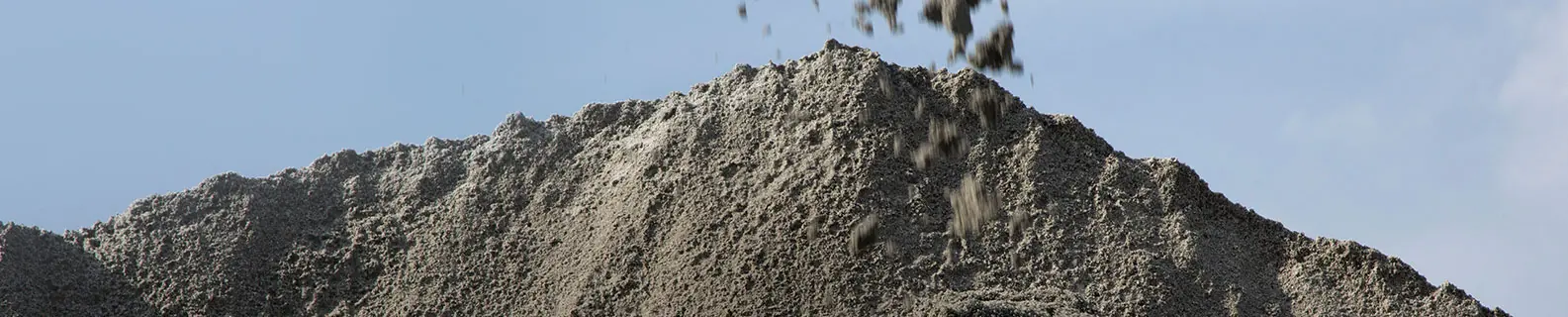
A manufactured sand washing plant converts crusher dust into washed, finely graded M Sand for concrete, plastering and masonry. It removes the minus 63 micron (230 mesh) fraction, typically 15–20% of the feed, and any clay, producing angular, impurity-free sand that outperforms river sand in strength and workability.
What is manufactured sand?
Manufactured sand (M Sand) is produced by crushing hard stone into sand-sized, angular particles, then washing and grading them for use as construction aggregate. It is a superior, sustainable alternative to river sand.
Sand is the world's second most consumed natural resource after water. Rapid urbanisation has pushed river sand extraction beyond what rivers can sustain, eroding riverbeds and banks. M Sand closes that gap: it can be produced close to the construction site, in consistent quality, at the quantity the market demands.
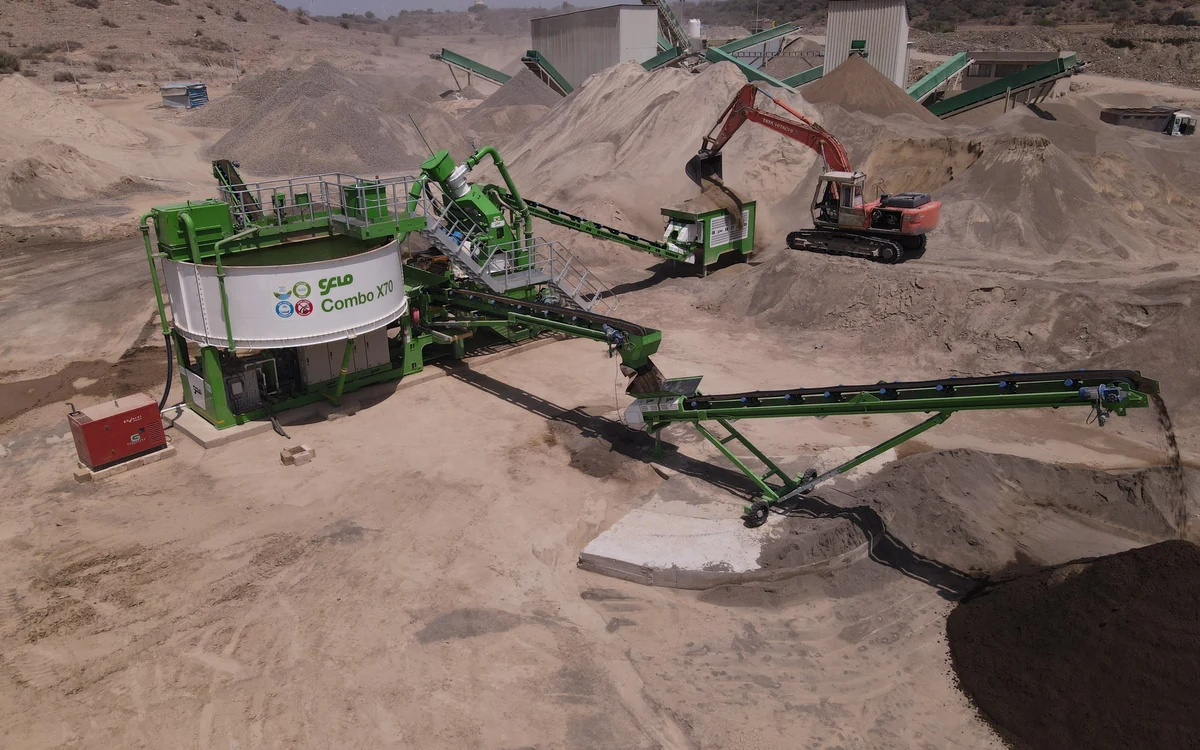
Crusher dust, crushed rock fines, quarry fines: one feed, four names
The sub-5 mm material left over when hard rock is crushed goes by a different name in almost every market. In India and Australia it is crusher dust or stone dust. In the UK and Ireland it is crushed rock fines, often shortened to CRF, or quarry fines. In North America you will hear crusher fines or stone sand.
They describe the same problem: a low-value byproduct that is too dusty and too poorly graded to sell as sand, stockpiling at the crusher because nobody wants it. Washing is what turns it into a product. Everything on this page applies whichever of those names your material goes by.
Coarse crushed rock above that size is a different job. That is aggregate washing rather than sand production, and it is covered on the aggregate washing page.
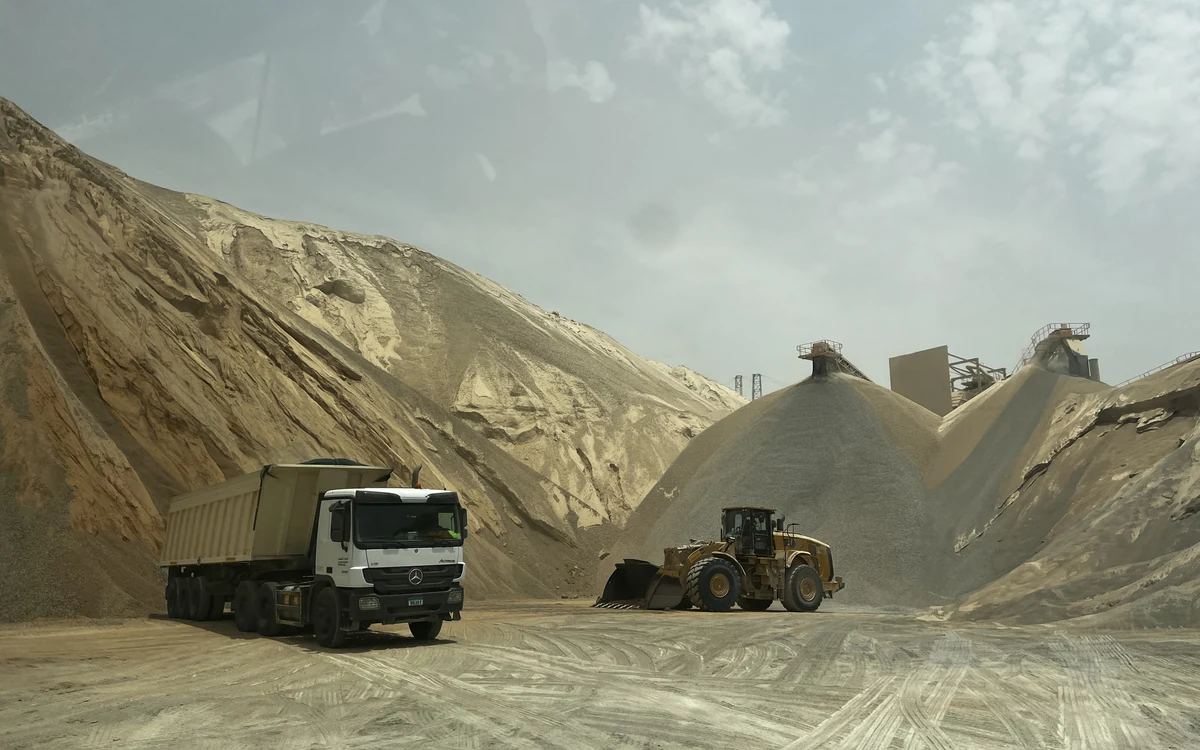
M Sand vs river sand
- Superior strength: angular particles with a rougher surface texture bond better with mortar, giving higher compressive and flexural strength than rounded, weathered river sand
- Better workability: consistent grading and a controlled fines content hold the sand inside the IS 383 grading envelope, which is what governs workability in the mix
- Lower cement consumption: free of clay, dust and silt, with denser particle packing that reduces voids and saves cement in concrete production
- Readily available: produced near the construction site, cutting transport costs and securing supply
- Eco-friendly: relieves the pressure of river sand mining on natural ecosystems
- Vastu friendly: free of the organic remains that river sand can carry
What a CFlo washing system solves
Our manufactured sand washing systems deal with the issues that make raw crusher dust and crushed rock fines unsaleable:
- Efficient removal of the minus 63 micron / 230 mesh material, typically 15–20% of the feed
- Zero loss of the lean 63–600 micron (230 mesh to 30 mesh) fraction, the range where crusher dust is most deficient and every particle counts
- Attrition options that scrub out clay where it is present in the crusher dust, protecting your final washed sand quality
Custom-built around your crusher dust or crushed rock fines
Crusher dust and crushed rock fines vary from quarry to quarry, so each plant is custom-built for your material and your final product specification. We start with extensive material analysis to determine the commercially viable product that can be recovered from your dust, then design a washing plant that maximises M Sand production and minimises waste from your crushing operation.
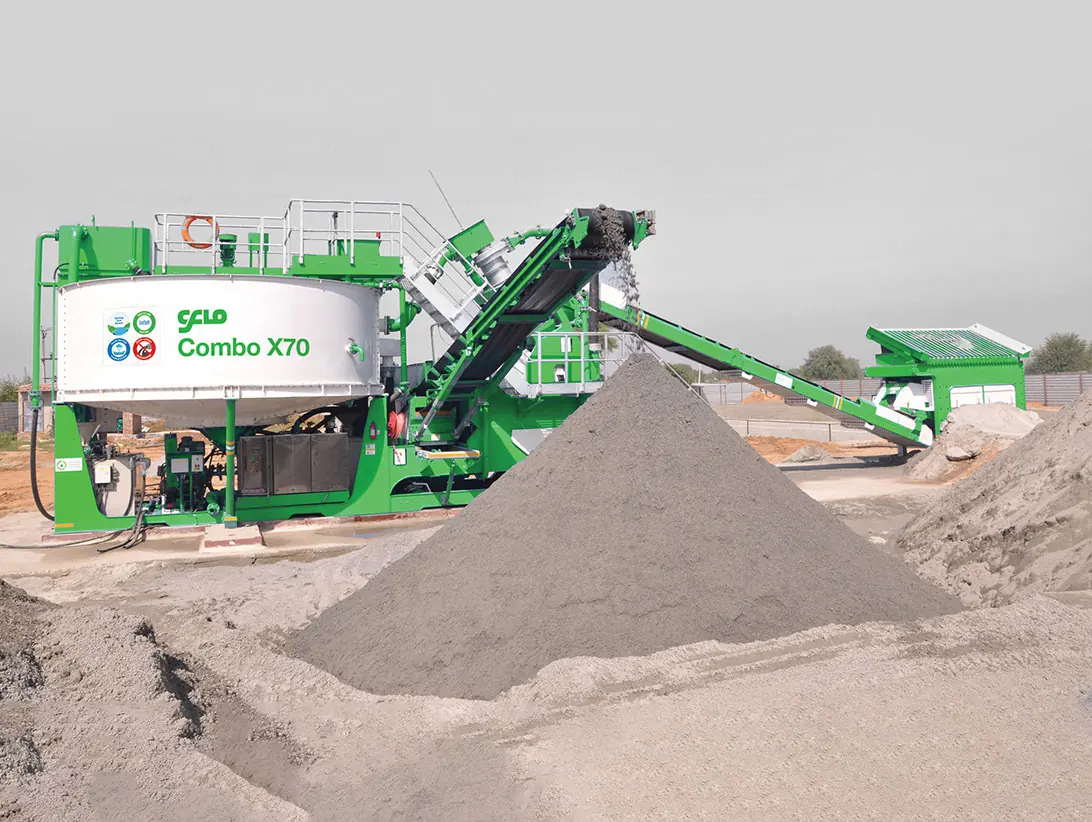
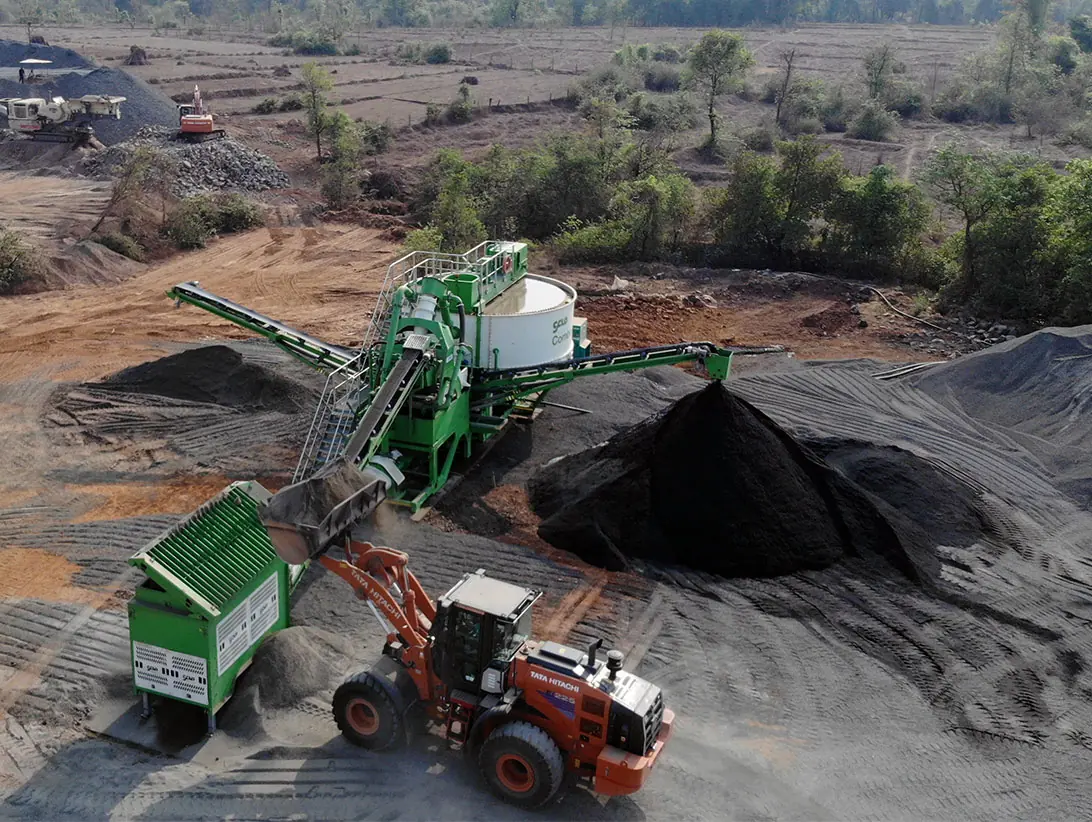
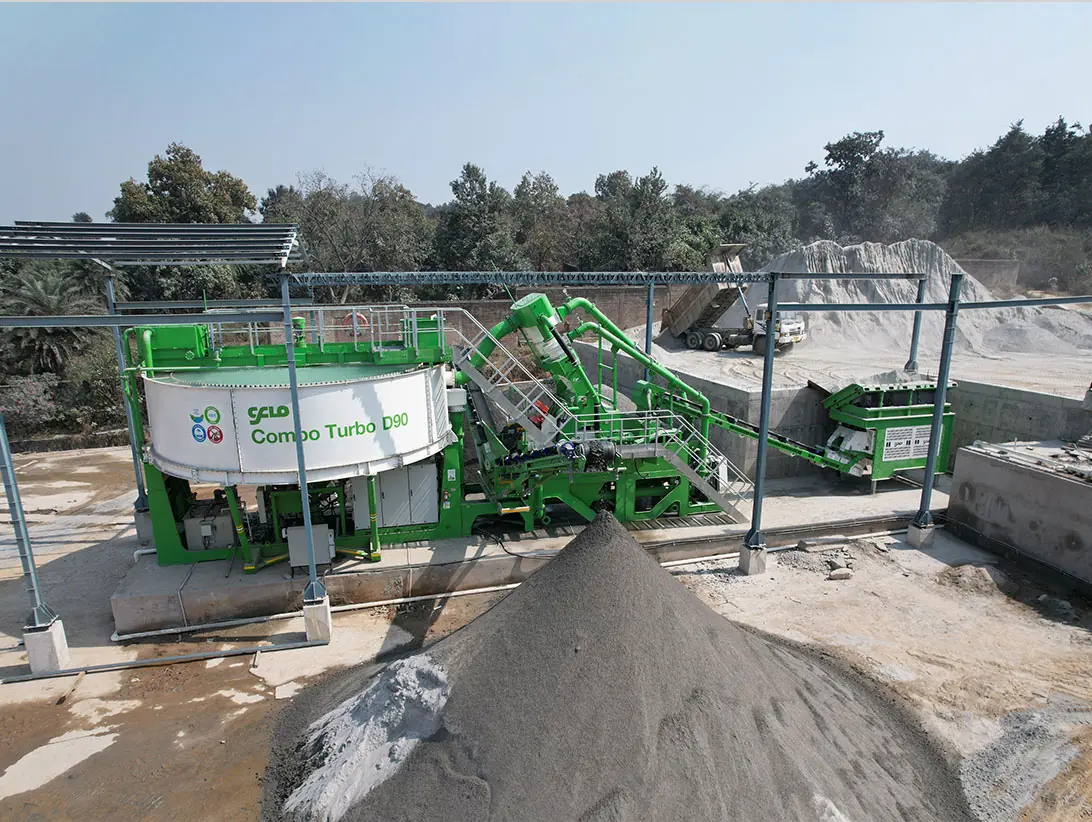
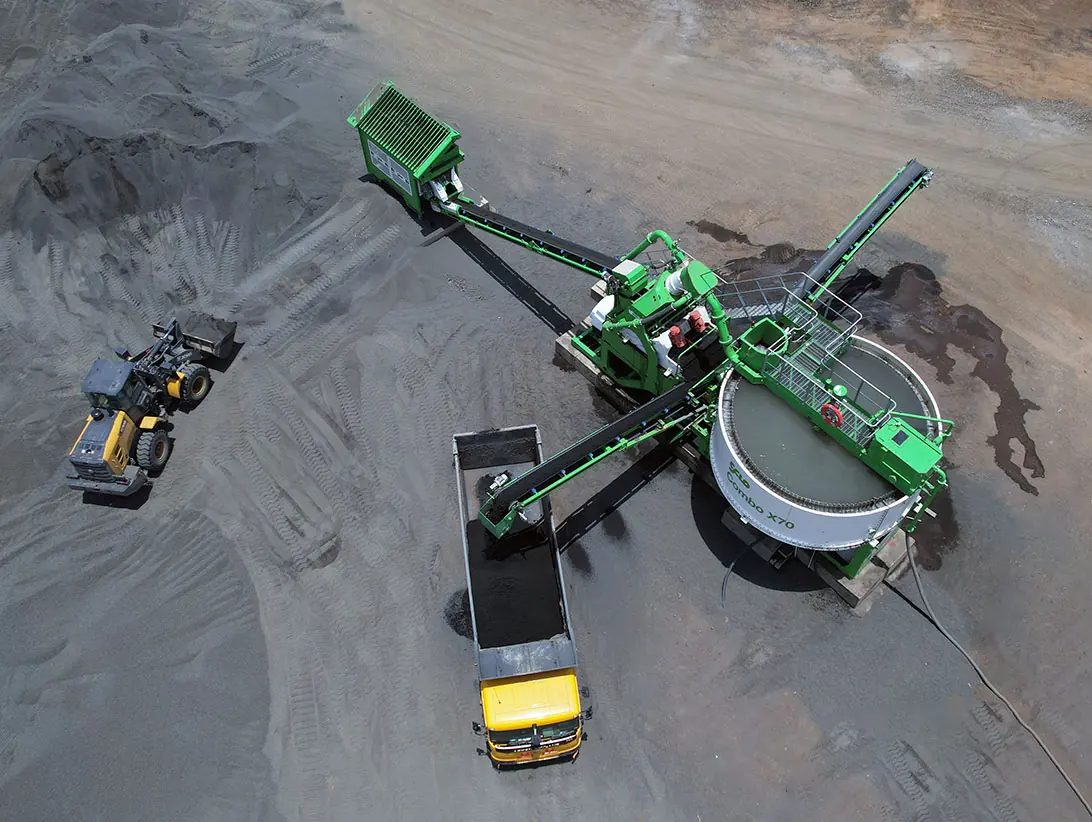
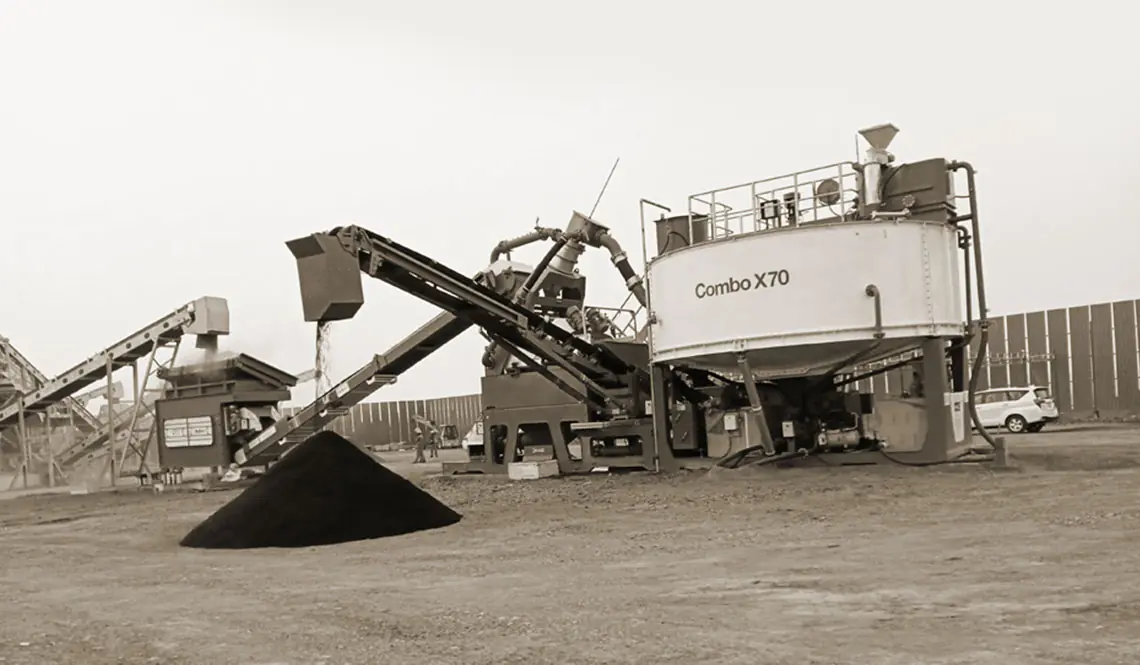
Our Combo range delivers this as a Next-Gen 'Super' System: Super modular for plug-and-play installation and compact shipping, Super smart with automation that holds product quality while reducing water and power, and Super easy with app-guided installation and service.
Proven on real plants
M Sand plants from CFlo run at GR Infraprojects (India), JS Infra, Raj Infrastructure, Power International (UAE), Vishnusurya Projects and Rekadaya Sarana Mukti (Indonesia). Each is documented in a case study you can review before you invest.
The equipment that holds the grading
Manufactured sand lives or dies on its grading curve, and two stages decide it. Screenmax FS86 High Precision Fines Screens hold the top of the gradation and dewater the product on the same deck, so no separate dewatering screen is needed. The Vertimax upward flow classifier trims the excess fines that crusher dust always carries, bringing the sand into the concrete grading envelope rather than leaving it just outside.
Water recovery is handled by the Hydromax thickener and the filter cake by Easysettle, both of which are built into every CFlo plant as standard. All of it arrives inside the Combo already engineered and factory tested.
Cutting the ultrafines without water
Washing is the route when crusher dust carries clay, because clay has to be scrubbed off and only water does that. There is a narrower case where water is not needed at all.
Where the sand comes straight off the crushing plant through a closed circuit it arrives dry, and the only thing wrong with it is too much ultrafine material. An Aerograder takes those fines out in air: no process water, no settling ponds, no tailings, and no screen media to blind or replace. Hotmix asphalt plants are the clearest case, because bituminous mixes will not tolerate a high ultrafine content and those plants usually sit alongside the crusher already.
What comes back depends on the rock and on what the crushing circuit sends across. At Samruddhi Mahamarg, Afcons produced a consistent graded manufactured sand this way. On other rock types, expect a measurable reduction in ultrafines rather than a certified grade. Testwork on your own material establishes which of the two applies.
The feed has to be below 5 mm and under 2% surface moisture, which in a monsoon climate means an enclosed circuit rather than an open stockpile. Where production has to continue through the monsoon from open stock, a washing plant is the answer. The two are seasonally complementary rather than competing.
Natural deposits
Material dug from a pit, river or alluvial deposit is a different problem, handled on the sand and gravel washing page.
More manufactured sand plants in operation
The project cards on this page show three plants. These are the other manufactured sand plants CFlo has commissioned, each with its own write-up.
- Raj Infrastructure, Shirdi, Maharashtra: two Combo X70 plants supplying IS 383 graded M Sand for the Samruddhi Mahamarg Expressway, with 95% water recycling.
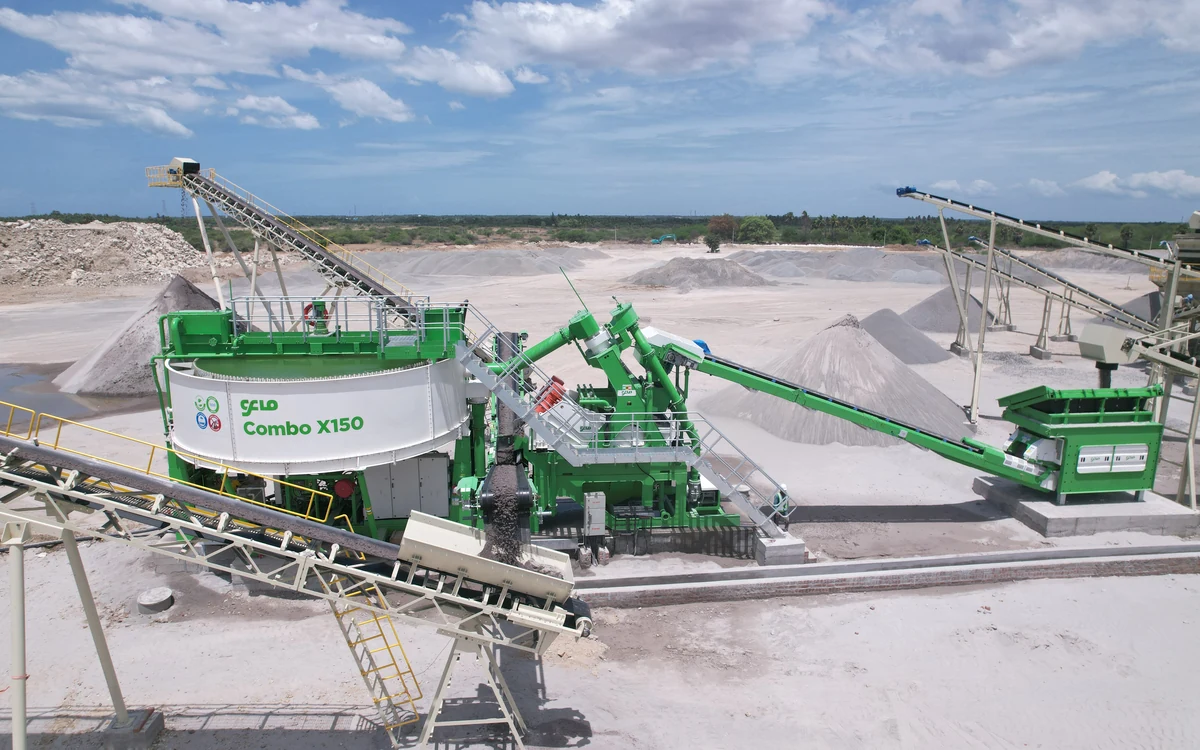
- Vishnusurya Projects, Tamil Nadu: a Combo X150 processing 150–180 tph of IS-compliant M Sand, output up 25–30%, costs down 20%, 95% of water recycled.
- PT Rekadaya Sarana Mukti, West Java: a Combo Alpha turning muddy pit sand into ASTM C33 construction sand, more than 1.5 million tonnes processed at up to 2.5 times the product value.
- YTL Cement, Batu Tiga Quarry, Kuala Lumpur: two Combo X70 plants converting 0–5 mm crusher dust into 70 tph of graded M Sand with 95% water recycling.
- Power International, Fujairah: a Combo Mega E5 turning minus 10 mm limestone rejects into construction sand and low-silica limestone, recycling 95% of its water.
A 150-180 tph M-sand plant in Tamil Nadu
In pictures
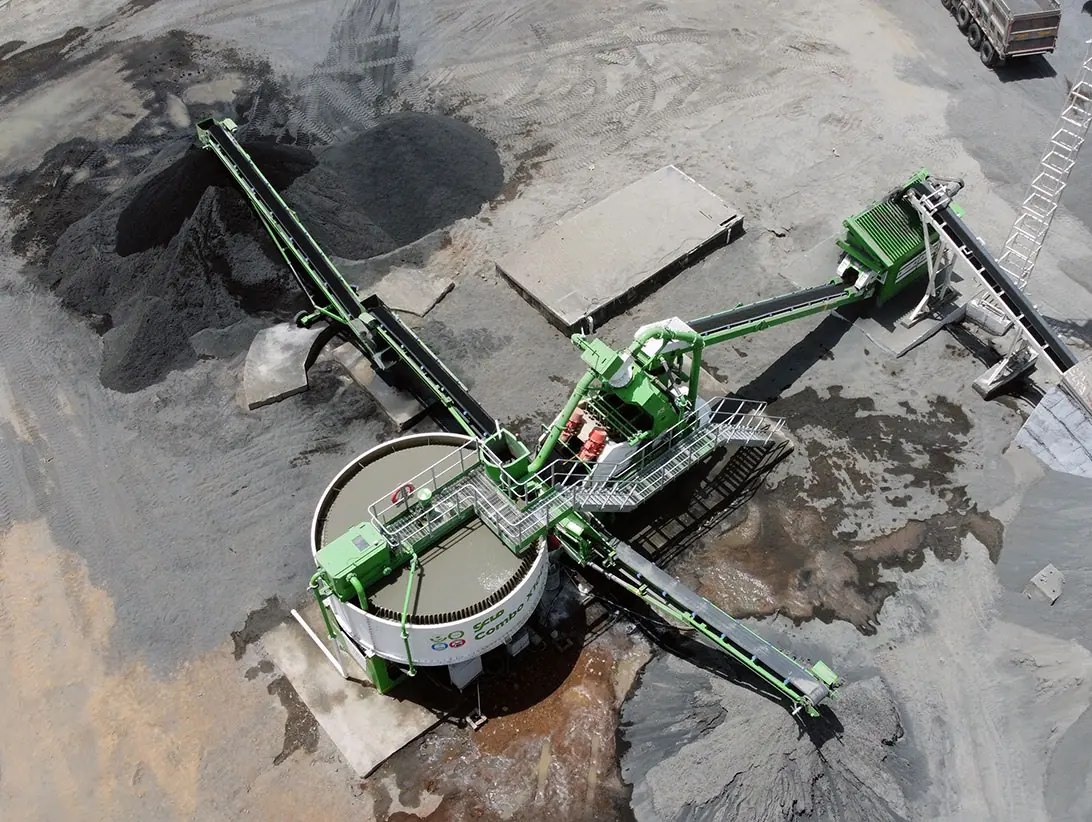
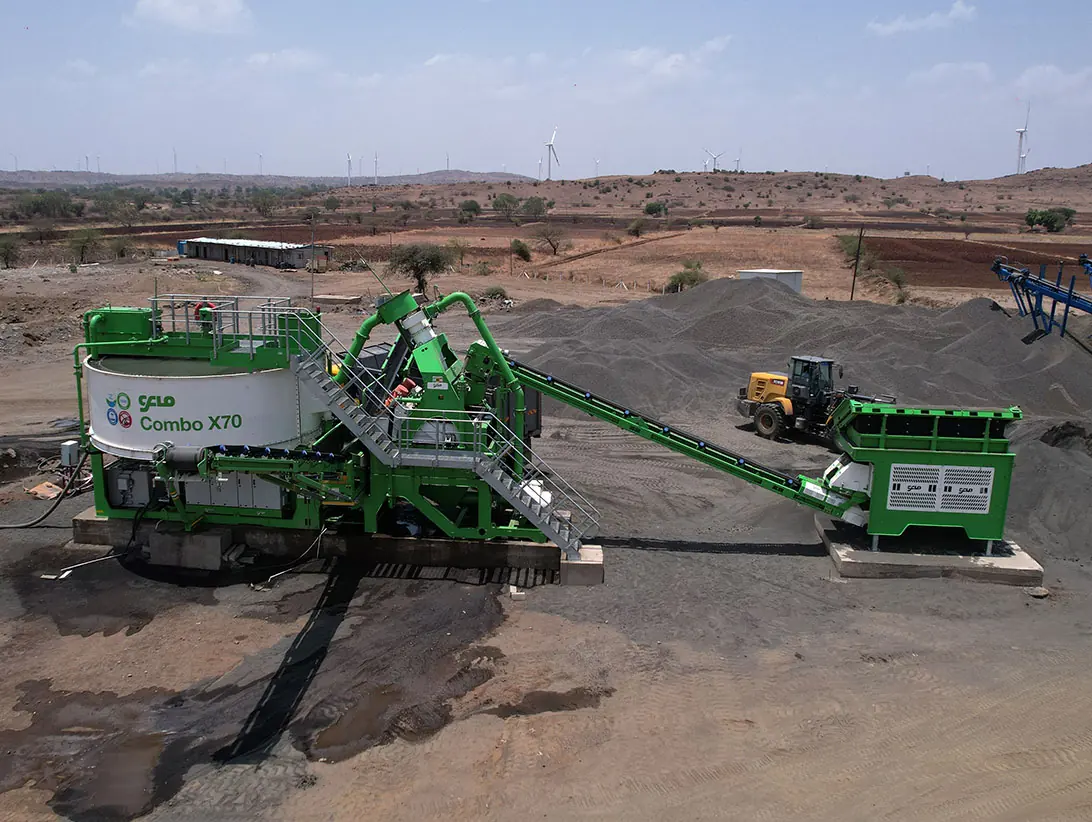
Real plants in this application
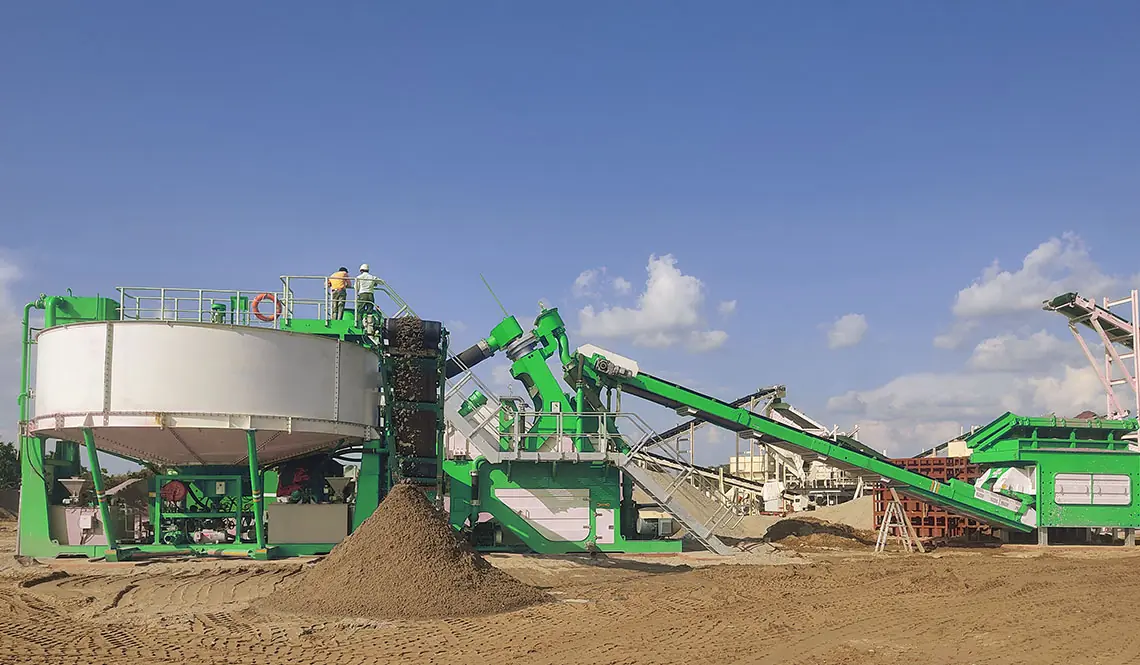
GR Infraprojects Ltd
Multiple project sites, India
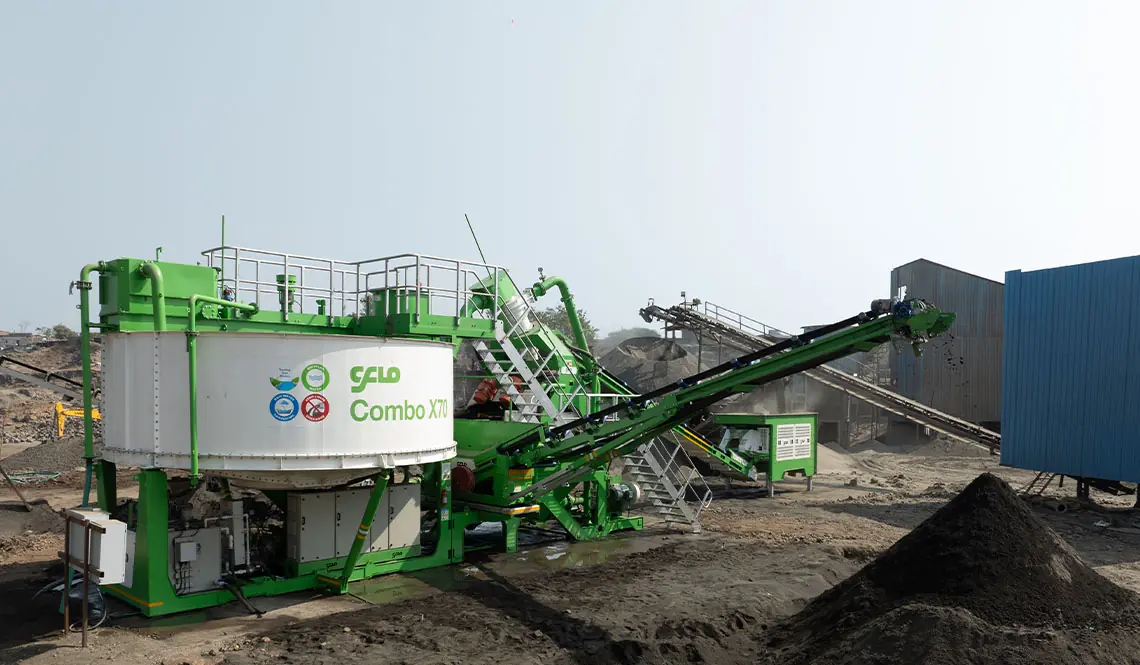
Zeal Alliance
Ratlam, Madhya Pradesh, India
JS Infra Pvt. Ltd
Aurad, Bidar, Karnataka, India
Machines behind these results: Combo
Frequently asked questions
What is M Sand and how is it made?
M Sand (manufactured sand) is artificial sand made by crushing hard stone into angular, sand-sized particles, then washing and grading them. A washing plant removes the minus 63 micron dust fraction and impurities such as clay and silt, leaving finely graded construction sand for concrete, plastering and masonry.
Is manufactured sand better than river sand for concrete?
Yes, on several measures. Angular M Sand particles bond better with mortar, giving higher compressive and flexural strength. Consistent grading improves workability, and because M Sand is free of clay, silt and organic impurities, denser particle packing reduces voids and cuts cement consumption in the mix.
How much of my crusher dust can be recovered as saleable sand?
Typically the minus 63 micron fraction, around 15–20% of the feed, must be removed; most of the rest can become saleable washed sand. The exact recovery depends on your dust, which is why CFlo runs extensive material analysis first to quantify the commercially viable product before designing your plant.
What are crushed rock fines and can they be washed into manufactured sand?
Crushed rock fines, CRF or quarry fines, are the sub-5 mm byproduct of crushing hard rock: the same material called crusher dust or stone dust elsewhere. Yes. Washing removes the minus 63 micron fraction that makes it dusty and unsaleable, and grades what remains into manufactured sand. The recovery depends on your rock and your crushing circuit, which is why every plant starts with a material analysis rather than a catalogue selection.
Can a sand washing plant handle clay in the crusher dust?
Yes. Where clay is present, CFlo specifies attrition scrubbing options that mechanically break down and remove clay from the sand before final classification. This protects the quality of the washed M Sand product and keeps it within specification for concrete and masonry use.
Why is every manufactured sand plant custom-built?
Crusher dust varies significantly between quarries in grading, fines content and clay contamination. CFlo analyses your material first, then designs the plant around your feed and your target product specification, so production of M Sand is maximised and waste from your crushing operation is minimised.
How quickly can a modular M Sand plant be installed?
CFlo's Combo plants are Super modular: pre-engineered building blocks ship compactly, install plug-and-play and commission far faster than a traditional stick-built plant. App-guided installation and service support means your team reaches saleable production sooner and keeps the plant running without specialist visits for routine work.