
Bauxite Washing & Beneficiation
Efficiently remove silica and clay from bauxite ore to improve final product quality.
PlatformsOremax
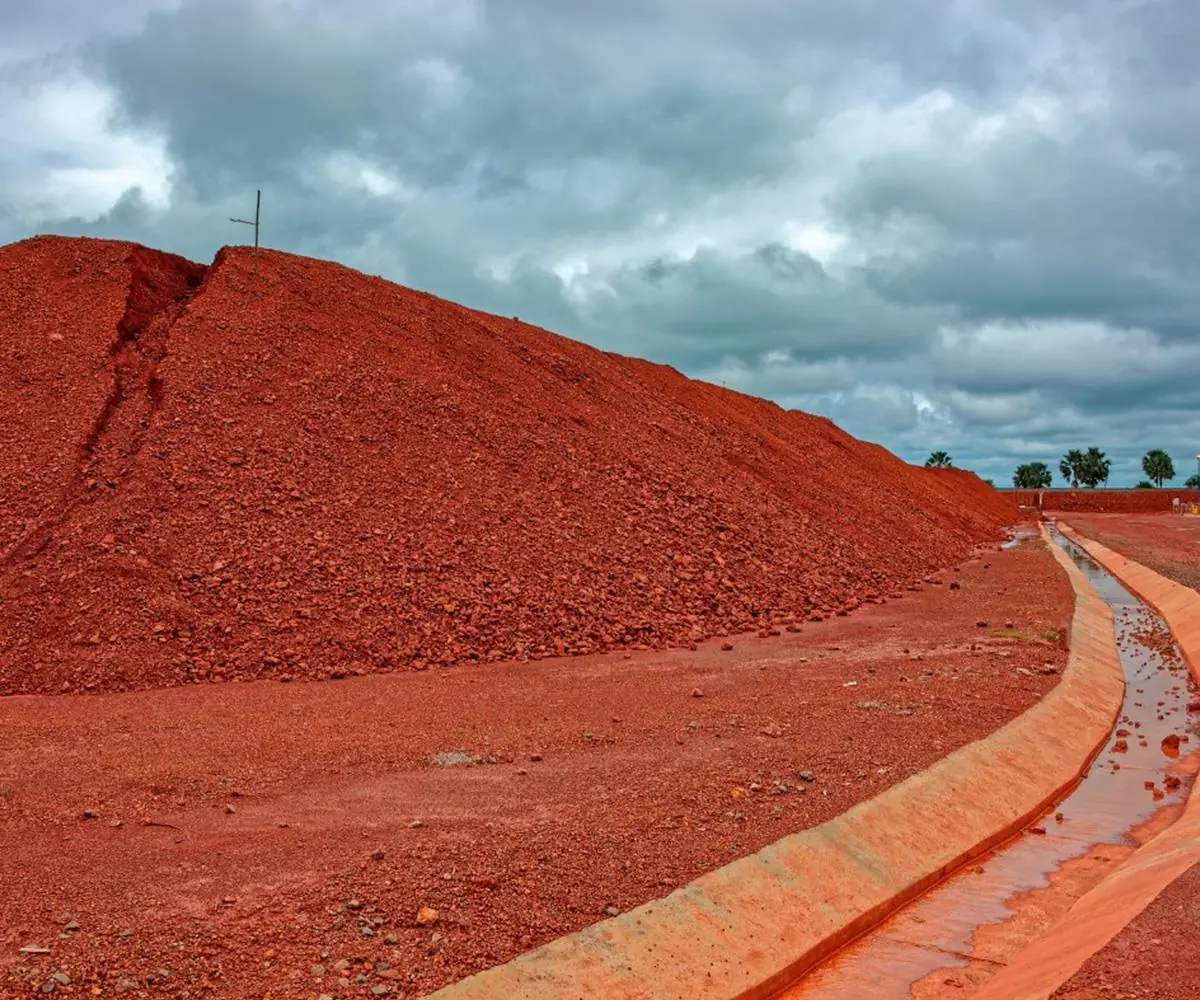
Bauxite beneficiation removes silica and clay contamination from mined bauxite ore to improve final product quality. CFlo builds the ore washing circuit that sits ahead of the refinery: scrubbing and desliming to take out clay and reactive silica, a customised hydrocyclone configuration for classification, and Hydromax thickener technology so the wash water is recovered and the slimes leave as a handleable cake, with optional filter press or centrifuge filtration.
What bauxite is
Bauxite is the ore aluminium comes from. It is not aluminium, and it is not alumina: it is a weathered rock rich in aluminium hydroxide minerals, and it goes through two steps before it becomes metal. First it is refined into alumina, aluminium oxide, and then the alumina is smelted into aluminium. A refinery buys bauxite on how much recoverable alumina is in it and how much trouble comes with it.
Inside the refinery, alumina is dissolved out of the ore in hot caustic soda, leaving a solution rich in dissolved alumina, the pregnant liquor, and an insoluble residue. That chemistry belongs to the refinery. What decides how much of it has to be done is the ore arriving at the gate: clay and reactive silica consume caustic soda and add residue volume while returning no alumina, so washing them off beforehand is where wet processing earns its place, and it is the part CFlo equipment is built into.
Why silica and clay are the problem
Silica and clay are not inert. They dilute the ore, so a tonne of feed yields less alumina, and clay in particular makes the residue harder to settle and dewater. Reactive silica is worse than that: it consumes caustic soda in the refinery, and caustic is a running cost rather than a one-off.
That is the case for taking both out before the ore reaches the refinery rather than dealing with them inside it. Every tonne of silica and clay removed upstream is a tonne the refinery does not heat, does not dose with caustic, and does not have to thicken and dispose of afterwards.
Removing silica and clay contamination
Silica and clay in bauxite feed dilute the ore and burden downstream refining. A customised hydrocyclone configuration and Hydromax thickener technology remove both silica and clay contamination before they can affect the final product.
Customised hydrocyclone classification
CFlo equipment sits at the clarification and classification stage of bauxite processing. Each hydrocyclone configuration is designed to meet the specific requirements of your mining operation, taking into account the nature of your feed material, throughput requirements and your desired classification point. This bespoke approach delivers a cleaner, more consistent feed to the refinery.
Hydromax thickener technology
At the classification stage, CFlo's Hydromax thickener technology thickens the slimes washed off the ore, concentrating the solids while clarified water overflows and gravity-feeds back to the plant, which keeps process water moving through the circuit.
Washing and filtration
The washing stage scrubs clay and reactive silica off the ore and the thickener recovers the wash water. Where a drier slimes cake or greater water recovery is required, a further filtration stage can be added, using either a filter press or a centrifuge. The related CFlo platform for bauxite duty is the Oremax modular ore washing system.
Frequently asked questions
What is bauxite?
Bauxite is the principal ore of aluminium: a weathered rock rich in aluminium hydroxide minerals. It is refined into alumina, which is aluminium oxide, and the alumina is then smelted into aluminium metal. A refinery values bauxite on its recoverable alumina content and on how much silica, clay and moisture come with it.
What is bauxite used for?
Almost all of it becomes aluminium, by way of alumina. Bauxite is refined to alumina by dissolving the aluminium content in hot caustic soda, and the alumina is then smelted to metal. Smaller quantities go to abrasives, refractories and cement.
Why does silica content matter in bauxite?
For two reasons. Silica and clay dilute the ore, so each tonne of feed yields less alumina. More expensively, reactive silica consumes caustic soda inside the refinery, and caustic is a running cost. Removing both before the ore reaches the refinery avoids heating, dosing and disposing of material that was never going to yield anything.
How is silica removed from bauxite ore?
CFlo uses a customised hydrocyclone configuration introduced at the clarification and classification stage of bauxite processing. The cyclone geometry and arrangement are engineered around your feed material, throughput and desired classification point, so silica and clay contamination are separated efficiently before the ore moves downstream.
Where does CFlo equipment fit in the bauxite circuit?
Upstream of the refinery, on the mined ore. Scrubbing and wet screening take off the clay, hydrocyclones handle desliming and classification, and Hydromax thickens the slimes so the wash water returns to the plant. An optional filter press or centrifuge completes the circuit where a drier cake is required. The Bayer process itself, inside the refinery, is not CFlo scope.
What happens to the slimes washed off the ore?
Hydromax thickens them. The thickener concentrates the slimes while clarified water overflows and gravity-feeds back to the wash plant, which is what removes the need for settling ponds and keeps the fresh water demand to a top-up.
Can a filtration stage be added to a bauxite washing plant?
Yes. After thickening, an additional filtration stage can be specified using either a filter press or a centrifuge, depending on the slimes characteristics and how dry you need the final cake to be.
What determines the hydrocyclone configuration for my operation?
Three factors: the nature of your feed material, your throughput requirements and your desired classification point. CFlo designs each configuration around these parameters rather than supplying an off-the-shelf arrangement, which is what protects both product quality and plant efficiency at your specific mine.