
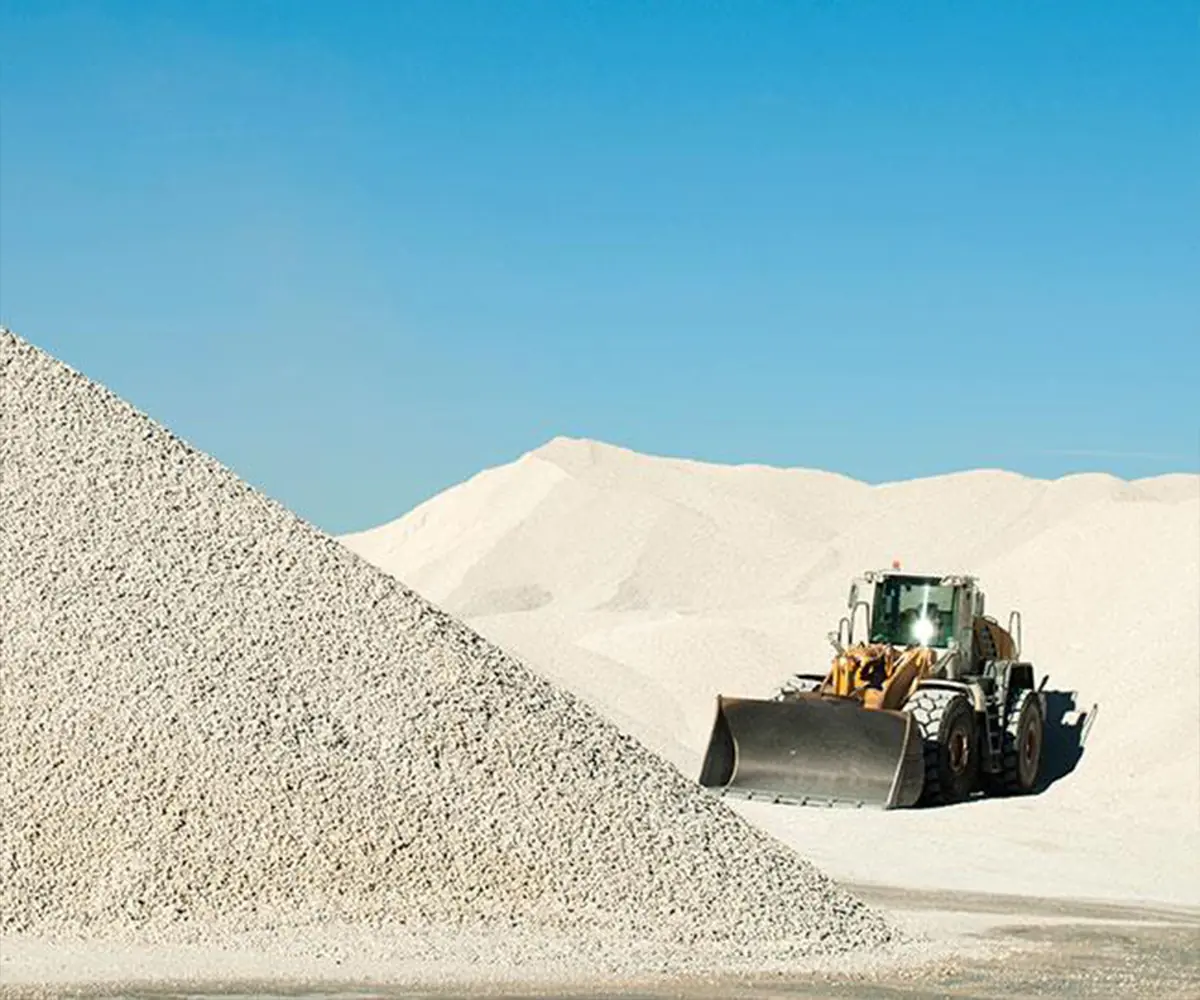
Limestone beneficiation upgrades low-grade limestone that would otherwise be dumped as mine waste. Through intense scrubbing and wet classification, CFlo plants recover 70–90% of that waste as high-value mineral for cement making, lifting CaO content significantly while keeping silica within acceptable limits and reducing the cut-off grade of the ore.
What limestone beneficiation is
Limestone is mostly calcium carbonate, and what a cement works buys it for is the lime in it. Grade is quoted as CaO, calcium oxide, the lime content. Typical cement-grade limestone runs around CaO 42%, silica 15% and MgO 1%.
Two of those three are limits rather than targets. Silica has to sit inside the range the cement mix allows. MgO, magnesium oxide, is capped tighter still, because too much of it makes the finished cement unsound. So a deposit is not rejected for lacking lime so much as for carrying too much of something else, and beneficiation is the business of separating the two.
Marl, and why softness is an opportunity
Where limestone is interbedded with marl, a natural mixture of limestone and clay, the contaminant is softer than the product. That sounds like a complication and is actually the opening: attrition breaks down the soft material while leaving the hard limestone intact, so a difference in hardness becomes a means of separation. It is the same principle that lets a scrubber clean an aggregate without grinding it away.
This is why low-grade material that was dumped as waste is recoverable at all. Between 70% and 90% of it comes back as high-value mineral, with CaO lifted and silica held inside specification.
Reduce the cut-off grade, extend the mine
CFlo's advanced modular limestone processing plants enable efficient ore processing at scale, maximising recovery while minimising water use and operational footprint. Their design holds consistent performance even with feed variability. By reducing the cut-off grade of limestone ore, they deliver significant efficiencies to mining operations:
- Increase the volumes of material available for processing
- Reduce the stockpiling of waste ores
- Extend the life of your reserve
- Maximise your return on investment
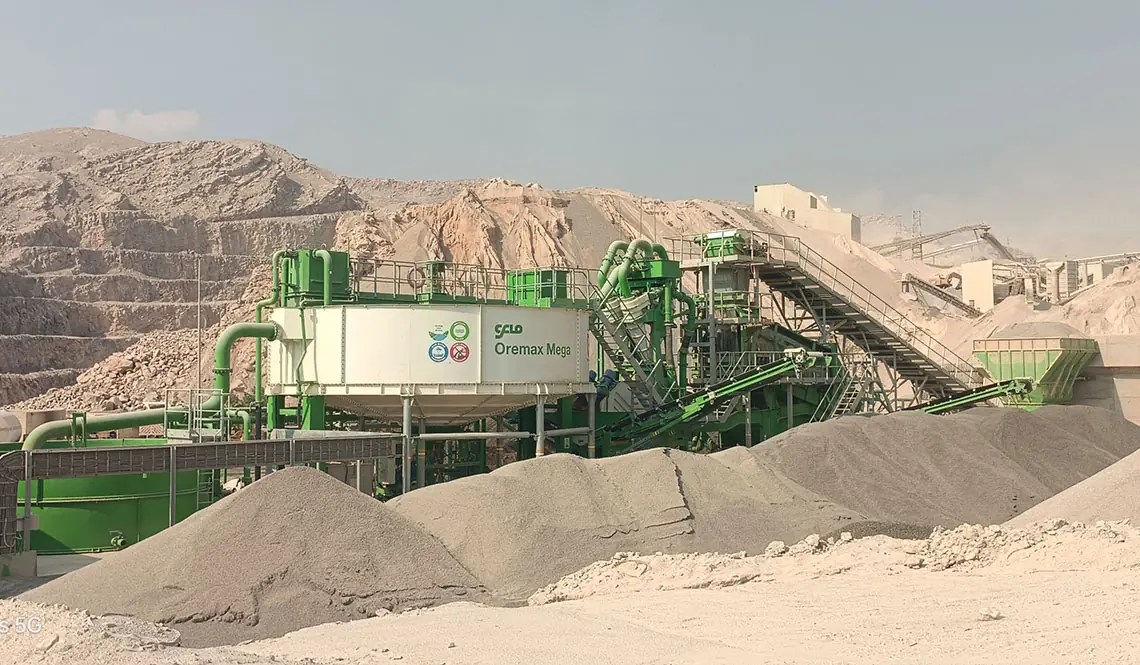
From mine waste to cement feed
Ore below the cut-off grade is treated as waste and dumped at the mine, occupying large areas and creating an environmental liability.
CFlo turns that material into cement feed. Intense scrubbing and wet classification lift the CaO content while holding silica inside the specification, so a stockpile that was written off becomes part of the reserve.
Fresh fines or old dumps, same plant
CFlo's modular designs accept both freshly generated fines from the crushing circuit and material reclaimed from old dumps. That means the plant pays back twice: it upgrades today's production stream and monetises decades of stockpiled waste sitting on mine land.
Oremax and Combo for limestone
Limestone beneficiation runs on CFlo's Oremax and Combo modular ranges, with a published case study at Power International, UAE. As Next-Gen 'Super' Systems they are Super modular for fast installation at the mine, Super smart with process control that holds product grade while minimising water and power, and Super easy with app-guided installation and service.
The equipment that separates marl from limestone
A Scrubmax twin shaft logwasher holds the material in a water bath and works it against itself, so the marl and clay disintegrate and wash away while the competent limestone survives the trip and leaves over the weir. Spray water alone will not separate them, because the clay is bonded to the rock rather than sitting on it.
Ahead of it a Strato scalping screener meters the run-of-mine feed, and behind it the process water is recovered by Hydromax.
Real plants in this application
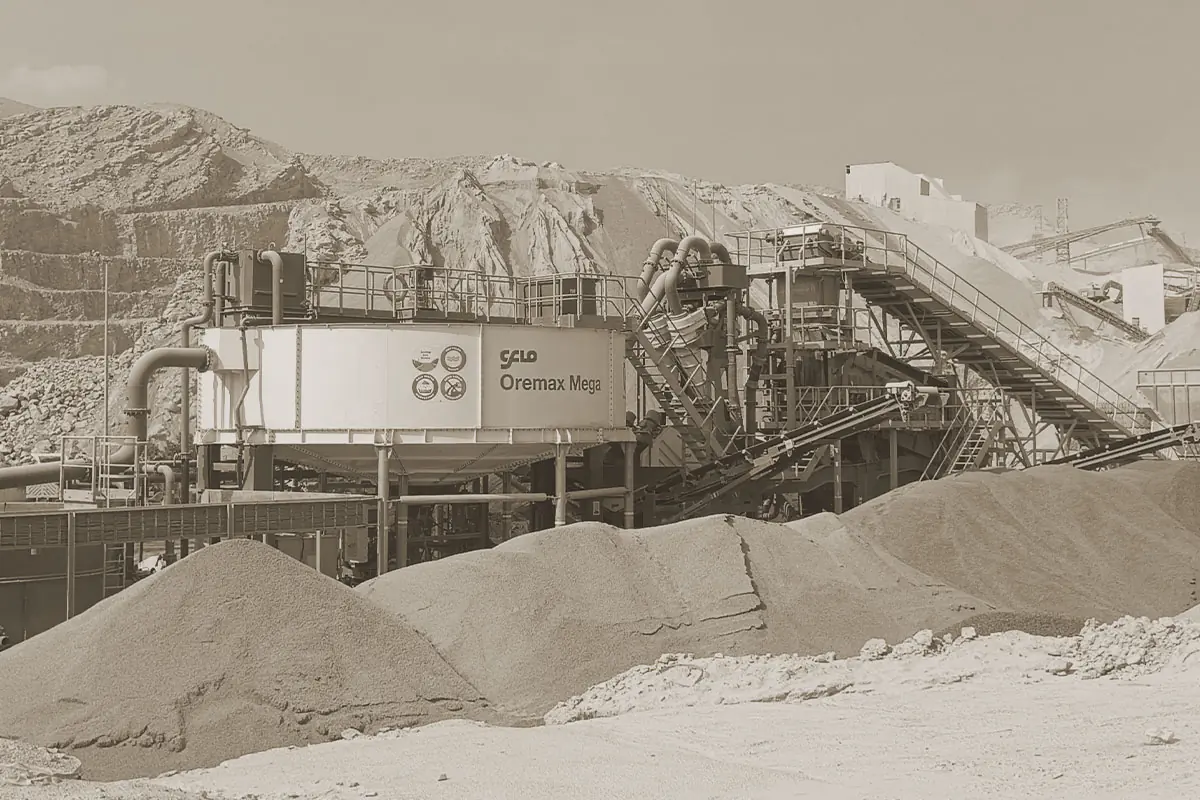
Machines behind these results: Combo
Frequently asked questions
What is limestone used for?
Overwhelmingly cement, which is the market that sets the grade. It is also burnt to lime for steelmaking and chemicals, used as a flux in blast furnaces, crushed for aggregate, and used as a filler and in glassmaking. Cement is the most demanding on consistency.
What does CaO mean in a limestone grade?
CaO is calcium oxide, the lime content, and it is how limestone grade is quoted. Typical cement-grade limestone runs around CaO 42%, with silica near 15% and MgO around 1%.
Why is MgO limited in cement-grade limestone?
Because too much magnesium oxide makes the finished cement unsound. It is a cap rather than a target, which is why a deposit can be rejected for what it carries rather than for what it lacks, and why beneficiation is about separation rather than enrichment.
Can low-grade limestone really be used for cement?
Yes. Lower-grade ores normally dumped as mine waste can be upgraded through intense scrubbing and wet classification, with 70–90% recovered as high-value mineral for cement making. Depending on feed grade, CaO content improves significantly while silica is held within acceptable limits.
What grade does limestone need for cement production?
Typical cement-plant limestone runs around 42% CaO, 15% silica and 1% MgO. Ore below the cut-off grade is usually dumped. CFlo beneficiation reduces that cut-off grade, so material previously classed as waste becomes part of your usable reserve.
Can the plant process old waste dumps as well as fresh fines?
Yes. CFlo's modular designs accept both freshly generated fines from the crushing circuit and material reclaimed from old dumps. Processing legacy dumps recovers high-value mineral, frees the land they occupy and removes an environmental hazard from the mine site.
How does beneficiation extend the life of a limestone reserve?
By reducing the cut-off grade, more of the deposit becomes processable ore rather than waste. That increases the volumes available for processing, reduces waste stockpiling, extends reserve life and maximises return on the investment already made in the mine.
How much water and space does a limestone beneficiation plant need?
CFlo's modular limestone plants are engineered to maximise recovery while minimising water use and operational footprint, and they hold consistent performance under feed variability. The Oremax and Combo platforms integrate several processing phases per module, keeping the installed footprint compact at mine sites.