
Contaminated Soil Remediation
Conserving resources sometimes means undoing harm, not just preventing it.
PlatformsReurban
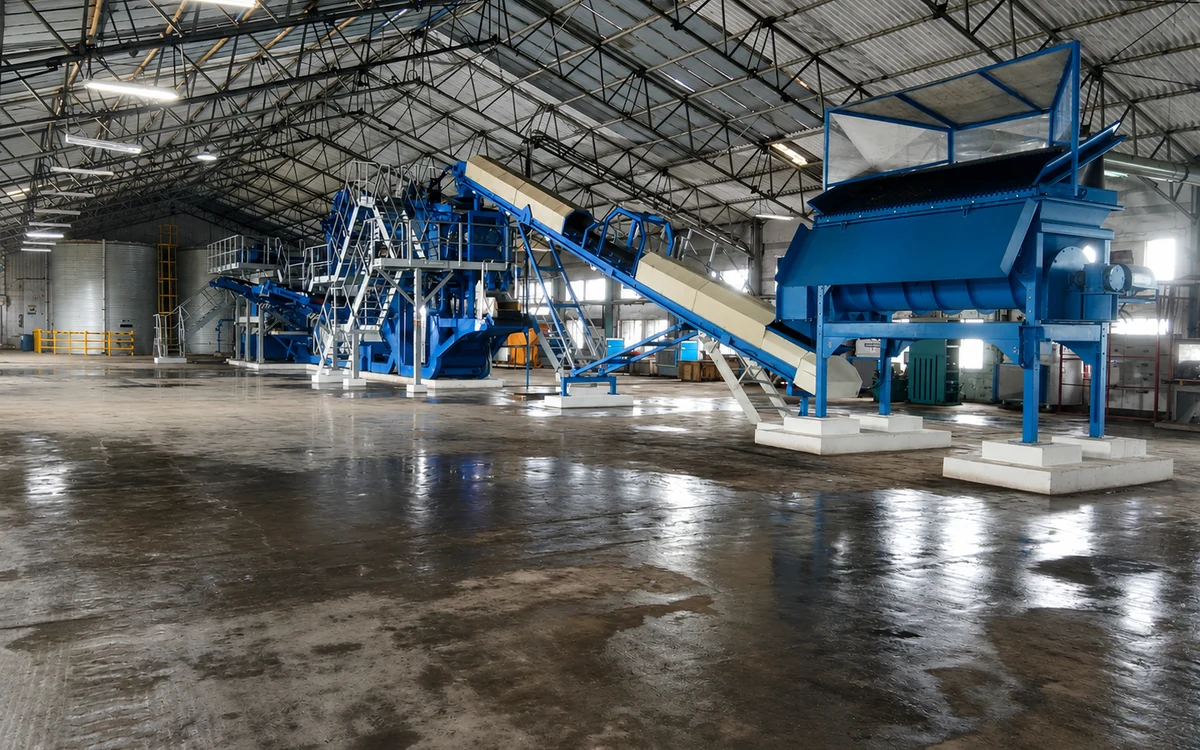
Contaminated soil remediation treats contaminated soil so that it no longer harms health or the environment, and where possible returns it to use. CFlo builds ex-situ contaminated soil remediation plants: the contaminated soil is excavated, then scrubbed, screened and washed so the contamination is liberated from the material it clings to and concentrated into a small fraction for specialist treatment, leaving the bulk clean enough to go back into the ground. Our best known plant treated mercury-contaminated soil at Hindustan Unilever's former factory at Kodaikanal.
The mercury remediation that set the standard
Hindustan Unilever Limited operated a thermometer factory at Kodaikanal, in Tamil Nadu, and the ground at the site was contaminated with mercury. Remediating it became one of the most closely watched environmental projects in India, carried out by HUL under the guidance of CSIR's National Environmental Engineering Research Institute and the Indian Institute of Soil and Water Conservation, and monitored by the Scientific Experts Committee constituted by the Supreme Court Monitoring Committee together with the Tamil Nadu Pollution Control Board.
CFlo was approached to help remediate the soil, and built the wet processing plant that did it.
The target was a Site-Specific Target Level of 20 mg/kg of mercury in soil, set by the regulator and later reaffirmed by the National Green Tribunal. That is a demanding number, and it had to be met on a constrained site, with contamination bound tightly to the surfaces of the material rather than loose within it.
The remediation has since been completed. Delivering the Foundation Day address at CSIR-NEERI on 8 April 2026, CSIR's Director General Dr N Kalaiselvi cited the successful remediation of the mercury-contaminated site at Kodaikanal and described it as "a matter of national pride" and a model for impactful science.
Why contaminated soil is worth washing rather than burying
It sounds like a technicality. It decides the entire approach.
When a contaminant is dissolved through a soil mass evenly, you are dealing with the whole volume and your options are limited and expensive. When it is concentrated on the surfaces of particles, and on the fine fraction in particular, something much better becomes possible: liberate it and separate it, and you are left with a large volume of clean material and a small volume of genuinely contaminated material.
That is what soil washing does. Rather than treating the whole mass chemically, it is a mechanical process that strips the contamination off the coarse fractions, concentrates it into the fines, and hands you two streams instead of one problem.
In hazardous waste management terms this is volume reduction, and it is the step that changes the economics of a site. The expensive, licensed part of the chain, the treatment or disposal of genuinely hazardous material, then applies to a small fraction of what you started with instead of to everything you excavated. CFlo builds and supplies that front end. The handling and final treatment of the concentrated hazardous fraction is a job for a licensed specialist, and the plant is designed around whatever route your regulator has approved.
Testwork decides whether it will work. Samples from Kodaikanal were analysed at our DSIR-accredited laboratory, which is where the surface-bound behaviour was established and where the flowsheet came from. On a remediation project the testwork is not a formality; it is the difference between a plant that meets the standard and one that does not.
The circuit
The plant scrubs, screens and washes every fraction, then separates the water from the solids.
Scrubmax heavy-duty scrubbing does the liberation. Material is held in a water bath and driven against itself, so attrition between the particles strips the contaminated film off the surfaces. This is the stage that makes the rest possible: no liberation, no separation.
Wet screening under pressurised water then sizes the material and rinses it, so that clean fractions leave clean rather than carrying the contamination they have just been separated from.
Dual-stage hydrocyclones make the fine cut, sending the sub-75 micron fraction, which is where the contamination has been concentrated, away from the saleable material.
A decanter separates that fine slurry into recovered water and a solid. The water goes back to the plant. The fines are stockpiled under cover for specialist treatment, in the Kodaikanal case mercury recovery by retort.
Water, on a site where losing it is not an option
A contaminated soil washing plant uses water to do its work, and every litre of that water is in contact with contaminated soil. Losing it is not a housekeeping problem, it is a containment failure.
The Kodaikanal plant was designed to recycle 95% of its process water with minimum spillage on site: the loop is closed, the contaminated water stays inside it, and fresh make-up is limited to what leaves in the treated material. The same water and tailings circuit that makes a sand plant economic makes a remediation plant containable.
A plant that had to fit
Remediation sites are rarely convenient. Kodaikanal is a hill town, the site was constrained, and there was not room for the sprawling arrangement a conventional contaminated soil washing plant would need.
Being modular is what solved it. CFlo designed a compact layout, and installed and commissioned it in the space that existed rather than the space the equipment would have preferred. On a remediation project that constraint is normal: the contaminated ground is where it is, often in a built-up area, and the plant has to go there.
What comes back out
The treated soil left the plant fit for reuse, as backfill and for redeveloped land, and the coarse fractions as construction material.
The alternative to remediation is excavation and landfill, which moves contaminated material somewhere else, consumes landfill capacity, pays the tax and burns the haulage, and leaves the original site with a hole in it. Remediation ends with the ground repaired and the material back in it.
PFAS
PFAS is the same separation problem with a much less forgiving water side, and it has a page of its own: PFAS contaminated soil. The short version is that no washing plant destroys PFAS, but concentrating it into the fine fraction is what makes the volume affordable to treat.
Where else this applies
The same approach to contaminated land remediation works wherever contamination sits on the surfaces of a granular material: brownfield and former industrial land, contaminated soil from sites polluted by heavy metals, hydrocarbon-affected ground, and excavation arisings from urban redevelopment.
It is closely related to the work CFlo does on C&D waste recycling, incinerated bottom ash and tunnelling waste, and the platform behind it is the Reurban.

Real plants in this application
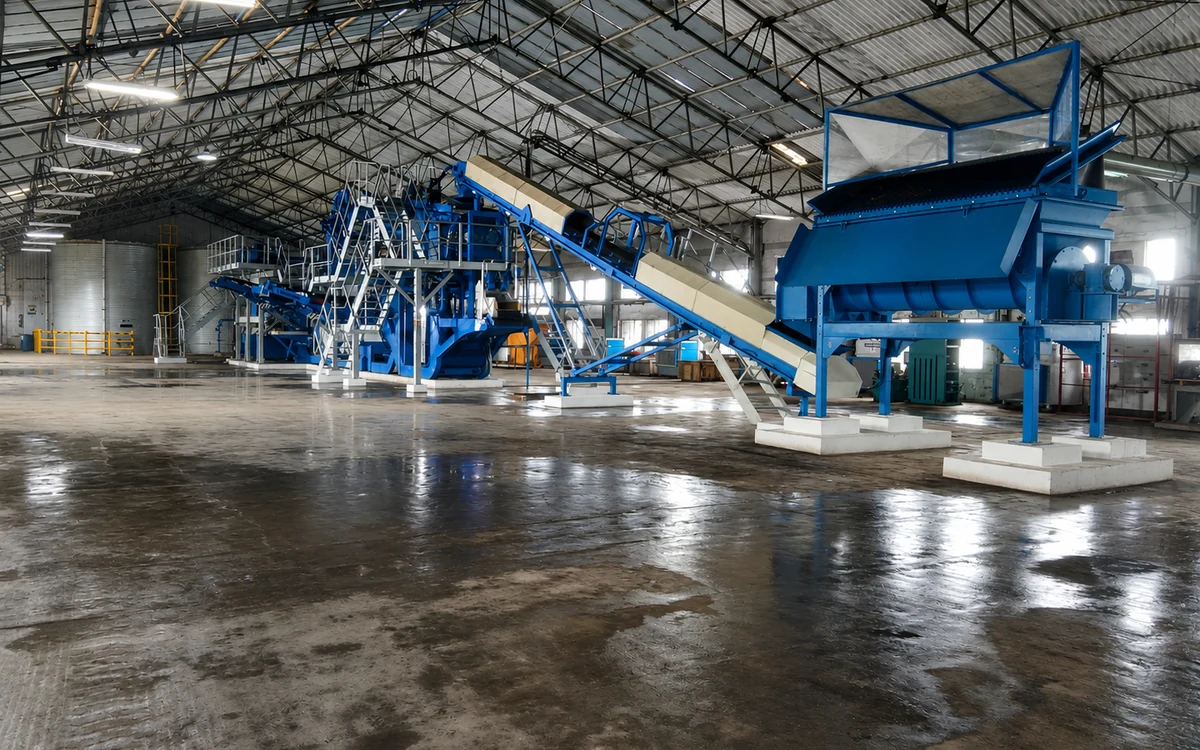
Machines behind these results: Reurban
Frequently asked questions
What is contaminated soil remediation?
Treating contaminated soil so that it no longer presents a risk to health or the environment. It can be done in place, which is in-situ remediation, or by excavating the material and treating it, which is ex-situ. CFlo specialises in ex-situ soil remediation by wet processing.
What is soil washing and how does it work?
A mechanical process, not a chemical one. The soil is scrubbed so that contamination bound to particle surfaces is liberated, screened and washed so the clean fractions leave clean, and classified so the contamination, which concentrates in the fines, is separated out. You end up with a large volume of reusable material and a small volume for specialist treatment.
Which contaminants can be treated this way?
It depends less on the contaminant than on where it sits. Where contamination is bound to particle surfaces or concentrated in the fine fraction, soil washing separates it effectively, as it did with mercury at Kodaikanal. Where a contaminant is uniformly distributed through the mass or dissolved in it, another technique is needed. Testwork on your own material is what settles it.
Is contaminated soil remediation cheaper than digging and dumping?
Usually, and the gap widens as landfill tax rises. Disposal costs you the tax, the haulage and the imported fill to replace what you removed, and you still own the liability of having moved contaminated material. Remediation recovers most of the volume as reusable material and leaves only a small fraction to be dealt with.
What happens to the contaminated fraction?
It is concentrated into the sub-75 micron fines, dewatered, and stockpiled under cover for specialist treatment under your hazardous waste management arrangements. At Kodaikanal that meant mercury recovery by retort. Because it is a small fraction of the original volume, the expensive treatment is applied to very much less material. We build the plant that achieves that reduction; the licensed handling and final treatment of the concentrate sits with your specialist contractor.
Can a contaminated soil washing plant fit on a constrained site?
Yes, and it usually has to. Contaminated soil tends to be where people are. CFlo plants are modular, which is what allowed the Kodaikanal plant to be laid out compactly and commissioned in the space available.
What is a Site-Specific Target Level?
The cleanup number a regulator sets for a particular site, rather than a generic national limit. At Kodaikanal it was 20 mg/kg of mercury in soil. It is the figure the plant has to be designed around, because it decides how completely the contamination has to be liberated from the material and how sharply the contaminated fines have to be separated from the clean fractions.
Who was the Kodaikanal remediation carried out by?
By Hindustan Unilever Limited, under the guidance of CSIR-NEERI and the Indian Institute of Soil and Water Conservation, and monitored by the Scientific Experts Committee constituted by the Supreme Court Monitoring Committee and by the Tamil Nadu Pollution Control Board. CFlo's role was to supply, install and commission the wet processing plant that treated the soil.