
Secondary Aggregate Processing
Turning steel slag and incinerator ash into graded aggregate, and recovering the metal that comes with them.
PlatformsReurban
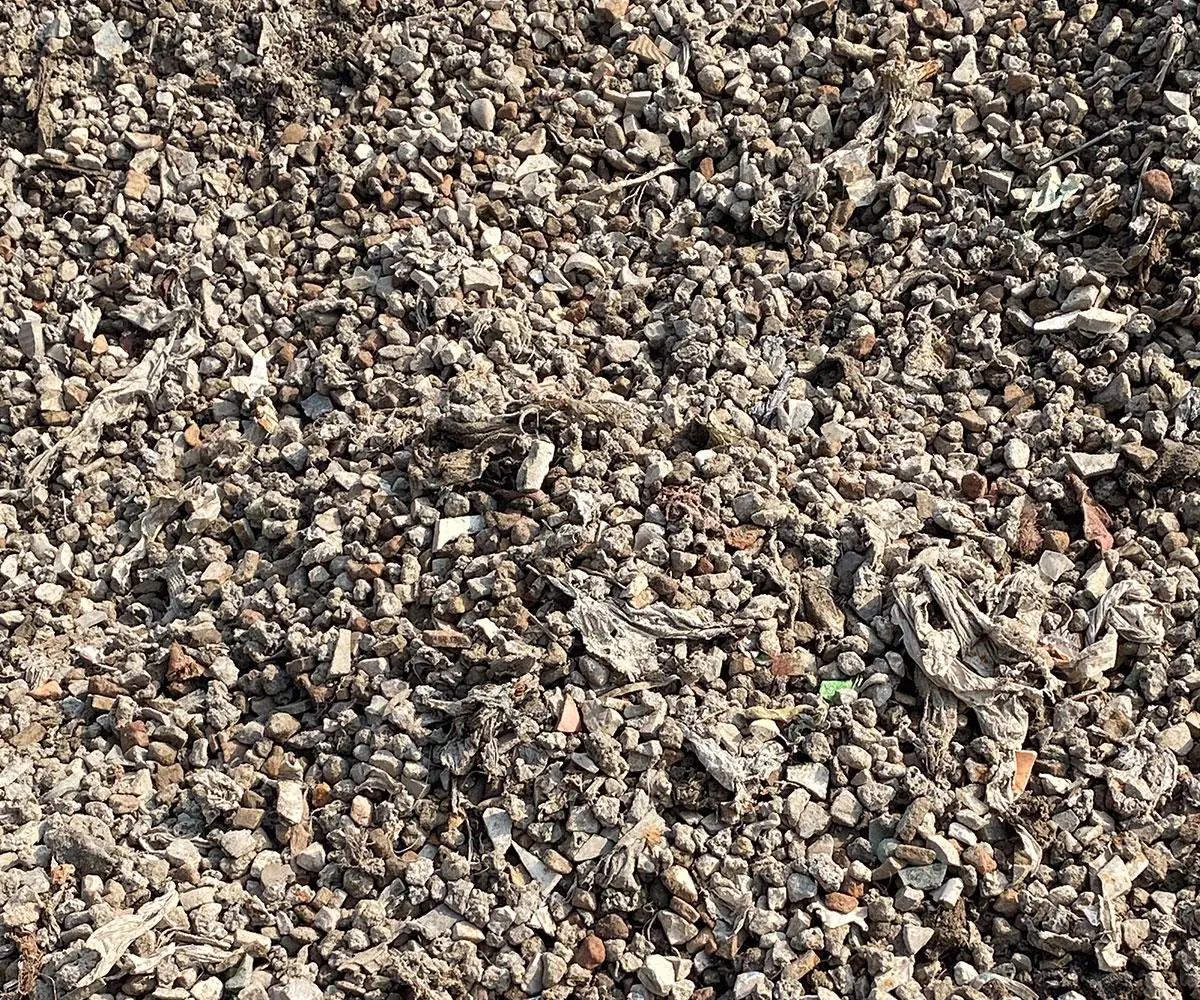
Secondary aggregate is a by-product from another industry put to use as aggregate, most commonly slag from steel making and ash from incineration. The material is already above ground and requires no extraction, but it arrives with metals, unburnt residue and fines that must be removed before it performs as aggregate. Washing and grading convert the by-product into a specified product, and on a slag stream the recovered metal contributes a second return alongside the aggregate.
What secondary aggregate is
Aggregate is normally classed by where it was won: dug from a pit, dredged from the sea bed, or blasted from a quarry face. Secondary aggregate is the category for material that was not won at all. It is what another process left behind, and the two large streams are slag from steel making and ash from incineration.
The commercial case is straightforward. The material already exists above ground, and storing it is usually a cost. Processing it displaces quarried stone, removes that liability, and in the case of slag recovers metal of value in its own right. See where it sits among the other types of aggregate.
Steel slag
Slag is the mineral fraction that separates from molten metal in a furnace. Cooled and crushed it looks like aggregate and behaves largely like it, which is why it has been used in road construction for a long time.
Three factors stand between raw slag and a specified product. Entrained metal is the first, and recovering it is often worth more per tonne than the aggregate around it. Free lime and magnesia are the second: certain slags expand on hydration, so weathering or ageing forms part of the accepted route before the material is used in bound applications. Fines and dust are the third, and are the conventional aggregate problem a wash plant is designed to address.
Washing addresses the first and third directly. Wet processing liberates and separates the metallic fraction far more effectively than dry screening, and it takes the fines out so the graded product holds a band rather than drifting with the weather.
Ash and incinerator bottom ash
The other large secondary stream is ash. Incinerated bottom ash, the residue left after waste-to-energy combustion, is a genuine aggregate feedstock once the metals and unburnt material are taken out of it, and it is already used in bulk fill, asphalt, blocks and concrete.
That stream has its own page, because the processing route is specific to it. See incinerated bottom ash recycling.
Why washing rather than crushing alone
A dry crush-and-screen circuit produces a product priced as fill, because it cannot remove what a specification measures. The contaminants in a secondary stream are more varied than in a natural deposit, not less, and they are the ones a buyer tests for.
A wash plant separates by density and by size simultaneously, allowing the metallic fraction to be recovered as a product, and removes the fines so the aggregate holds a grading. The closed water circuit makes this practical close to a works: around 95% of process water is recovered, and the solids leave as a filter cake rather than to a lagoon.
Sizing a plant for a by-product stream
By-product streams vary more than quarried rock, since they reflect the operation of the parent process. That variation is the principal design consideration and cannot be resolved from a catalogue.
We pilot the material at our material testing lab and design from the measured result: what the metal content actually is, how the fines behave, and how much the stream moves between batches.
The related CFlo platform
The related CFlo platform for secondary aggregate duty is the Reurban wet processing system, which washes and classifies the mineral fraction into usable aggregate once the contaminants are out.
Recycled, as distinct from secondary
Secondary aggregate is a by-product of another industry. Material recovered from construction work is recycled aggregate, and where it is washed rather than dry screened it is washed recycled aggregate. The two are treated separately in specifications.
Frequently asked questions
What is secondary aggregate?
By-products from other industries put to use as aggregate, for example slag from steel making or ash from incineration. The defining feature is that the material was produced by another process rather than quarried for the purpose.
Is slag suitable for concrete?
Some slags are, after processing. The considerations are recovering the entrained metal, removing the fines, and managing expansion where free lime or magnesia is present, which is why weathering or ageing is part of the accepted route before bound applications.
Why wash slag instead of just crushing and screening it?
Because dry processing cannot recover the metallic fraction efficiently or remove the fines that a specification measures. Wet processing separates by density and size at once, which turns the metal into a recovered product and lets the aggregate hold a grading band.
Is incinerator bottom ash a secondary aggregate?
Yes. It is one of the two largest secondary streams alongside steel slag, and it is used in bulk fill, asphalt, blocks and concrete once metals and unburnt material are removed. It has its own dedicated page.
Does processing secondary aggregate pay for itself?
In many cases. The aggregate displaces bought-in quarried stone, and on a slag stream the recovered metal has value of its own. The material is already on site, so there is no extraction cost.