
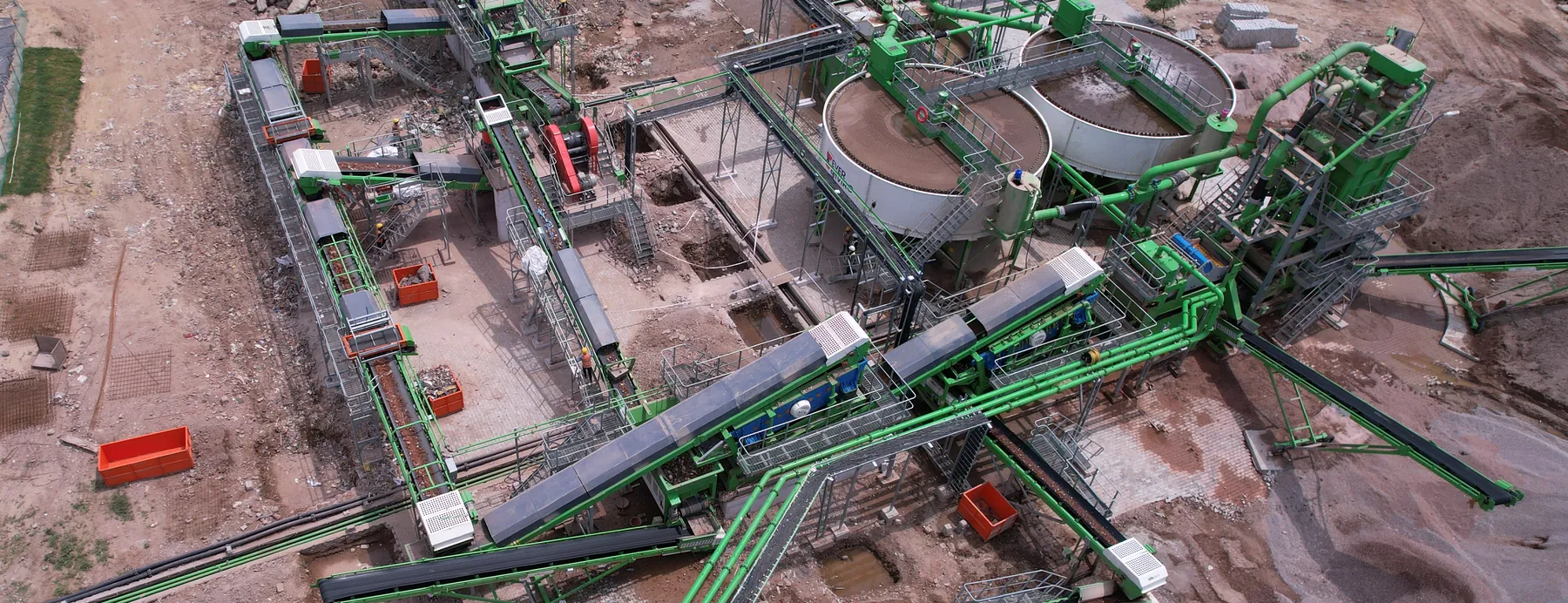
Washed recycled aggregate is aggregate recovered from soils, excavation arisings and demolition waste, then washed rather than only crushed and screened. Washing separates the clay, silt and light contamination from the stone, which is what lifts the product from fill and sub-base to graded aggregate and recycled sand a concrete plant will accept. The feed is usually soils and excavation arisings rather than demolition rubble.
Dry screening puts a ceiling on the product
Most recovered construction material is crushed and screened dry. That sorts it by size, but it does nothing about what is stuck to it. Clay and silt stay on the stone, gypsum stays in the mix, and timber, plastic and foam travel with the light fraction.
The result grades out as fill and sub-base. It is a real product with a real market, but it is the low end of one, and it is priced accordingly. Washing changes the ceiling rather than the tonnage: the same feed, processed wet, yields graded aggregate and a recycled sand with a controlled fine fraction.
Where the feed comes from
Three streams produce it, and each is covered on its own page because each needs a different arrangement of the plant.
Soils and excavation waste is the largest by volume. Excavation arisings are a mix of soil and stone, and washing separates them.
Construction and demolition waste is the recognisable stream. The contamination is physical as much as mineral: reinforcing bar, timber, plastics and gypsum, so scalping and trash removal come before scrubbing.
Incinerated bottom ash needs washing to remove salts and residual metals before it behaves like an aggregate at all.
Where the material is chemically contaminated rather than simply dirty, the duty becomes remediation and the obligations change. See contaminated soil and PFAS contaminated soil.
Why the natural alternative is getting scarcer
In Great Britain the reserves that would otherwise supply this material are not being replaced. Across 2014 to 2023, for every 100 tonnes of sand and gravel consumed, new planning permissions were granted for about 61 tonnes, and for crushed rock about 33 tonnes. The Mineral Products Association, which publishes those figures, has said this is not sustainable in the medium term.
Recovered material is the fraction that can grow without a new mineral permission, and washing is what makes it saleable into the higher-value uses. That is the reason the washed share of recycled supply is growing faster than recycled supply itself.
What the product has to satisfy
Selling recovered material as a product rather than moving it as waste depends on two things: a specification it consistently meets, and a documented regime showing that it does. In Britain that means grading to the relevant standard, BS EN 12620 for concrete aggregates or BS EN 13242 for unbound and hydraulically bound mixtures, under factory production control.
A washed product with a controlled fine fraction is materially easier to evidence than a dry-screened one, because the number that certificates report is fines content, and washing is how you control it. It is also the condition on which recovered material stops being waste.
The plant that does it
The Reurban is built for this duty: scalping and trash removal, attrition scrubbing, classification and dewatering on a modular chassis, with up to 95% of the process water recycled. Each plant is configured for its feed, because clay content and contamination decide the arrangement more than tonnage does.
Because the material is heavy and low value until it is processed, the plant is designed to work where the arisings are rather than at a distant facility. Moving spoil out and aggregate back in is usually the largest avoidable cost on the job.
For a site that also has crushed rock or a natural deposit to wash, the Combo covers that duty, and the two run as separate lines rather than one circuit.
What we need to size it
A sample, its clay and silt content, the proportion of stone to soil, the contamination you expect, and the specification the product has to meet. Material is piloted at our material testing lab rather than sized from a table, because two excavation feeds from the same city behave differently.
Frequently asked questions
What is washed recycled aggregate?
It is aggregate recovered from soils, excavation arisings or demolition waste that has been washed rather than only crushed and screened. Washing removes the clay, silt and light contamination stuck to the stone, so the product grades out as aggregate and recycled sand instead of as fill.
How is it different from recycled aggregate?
Recycled aggregate is the broader term for any aggregate recovered from construction and demolition waste. Washed recycled aggregate is the part of it that has been through a wet process, which is what allows the fine fraction to be controlled and the product to be certified into higher-value uses.
Is the feed usually demolition rubble?
Not in the largest volumes. Demolition rubble is the recognisable stream, but most washed recycled aggregate is produced from soils and excavation arisings, which arrive as a mix of soil and stone that washing separates.
Can washed recycled aggregate go into concrete?
Where it meets the grading and the fines limits of the relevant standard, and is produced under factory production control, yes. Whether a given feed reaches that depends on what is in it, which testwork establishes rather than a general claim.
What happens to the fines that are removed?
They leave as tailings. The Easysettle sludge bay manager rigidifies them at the point of disposal so water is released immediately, which keeps the lagoon footprint small and returns recycled water to the plant faster. Mechanical dewatering can be specified where there is no room for lagoons.
Does the plant have to sit at a fixed facility?
No. The plant is modular and ships in containers, and it is normally sited where the arisings are. That removes one of the two haulage movements a distant facility requires, which on this material is the largest single cost.