
Soils and Excavation Waste Recycling
Separating the stone from the soil where it is dug, instead of paying to haul both away.
PlatformsReurban
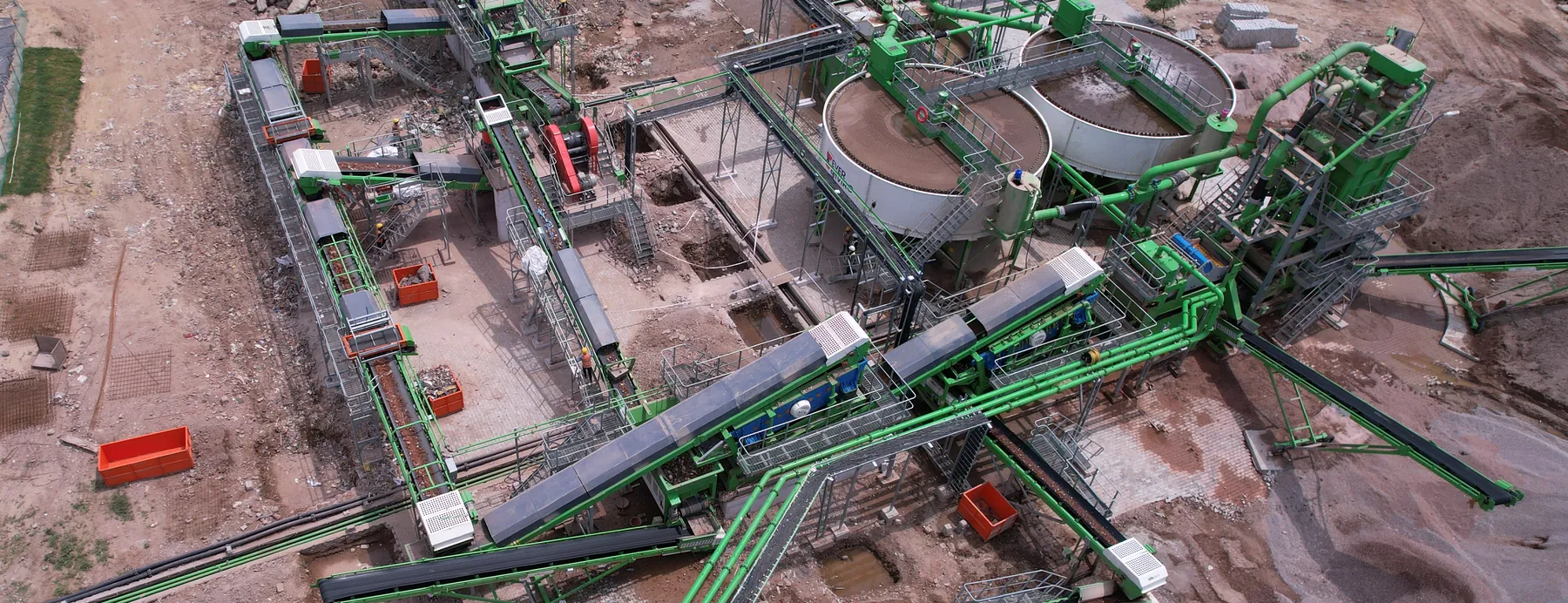
Excavation arisings are usually a mixture of soil and stone, and hauling the whole mixture off site means paying to move and tip material that is largely useful. Washing separates the two on site: the stone becomes graded aggregate, the sand fraction becomes usable sand, and only the genuine fines leave. Muck away tonnage falls, and what stays behind is a product rather than a cost.
The cost is in the movement, not the material
A basement, a foundation, a utility trench or an infrastructure cutting all produce the same thing: tonnes of mixed soil and stone that the programme treats as something to be removed. The cost is counted in loads out, tipping charges and landfill tax, and it is paid on the whole tonnage regardless of what is in it.
The material itself is not the problem. On many sites more than half of it is stone and sand that would be bought back in as aggregate later in the same job. Dig and dump pays to remove it and then pays again to replace it.
What is actually in excavation arisings
Three things, in proportions that vary with the geology and with how the excavation was carried out. There is stone, which is aggregate once it is clean. There is a sand fraction, which is sand once it is graded. And there is soil, clay and silt, which is the only part that genuinely has to leave.
Dry screening will not separate them, because clay does not release from stone by being shaken. It coats it. That is why a screen produces a dirty oversize and a blinded deck, and why the honest answer for mixed arisings is a wet process.
Washing on site, so the tonnage never leaves
Scrubbing breaks the bond between the soil and the stone under pressure, classification splits the sand from the fines, and dewatering returns both as stockpiled product. Only the fines leave as tailings, and up to 95% of the process water is recycled back into the plant.
Because the plant is modular and ships in containers, it works at the excavation rather than at a distant facility. That matters more here than on almost any other duty: the material is heavy, low value until it is processed, and priced by the load.
What you get back, and what it is worth
Clean graded stone, usable as site-won aggregate or sold on. A sand fraction that can be graded for concrete or bedding. And a much smaller volume of genuine fines to remove, which is where the tipping saving comes from.
Where the recovered material is to be sold rather than reused on site, it becomes washed recycled aggregate, and the specification and factory production control requirements on that page apply.
When it is contamination rather than dirt
Soil that is chemically contaminated is a different duty with different obligations, and washing is part of a remediation scheme rather than an aggregate recovery one. See contaminated soil, and PFAS contaminated soil where those compounds are suspected.
Tunnelling is also its own case. A tunnel boring machine produces bentonite slurry rather than mixed arisings, and that is treated in a slurry treatment plant. See tunnelling and excavation waste.
The plant
The Reurban is the platform for this work: scalping, trash removal, attrition scrubbing, classification and dewatering on one modular chassis. The configuration follows the feed, and on this duty the deciding variable is clay content, because clay is what determines how much scrubbing energy the material needs.
What we need to size it
A representative sample, the proportion of stone to soil, the clay content, the tonnes per hour the excavation programme will produce, and what you intend to do with the recovered stone and sand. Material is piloted at our material testing lab, because two sites in the same city rarely behave the same way.
Frequently asked questions
What are excavation arisings?
They are the material an excavation produces: a mixture of soil, clay, sand and stone taken out of the ground for basements, foundations, utilities or infrastructure. In British practice the removal of that material off site is usually called muck away.
Can excavation waste be screened rather than washed?
Screening sorts by size but does not remove the clay coating the stone, so it produces a dirty oversize and blinds the deck on wet or clayey material. Where the arisings are largely clean and granular a screen may be enough. Where clay is present, separation needs a wet process.
How much of the material can typically be recovered?
It depends entirely on the geology and how much of the arisings is stone and sand rather than soil. That proportion is the first thing testwork establishes, because it decides both the plant configuration and whether the economics work at all. It is measured on your sample rather than estimated from a percentage.
Does the plant have to be on the excavation site?
No, but that is where it pays best. The material is heavy and cheap until it is processed, so the haulage is the dominant cost. Processing at the excavation removes a load out and a load back in.
What happens to the soil and fines that are removed?
They leave as tailings, rigidified at the point of disposal by the Easysettle sludge bay manager so water releases immediately and the volume to remove is as small as possible. Recycled water returns to the plant.
Is this the same as contaminated soil remediation?
No. This is separating useful aggregate from ordinary soil. Where the soil is chemically contaminated, the work becomes remediation, with its own testing, consenting and disposal requirements. Those duties are covered separately.