
PFAS Contaminated Soil
Nothing in a washing circuit destroys PFAS. Concentrating it into a fraction of the volume is what makes the problem affordable.
PlatformsReurban
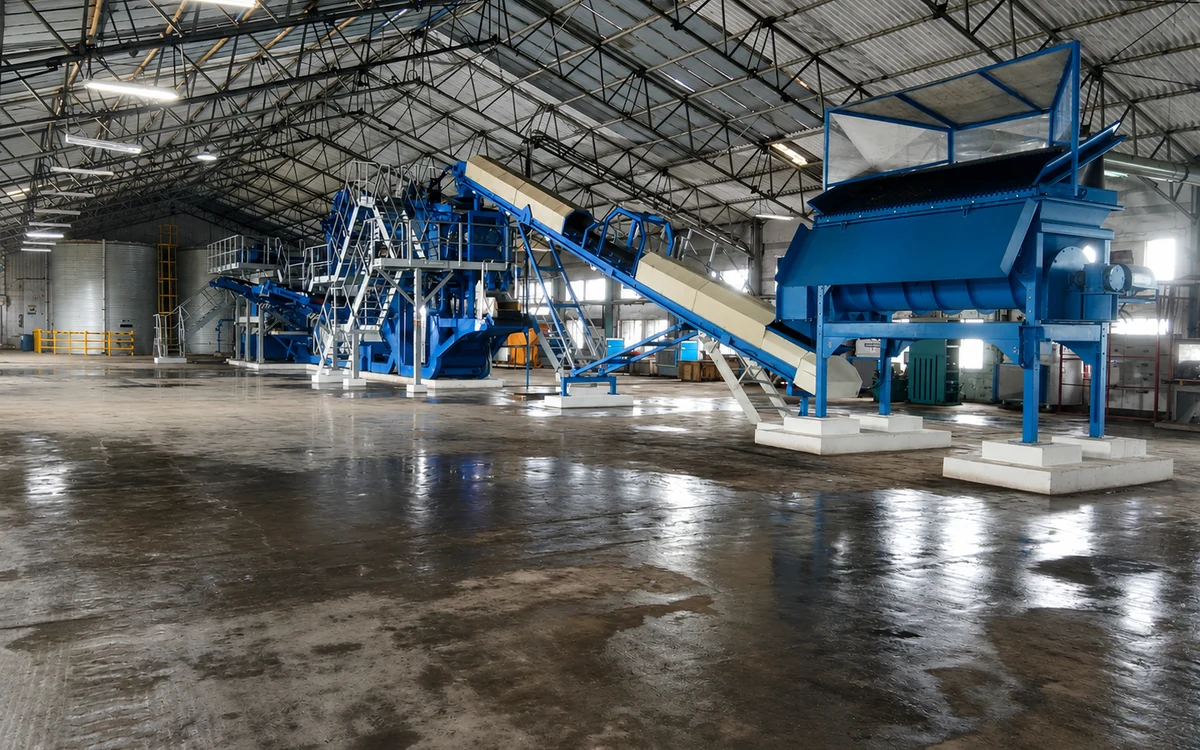
Soil washing does not destroy PFAS. What it does is separate the soil into a coarse fraction that can be washed clean enough to reuse and a fine fraction that holds most of the PFAS, so the small volume that genuinely needs specialist treatment or disposal is a fraction of what you excavated. The wash water carries PFAS and is treated by granular activated carbon or ion exchange before it is reused or discharged.
Start with what soil washing cannot do
There is a lot of loose language in this market, so here is the position plainly.
PFAS are called forever chemicals because the carbon-fluorine bond is extraordinarily stable. Destroying them takes high temperature incineration, supercritical water oxidation, plasma or similar. No washing plant destroys PFAS, and any supplier implying otherwise is selling you something that does not exist.
What a washing plant does is move PFAS around, deliberately and usefully. That turns out to be worth a great deal, because the cost of dealing with PFAS scales with the tonnage you have to treat.
Why separation works on PFAS
PFAS adsorb onto particle surfaces, and surface area per tonne rises steeply as particles get finer. A tonne of silt and clay has vastly more surface than a tonne of gravel, so the fine fraction carries most of the contamination. Field and laboratory work consistently finds PFAS concentrations in the fines several times those in the sand and gravel fractions.
That is the same physics as the mercury work at Kodaikanal, and it supports the same approach: liberate and separate. Scrub the coarse material so the contaminated film and adhering fines come off it, classify so the fines report to their own stream, and you have split one large problem into a large clean stream and a small dirty one.
Published work on ex-situ PFAS soil washing reports high removal from the sand and gravel fractions and much lower removal from the silt and clay, which is exactly what you would expect: the coarse material gives up its contamination readily, the fines hold onto theirs. The implication is not that the method fails. It is that the fines are where the PFAS ends up on purpose, and that is the stream to send for specialist treatment.
Volume reduction
On a typical soil the coarse fraction is the great majority of the mass. If that comes back sufficiently clean for its intended reuse, and the PFAS concentrates into the minority fine fraction, then whatever you do next, thermal treatment, stabilisation, or a licensed landfill, you are doing it to far less material.
Since PFAS disposal and destruction are charged by the tonne and are expensive, that ratio is usually what decides whether a site is economic to remediate at all.
The water is not an afterthought
This is where PFAS differs from most contaminants a washing plant deals with, and where projects go wrong.
The wash water will contain PFAS. It is mobile in water, so it does not stay politely in the solids, and PFAS in a discharge is a serious regulatory matter. Any credible PFAS soil washing plant therefore has a water treatment stage: granular activated carbon, ion exchange resin, or both in series, treating the process water so it can be recirculated inside the plant rather than discharged.
CFlo builds the washing and separation plant and the closed water circuit around it: the Hydromax thickener recovering the bulk of the water and the solids handling behind it. The PFAS-specific polishing media are specified and supplied with specialist partners, because that is their field and not ours. What we take responsibility for is that the circuit is closed, that the water goes to the polishing stage rather than to ground, and that the plant integrates with it properly.
Testwork is not optional here
For most materials, pilot testing sizes a plant. For PFAS it decides whether the project is viable.
You need to know how the PFAS is distributed across the size fractions in your soil, how clean the coarse fraction actually comes, what the wash water will contain, and therefore what the polishing stage has to handle and what the residual volume will be. None of that is transferable from another site. Send a representative sample, and the numbers in the proposal will be from your material.
Where PFAS turns up
Fire training grounds and airports, where firefighting foam was used for decades; defence sites; some manufacturing and landfill sites; and increasingly ordinary redevelopment land where nobody expected it until it was tested for.
The related work is on the contaminated soil remediation page, and the equipment is the same: Scrubmax for liberation, classification and screening to make the cut, and Hydromax with a filter press or Easysettle behind it.
The related CFlo platform
The related CFlo platform for soil washing duty is the Reurban wet processing system, which scrubs the contamination off the coarse fraction and concentrates it into the fines for disposal.
Frequently asked questions
Does soil washing remove PFAS?
It removes PFAS from the coarse fraction and concentrates it in the fines and the water. It does not destroy it. The value is volume reduction: the material that still needs expensive treatment becomes a small share of what you excavated.
What happens to the PFAS afterwards?
The fine fraction goes for specialist treatment or licensed disposal, and the process water goes through granular activated carbon or ion exchange. Destruction, where it is required, needs thermal or advanced oxidation processes that are a different industry from ours.
Can the washed coarse fraction be reused?
That depends on your regulator and the reuse you have in mind, and it has to be demonstrated by testing rather than assumed. Published trials report high removal from sand and gravel fractions, but the acceptance criteria are a matter for the environmental regulator on your site.
Why can you not just treat the whole soil mass?
You can, and it is usually unaffordable. Treating every tonne with a process capable of dealing with PFAS costs many times what separating the soil first does. Concentrating the contamination is what brings the treatable volume down to something a project can carry.
Do you supply the water treatment as well?
The washing plant and the closed water circuit are ours. The PFAS-specific polishing media, activated carbon and ion exchange, are specified and supplied with specialist partners. We integrate them and take responsibility for the circuit being closed.
How do we find out whether this will work on our site?
Testwork, and there is no shortcut. We need to see how PFAS is distributed across the size fractions of your soil, because that ratio determines both the volume reduction you will achieve and what your water treatment has to handle.