
Hydromax Water Recycling System
One tank instead of a pond field. Clean water back to the plant, sludge out on a controlled cycle.
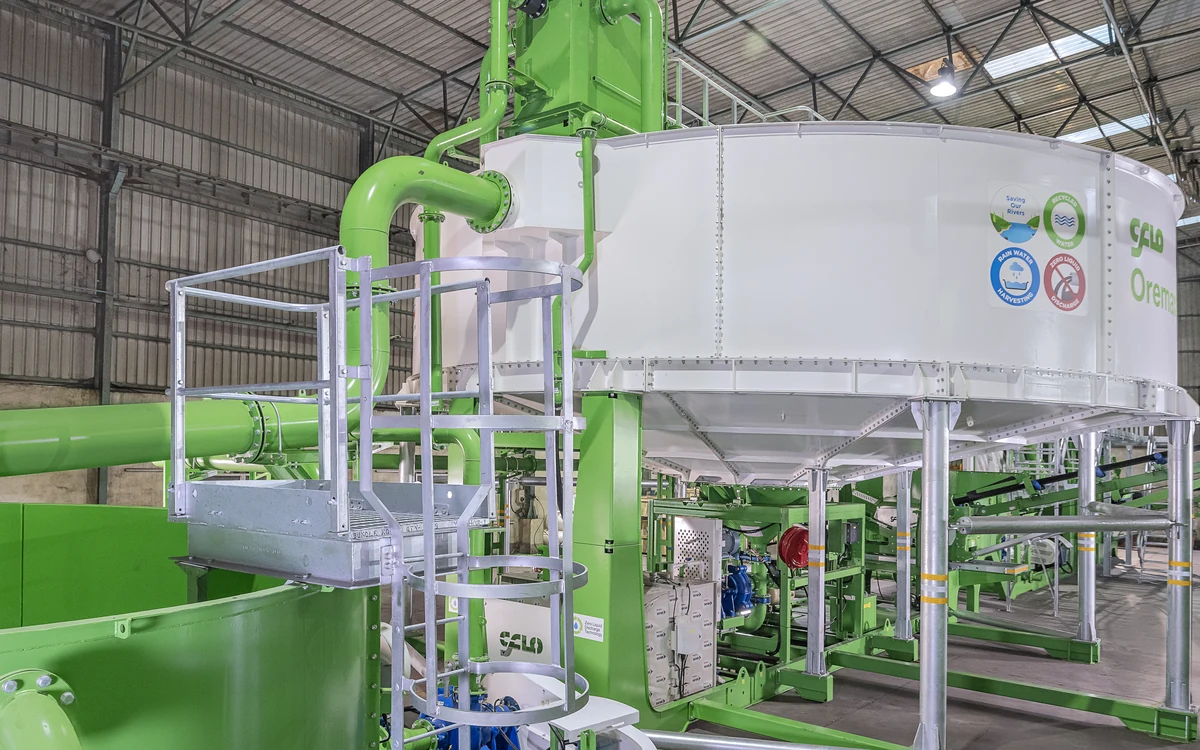
The CFlo Hydromax is a high-rate thickener that separates solids from process water and returns the clean water to the wash plant. It replaces a field of settling ponds with one engineered tank, discharging thickened sludge on a controlled, automatic cycle. Hydromax is built into every CFlo flagship plant as standard, and is also supplied on its own to close the loop on a plant you already run.
What a thickener is for
A wash plant leaves you with dirty water. The traditional answer is a series of settling ponds: they occupy ground that could hold reserves or stockpiles, lose water to evaporation and seepage, need cleaning out by excavator, and overflow when it rains hard.
A high-rate thickener does the same job in one tank and in minutes rather than days. Slurry is dosed with flocculant, solids bind and settle, clean water overflows a weir and gravity-feeds back to the plant, and consolidated sludge is pumped out automatically when it reaches depth.
Industries this plant serves
How the Hydromax works
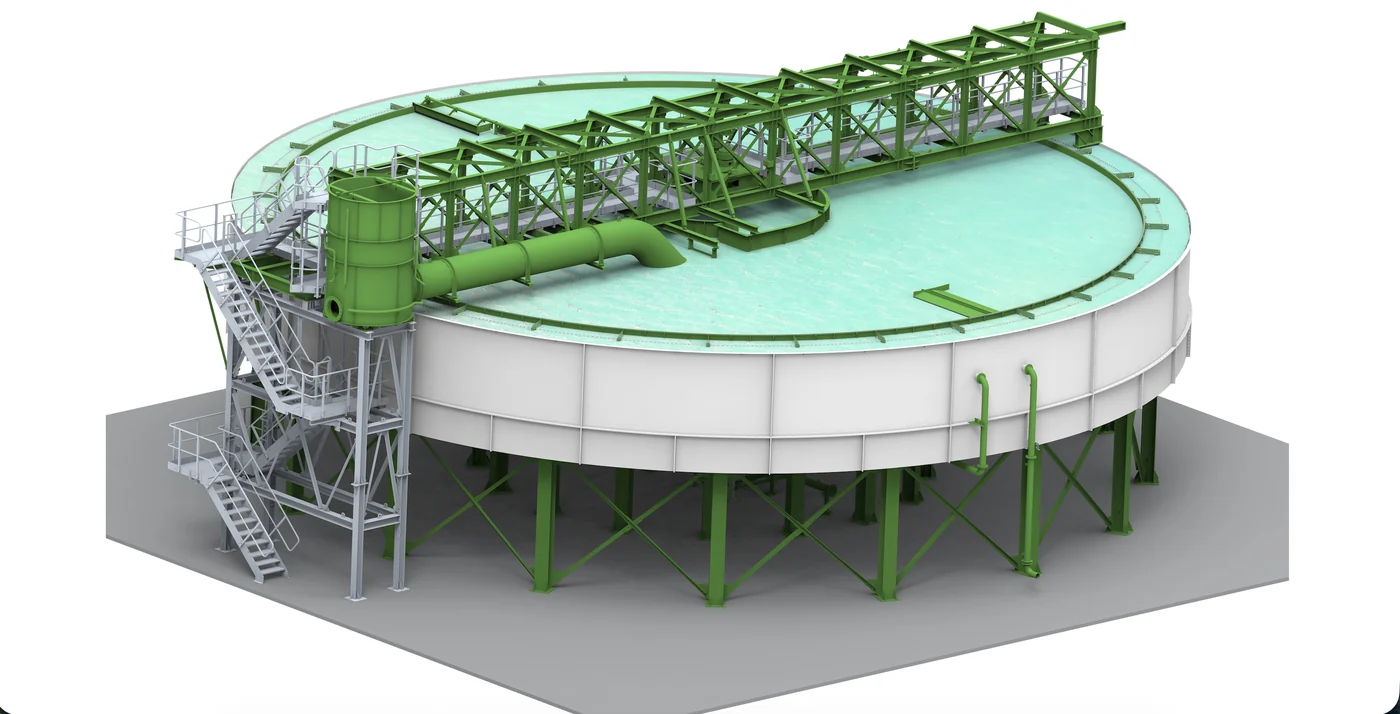
- De-aeration chamber. Slurry meets pre-mixed flocculant at the inlet. A baffle plate releases the air entrained by the feed pump, because air bubbles disturb laminar flow and work against settlement.
- Centre diffusion drum. De-aerated, conditioned slurry enters at the centre of the tank, the furthest point from the overflow weir, so solids have the longest possible travel path in which to settle. Fresh feed passes through the existing sludge bed, putting the flocculant already in it to a second use.
- Four-arm rake. Angled scrapers rotate slowly and continuously, conditioning the bed so that solids consolidate to a pumpable density and sweep to the central cone without dead zones. The drive is torque-monitored for overload protection.
- Peripheral weir. A V-notch profile takes clean water evenly around the full circumference and gravity-feeds it to storage for reuse.
- Automatic de-sludge. Level probes trip a pneumatic knife valve and the sludge pump together. When the level falls, the valve closes and the pipework back-flushes itself before the cycle repeats.
Built for a quarry, not a laboratory
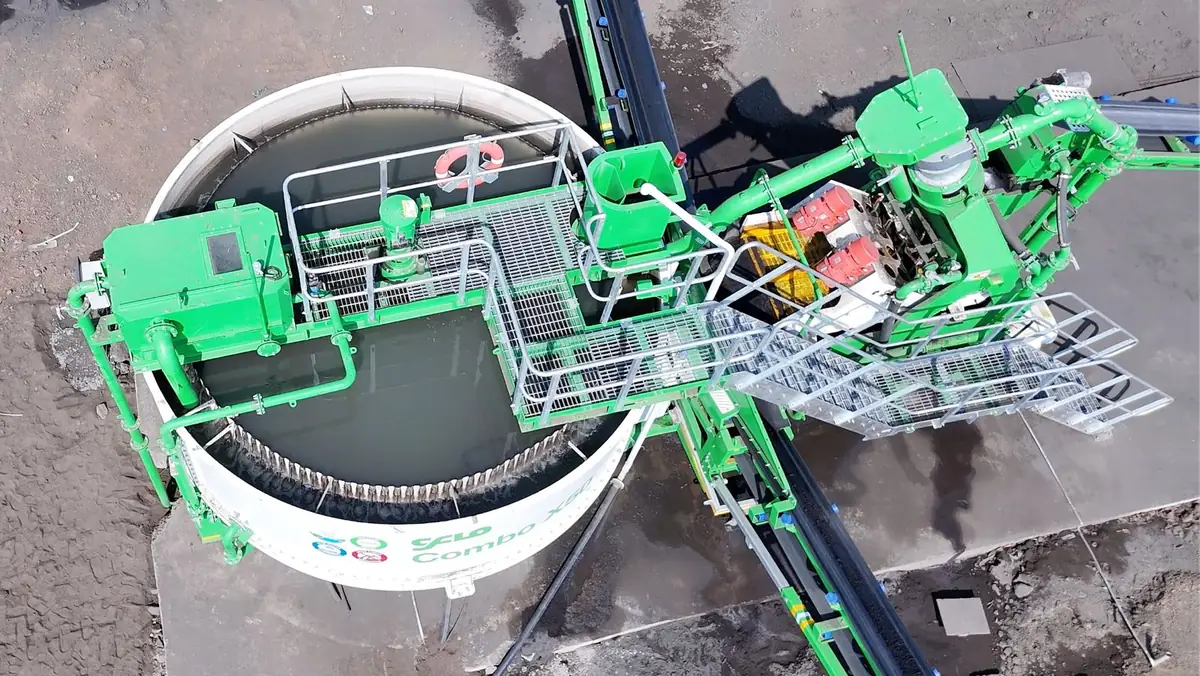
The tank is mild steel bolted sectional construction, so it assembles on site quickly and ships worldwide in standard open-top containers with minimal civil works. A full-diameter galvanised bridge and walkway bolts to the tank wall, giving safe access for sampling and maintenance with no rotating structure to work around. The sludge pumping station is modular, pre-wired and factory tested.
Polydex dosing
Every Hydromax is matched with a Polydex polymer dosing station: a loading hopper and screw feeder for powder polyelectrolyte, a mixing tank with twin propellers and ultrasonic level sensing, and a dosing pump with in-line dilution and variable speed drive.
The reason it is a batch system rather than a continuous one is that polymer needs time to hydrate. Dosed before it has aged, it works poorly, consumption rises and dosing pumps block. Polydex mixes, ages and doses in sequence so every batch is fully activated before it leaves the unit.
Pairs with Easysettle or a filter press
A thickener recovers your water. It does not, on its own, solve what to do with the sludge, and that choice depends on your site.
Easysettle rigidifies the sludge as it is discharged to a bay, so it releases its water immediately and dries to a cake firm enough to drive on. It suits sites with room for bays and no requirement for a very low moisture.
A filter press suits constrained sites, cake that has to be trucked, or a moisture specification to hit. CFlo supplies presses through our industry supply chain partners rather than manufacturing them, and designs the circuit around the press, integrates, installs and commissions it under the same single point of responsibility as the rest of the plant.
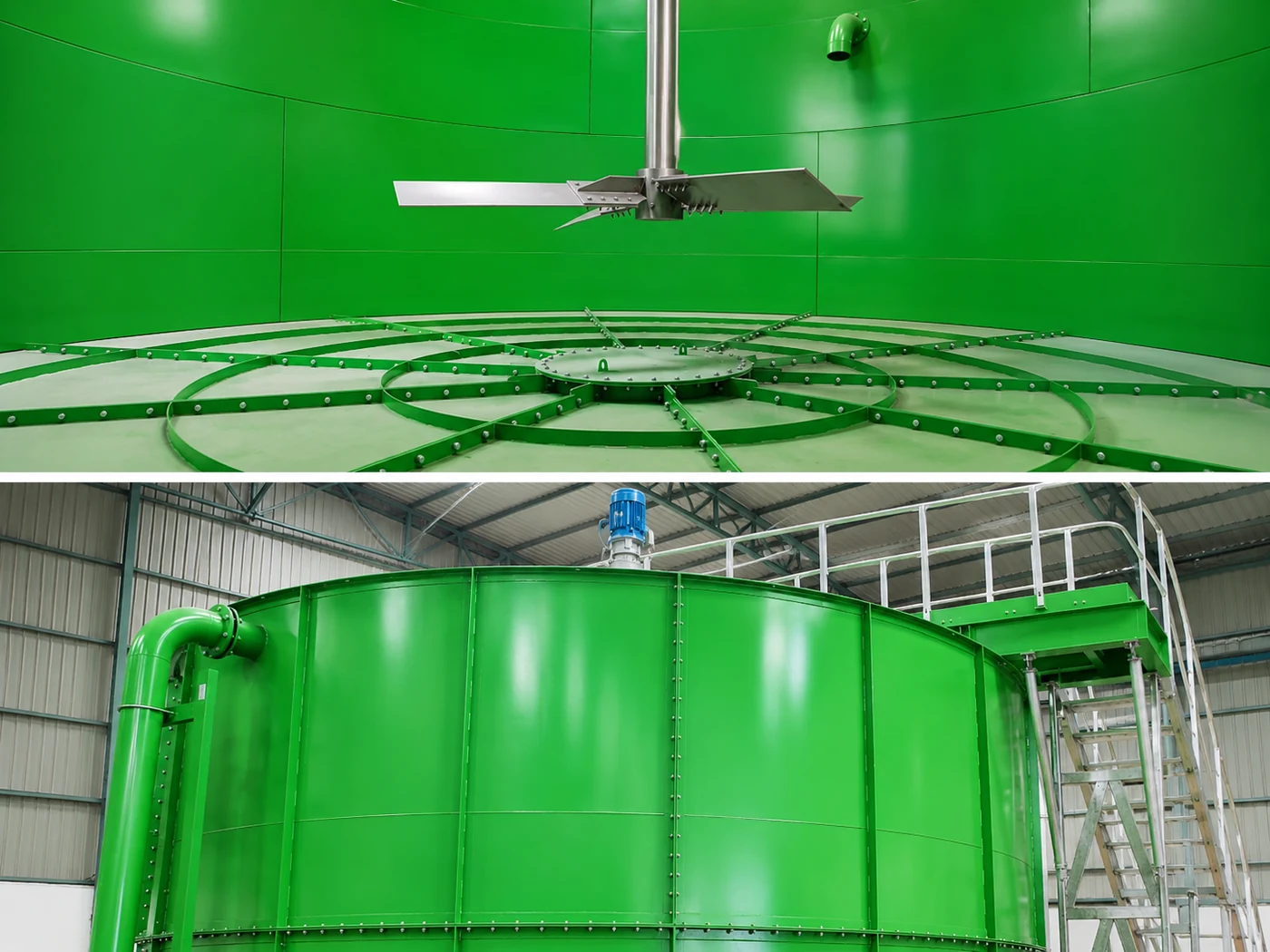
A press works in batches; a thickener discharges continuously. What reconciles the two is a buffer tank with an agitator, sized to hold the sludge between press cycles and keep the solids in suspension so the press is charged with a consistent feed rather than whatever has settled. CFlo builds those too, as bolted sectional tanks on the same principles as the Hydromax itself.
The Hydromax discharges just as readily to a lagoon or a centrifuge where that is what a site already runs.
Beyond wet processing
The same thickener is a clarifier, and the same Polydex station is a polymer dosing plant, which is why the Hydromax also does duty on wastewater and sludge management: sludge dewatering, tank and digester cleanout, stormwater solids and industrial wash water.
Controls
Fully automatic PLC operation, pre-installed, pre-wired and factory tested. Level probes drive the de-sludge sequence, rake torque is monitored continuously with automatic stop on overload, and a high-high sludge level trips the wash plant feed rather than letting the tank overfill. Manual override and manual de-sludge are available, with alarms and an event log on the HMI.
Model range
| Model | Max feed rate (m³/hr) | Sludge solids (tph) | Power (kW) | Polydex | Transport |
|---|---|---|---|---|---|
| H100 | 100 | 5 | 20 | ST15 | 3 x 40 ft OT |
| H200 | 200 | 10 | 25 | ST25 | 3 x 40 ft OT |
| H300 | 300 | 15 | 32 | ST25 | 4 x 40 ft OT |
| H400 | 400 | 20 | 35 | ST40 | 4 x 40 ft OT |
| H600 | 600 | 30 | 40 | ST40 | 5 x 40 ft OT |
| H900 | 900 | 45 | 60 | ST60 | 7 x 40 ft OT |
| H1600 | 1500 | 80 | 75 | ST80 | 8 x 40 ft OT |
| H3500 | 3500 | 175 | 120 | ST120 | 18 x 40 ft OT |
Sizing is driven by hydraulic feed rate first, then solids loading and particle size, the mineralogy of the fines, and where the sludge is going. Surface area is the lever that matters: a wider tank lowers upward flow velocity, keeps settlement laminar and reduces polymer consumption for the life of the plant, which is why undersizing a thickener is a false economy.
Water recycling on a 150-180 tph plant
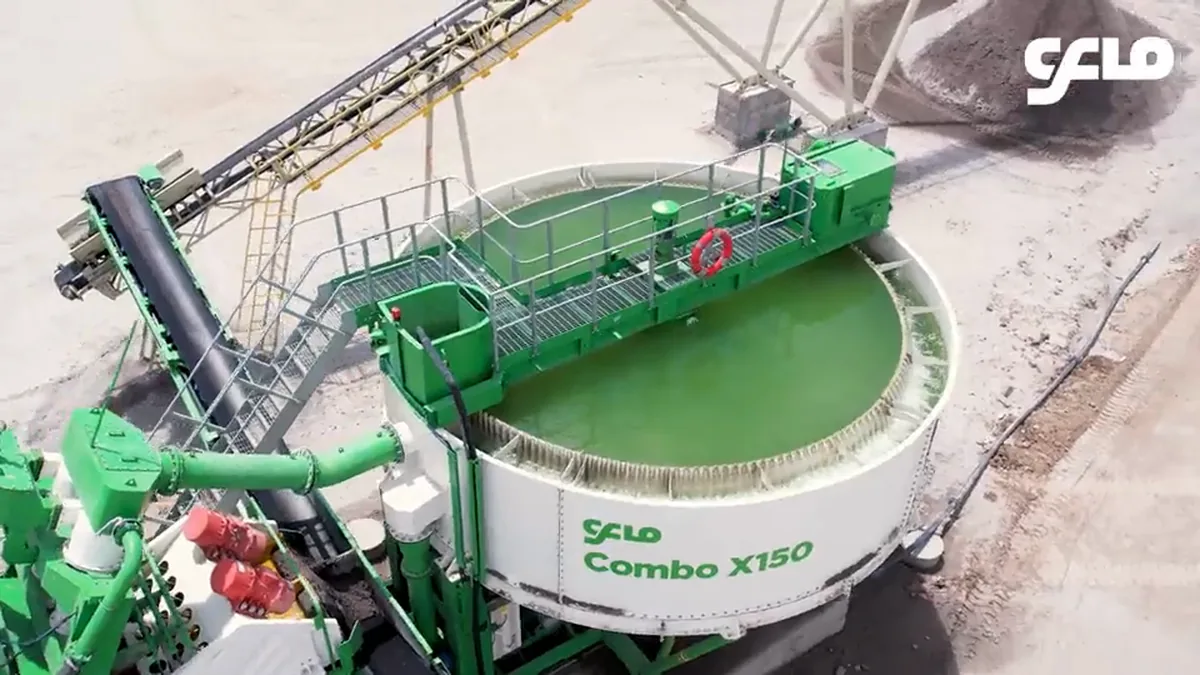
Clarified water returning to the wash plant from a Hydromax thickener.
Frequently asked questions
What is a high-rate thickener?
A tank that uses controlled flocculant dosing to settle suspended solids in minutes rather than days. It gives you clean water to reuse and a thickened sludge you can pump, in one engineered piece of equipment instead of a series of ponds.
Do I need one if I already have settling ponds?
That depends on what the ponds are costing you in land, water make-up, excavator time and compliance risk. A thickener typically pays back on those four, and frees the pond area for stockpiles or reserves.
Can Hydromax be retrofitted to a plant from another manufacturer?
Yes. It is supplied as a standalone system as well as built into CFlo plants, and is designed to bolt onto an existing wash circuit.
What flocculant does it use?
A high molecular weight anionic polyacrylamide, prepared and metered by the Polydex station. CFlo supplies Ecoblu, a medium-anionic grade formulated for fast settling and clear overflow. Dose is set by jar test on your own slurry, because mineralogy, particle size and water chemistry all move the optimum.
What happens to the sludge?
Whatever suits the site: an Easysettle bay, a filter press, a centrifuge or a lagoon. The Hydromax discharges to any of them, and we can supply and integrate the downstream equipment as part of the same scope.
How much civil work does it need?
Little. The tank is bolted sectional steel on modular support legs rather than a site-welded structure on a concrete raft, which is what makes it quick to erect and, if the operation moves, relocatable.
How do I size one?
Give us the hydraulic feed rate in m³/hr, the solids percentage and particle size distribution, the mineralogy of the feed, and where the sludge is going. Better still, send a material sample and we will pilot it rather than size from a table.