
Wastewater and Sludge Management
Take the water out, and what is left is manageable.
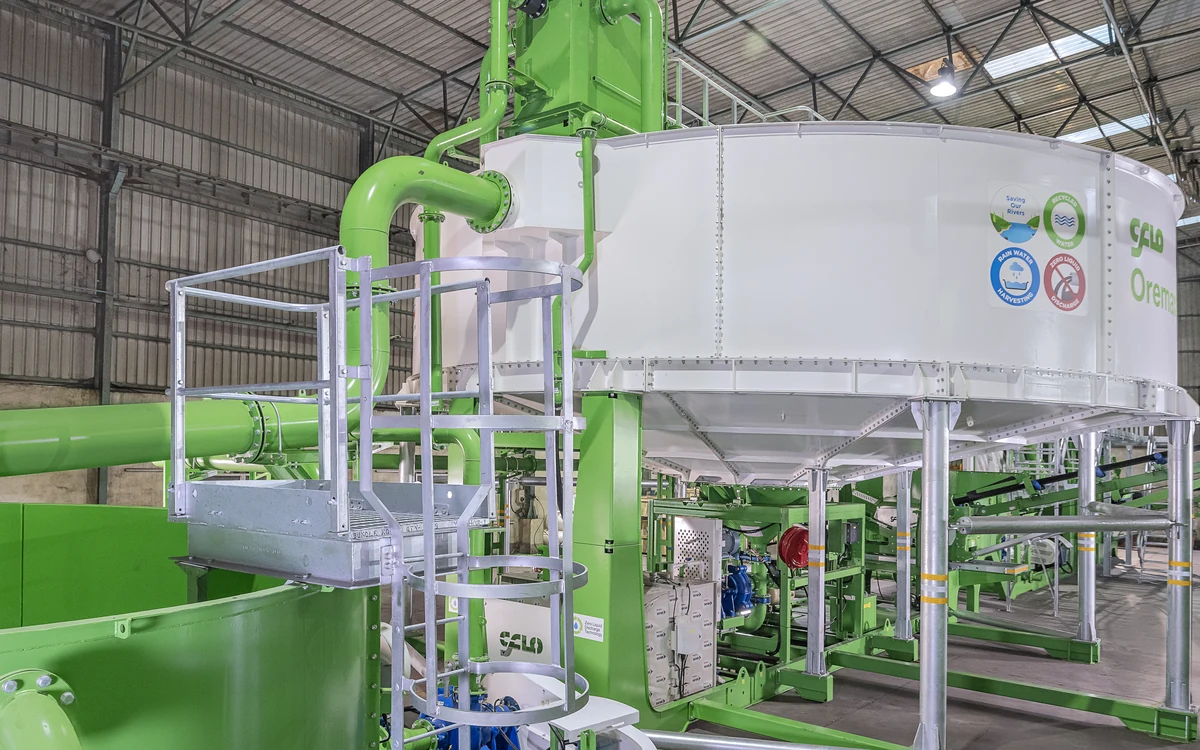
Every wastewater problem is a solids problem wearing a different name. CFlo builds thickening, flocculation and dewatering plants that take a dilute, difficult slurry and split it into clean water and a handleable solid, using the same Hydromax thickeners, Polydex dosing and Easysettle bays that close the loop on our wet processing plants. Where a low cake moisture is required, we supply and integrate filter presses.
Why a wet processing company builds wastewater plants
It is not a diversification. It is the same equipment doing the same job.
A sand washing plant spends most of its engineering effort on one problem: separating a very dilute suspension of fine solids into water clean enough to reuse and a solid dry enough to move. Those two steps are what sludge management consists of. The Hydromax thickener that clarifies wash water is a clarifier; the Polydex unit that conditions the slurry is a polymer dosing plant; the Easysettle system that rigidifies sludge at the point of disposal is a dewatering process.
Wet processing is an unforgiving school for this. A plant washing several hundred tonnes an hour generates sludge continuously, cannot stop when it thickens badly, and pays for every litre of fresh water it has to buy. Equipment that survives that is not troubled by a municipal or industrial duty.
Sludge dewatering
The core duty. A dilute sludge arrives, and it has to leave as clarified water and a solid you can load into a truck.
Flocculant is dosed and aged properly, because polymer that has not hydrated works poorly and raises consumption; that is what the Polydex station exists to prevent. The conditioned slurry enters the thickener at the centre, in laminar flow, and clean water overflows a peripheral weir. Underflow is drawn off at a pumpable density on an automatic cycle.
From there the choice depends on how dry the cake has to be. Easysettle rigidifies the underflow at the point of disposal, releasing its water immediately and drying to a trafficable cake in about 48 hours: cheap, unattended, and right where there is room for bays. A filter press produces a drier cake for a site with no room, a cake that has to be trucked, or a moisture specification to hit. CFlo supplies presses through industry partners, designs the circuit around them, and integrates a buffer tank with an agitator so a batch press can be fed from a continuous thickener.
Tank and digester cleanout
Tanks and digesters accumulate grit and settled solids, and eventually have to be emptied. What comes out is an awkward mixture: heavy grit, biological solids and a great deal of water, usually under time pressure because the asset is out of service while the work is going on.
Treating it on site rather than tankering it away changes both the cost and the duration. Screening and grit removal take out the coarse and abrasive fraction, thickening and dewatering reduce what remains to a solid, and the recovered water goes back rather than being hauled. The tonnage leaving site falls to what is genuinely waste.
Stormwater and gully solids
Stormwater carries the road surface with it: grit, silt, hydrocarbons and litter. Interceptors and chambers fill with it, and so do gully pots.
The solids are largely recoverable mineral rather than waste, which is why this stream sits naturally alongside the road sweepings and gully waste work. Separating the grit, dewatering it and treating the water leaves a small genuine residue instead of a full tanker.
Wash water recovery in industry
Any process that washes something produces dirty water: vegetable and food processing, vehicle and plant washing, concrete truck washout, mineral and industrial washing.
The pattern is always the same. Solids are suspended in water that is expensive to buy and expensive to discharge, and the discharge consent is usually written in terms of suspended solids. Thickening and dewatering address both ends at once: the water is clarified for reuse or for compliant discharge, and the solids leave as a cake rather than as a liability.
Where the water carries an organic load rather than only mineral solids, solids removal is the first stage of the treatment train rather than the whole of it, and we will say so rather than selling a thickener as a complete answer.
What we do and what we do not
CFlo is a solids-liquid separation business. We are very good at taking suspended solids out of water and turning them into something handleable, and at recovering the water.
We are not a chemical or biological water treatment company. Dissolved contaminants, nutrient removal, disinfection and biological treatment are outside our scope, and where a project needs them, our plant is the front end of a train rather than the train. Being clear about that boundary is what makes the part we do supply dependable.
Frequently asked questions
What does a sludge dewatering plant actually do?
It takes a dilute sludge and splits it into two useful things: clarified water that can be reused or discharged, and a solid dry enough to handle and transport. Flocculant conditioning, thickening and then either bay dewatering or a filter press.
Easysettle or a filter press for sludge?
Easysettle where there is room for bays and no requirement for a very low cake moisture: it is cheaper, has almost no moving parts and runs unattended. A filter press where space is tight, the cake has to be trucked, or a moisture specification has to be met. A press also needs an agitated buffer tank to reconcile its batch cycle with a continuous thickener, which we supply.
Can you handle digester and tank cleanouts?
Yes, as a solids separation duty. Grit and settled solids are screened and separated, the remainder is thickened and dewatered, and the water is recovered, so what leaves site is a solid rather than tankers of slurry.
Do you treat dissolved contaminants?
No. CFlo separates suspended solids and recovers water. Dissolved contaminants, nutrients and biological treatment need chemical or biological processes that are not what our equipment does. On those projects our plant is the solids front end of a larger treatment train.
Is this the same equipment as your sand plants?
Yes. The Hydromax thickener, the Polydex dosing station and the Easysettle bay manager were developed for wet processing plants that generate sludge continuously and cannot afford to buy fresh water. A municipal or industrial duty is a gentler version of the same problem.
Can it be retrofitted to an existing works?
Usually. Thickening and dewatering are a discrete stage, so the plant can be inserted into an existing flowsheet with the clarified water returned wherever it is most useful.