
Silica Sand & Glass Sand Processing Plants
Purification of silica sand for solar photovoltaic panels, flat glass and the full range of soda-lime-silica glass products.
PlatformsMicrograder
A silica sand processing plant washes, classifies and beneficiates raw silica deposits into glass-grade sand. Commercial soda-lime-silica glass contains 70–74% silicon dioxide, and low-iron grades for solar photovoltaic panels demand attrition, gravity and magnetic separation and acid leaching. CFlo builds the full modular circuit with up to 95% water recycling.
What is silica sand?
Silica sand is sand whose grains are predominantly quartz, which is silicon dioxide, SiO2. Ordinary construction sand is a mixture: quartz alongside feldspars, micas, clay and fragments of whatever rock the deposit came from. Silica sand is sold on how little of anything else it contains.
Two numbers decide what a deposit is worth. SiO2 says how much of it is quartz. Fe2O3 says how much iron oxide is left, and iron is what discolours glass, so it sets the price. The gap between a deposit and a product is narrower than it sounds and harder to cross than it looks: at Chu Lai in Vietnam the feed assayed about 98.5% SiO2 with roughly 0.5% Fe2O3, which is a good silica deposit and still not a glass sand. Processing took it above 99.3% SiO2 and cut the iron tenfold, to below 0.05%. That last 0.8% of purity is the whole business.
Silica sand comes from quartz-rich deposits of several kinds, and each behaves differently in a plant: dune and desert sand, beach sand, alluvial and river deposits, sea sand, weathered sandstone, and crushed quartz or quartzite.
What silica sand is used for
Glass is the largest market and the most demanding on chemistry. Commercial soda-lime-silica glass, which covers flat and float glass, containers, and solar photovoltaic glass, runs between 70% and 74% silicon dioxide, and all of that silica starts as sand. Beyond glass, the same material is graded for foundry moulding sand, for frac sand and proppant where the grain has to survive downhole crush loads, for ceramics and refractories, for water filtration media, and for the low-iron grades that solar panels need.
Silica sand and glass sand: the difference
Glass sand is not a different mineral. It is silica sand that meets a particular glass batch on two counts at once, chemistry and grading, and misses on either count are equally fatal: iron above specification tints the glass, and a gradation that is too wide or too fine changes how the batch melts. That is why there is no single specification for glass sand, and why the answer always starts with an assay of your own deposit rather than a catalogue.
Glass sand starts with the right specification
There is no single specification for glass sand, because every glass type has different chemical and physical requirements. Most commercial glass is soda-lime-silica glass, covering solar glass, photovoltaic glass, bottles, glass jars, and flat or float glass for windows, mirrors and glazing. These glasses contain between 70% and 74% silicon dioxide, and the ultimate source of that silica is sand.
CFlo works with the largest glass manufacturers, including Saint-Gobain, to optimise their glass production processes, and manufactures the full range of equipment required on a glass sand processing plant.
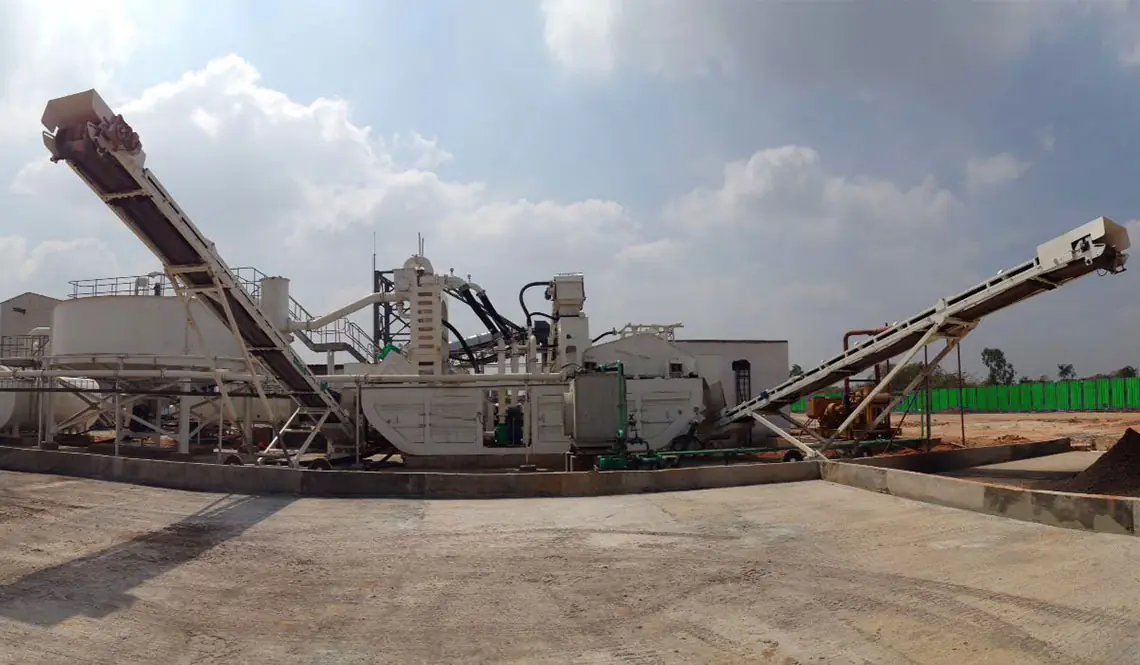
Low-iron silica sand for solar panels
Producing specialist grades, particularly low-iron glass silica sand for solar photovoltaic panels, requires beneficiation and leaching equipment beyond simple washing. The process starts with detailed analysis of your feed material: its particle size distribution (PSD) and its chemical properties. From that analysis, and your target physical and chemical specification, CFlo designs a custom-built low-iron silica sand plant that typically includes:
- Feed system and primary screening
- Attrition
- Gravity separation
- Magnetic separation
- Acid leaching
- Sand classification and dewatering
- Stacking and stockpiling
- Drying
- Water recycling and tailings management
Why modular matters
- Maximum process efficiency: careful attention to every material transfer point retains material and water in the circuit, maximising product yield
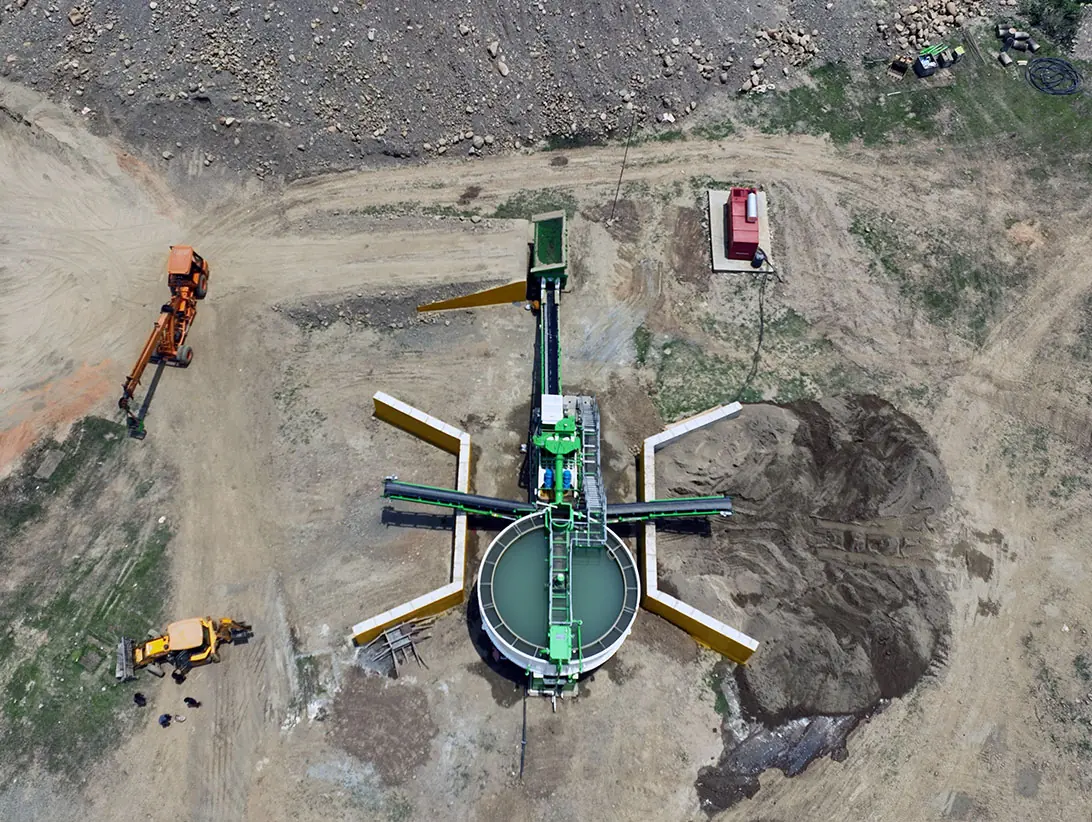
- Minimal footprint: integrating several processing phases into modular units cuts the space your plant occupies and reduces project cost through lighter associated works
- Rapid deployment: modular equipment installs in significantly less time than a stick-built static plant, so you are producing sooner
This is the Next-Gen 'Super' Systems approach: Super modular plants that ship compactly and install plug-and-play, Super smart automation that holds glass-grade quality while reducing water and power, and Super easy app-guided installation and service.
Zero-Liquid Discharge water management
Choosing CFlo's Zero-Liquid Discharge (ZLD) solution achieves up to 95% water recycling from the wet processing circuit while significantly reducing the space your plant requires. ZLD is particularly advantageous when producing low-iron glass silica sand for solar panels, where environmental performance is paramount to the end customer.
Proven with glass and mineral producers
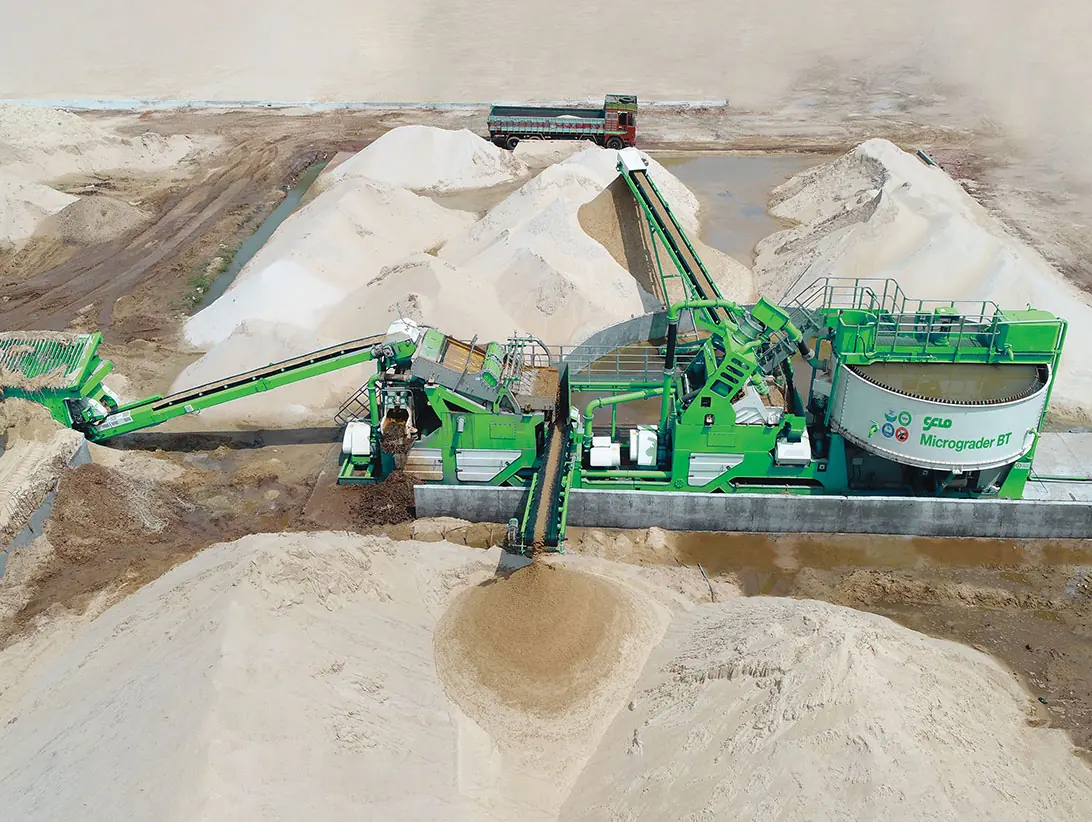
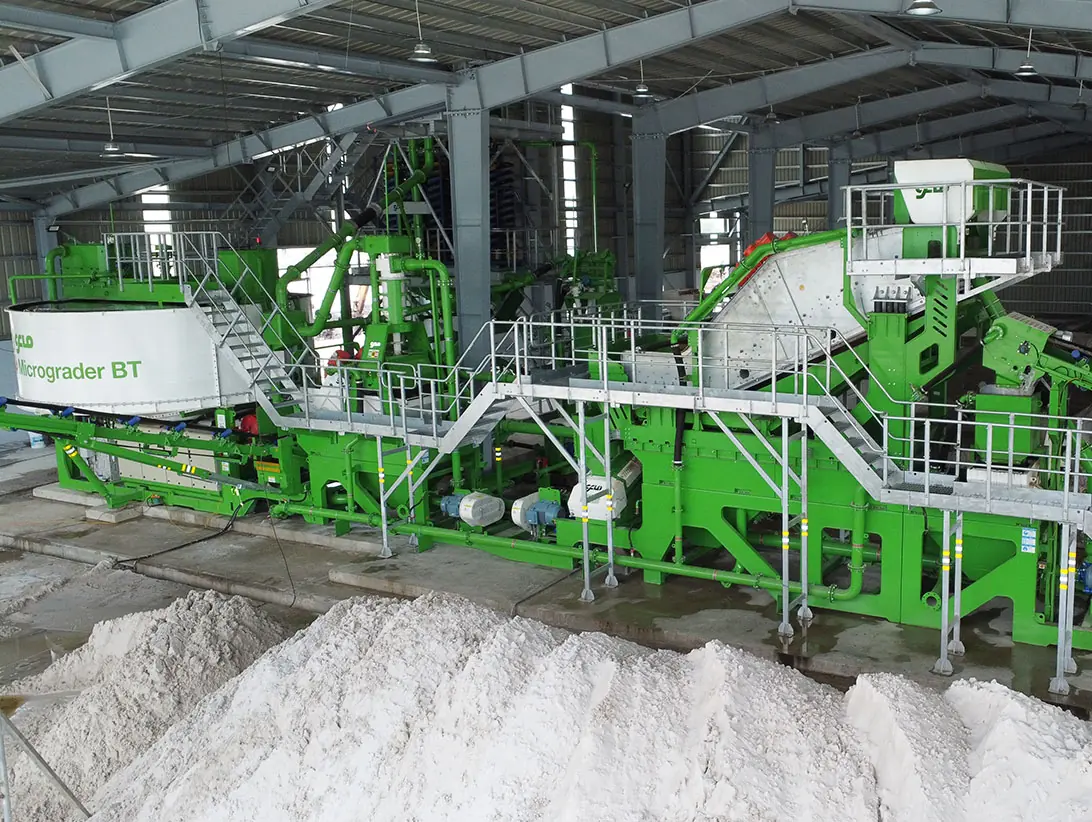
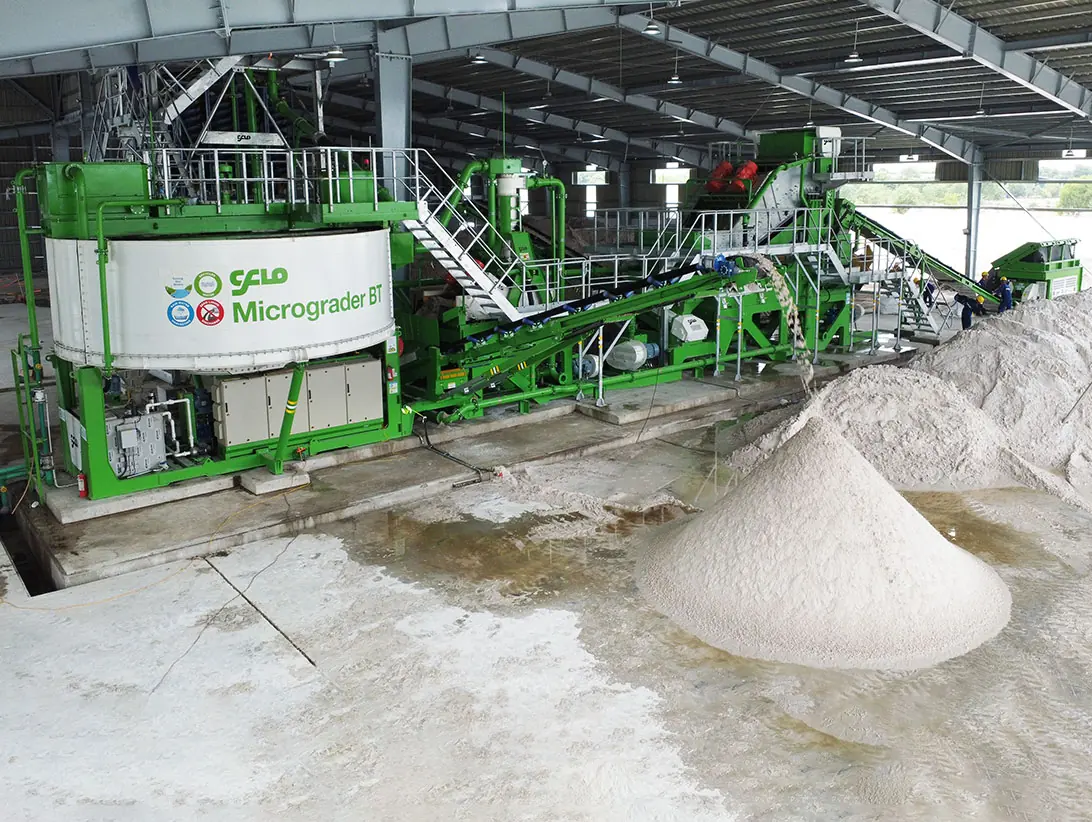
CFlo silica and glass sand plants operate at Chu Lai (Vietnam), Ahmed Brothers Materials, Phenikaa (Vietnam), Saint-Gobain and Suraj Minerals, with the Micrograder as the core classification system. Each installation is documented in a published case study.
The equipment that holds the specification
Glass and foundry sand are sold on two things at once, chemistry and grading, and a different machine holds each.
Iron oxide films on the quartz grain drive the Fe2O3 figure that sets the price, and an Atropure attrition scrubber removes them by high-density attrition rather than washing. Screenmax FS86 High Precision Fines Screens then hold the top of the gradation precisely, dewatering on the same deck. The mid-range cut, where a screen blinds and a cyclone scatters, belongs to the Vertimax upward flow classifier, which also floats lignite and organic matter off the top and away from the glass batch. All three are built into the Micrograder plant and are also supplied on their own.
See it in action
In pictures
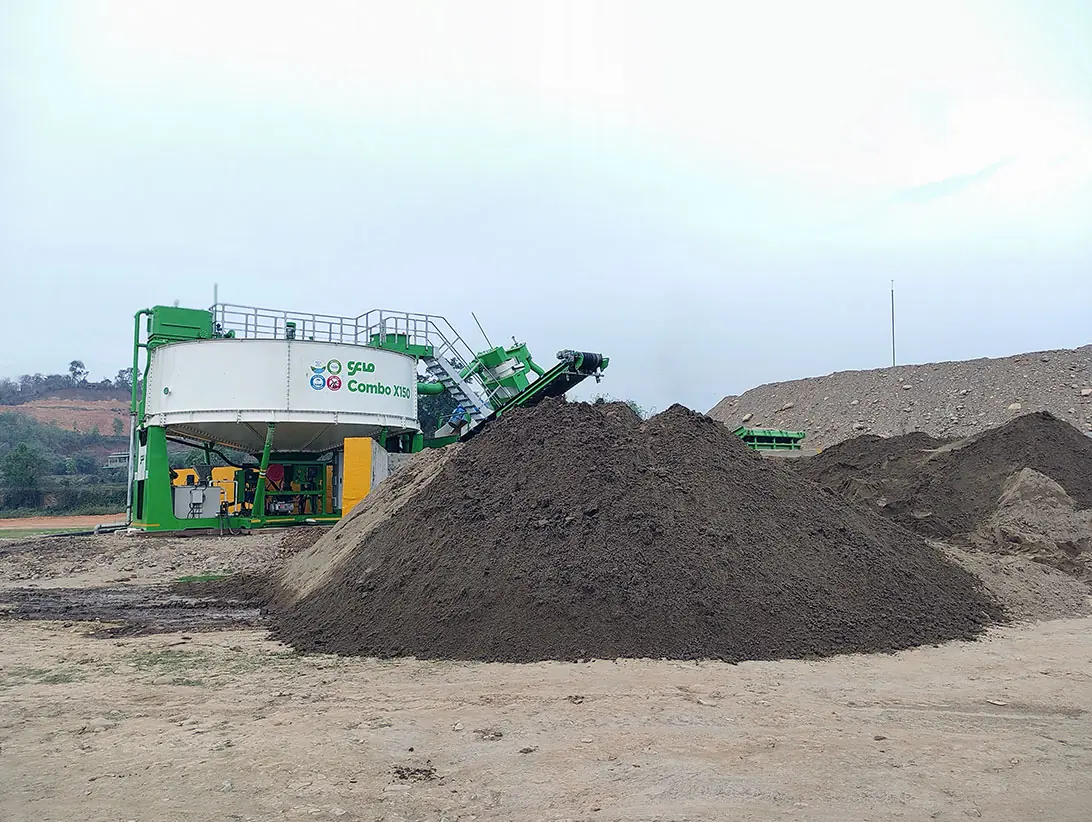
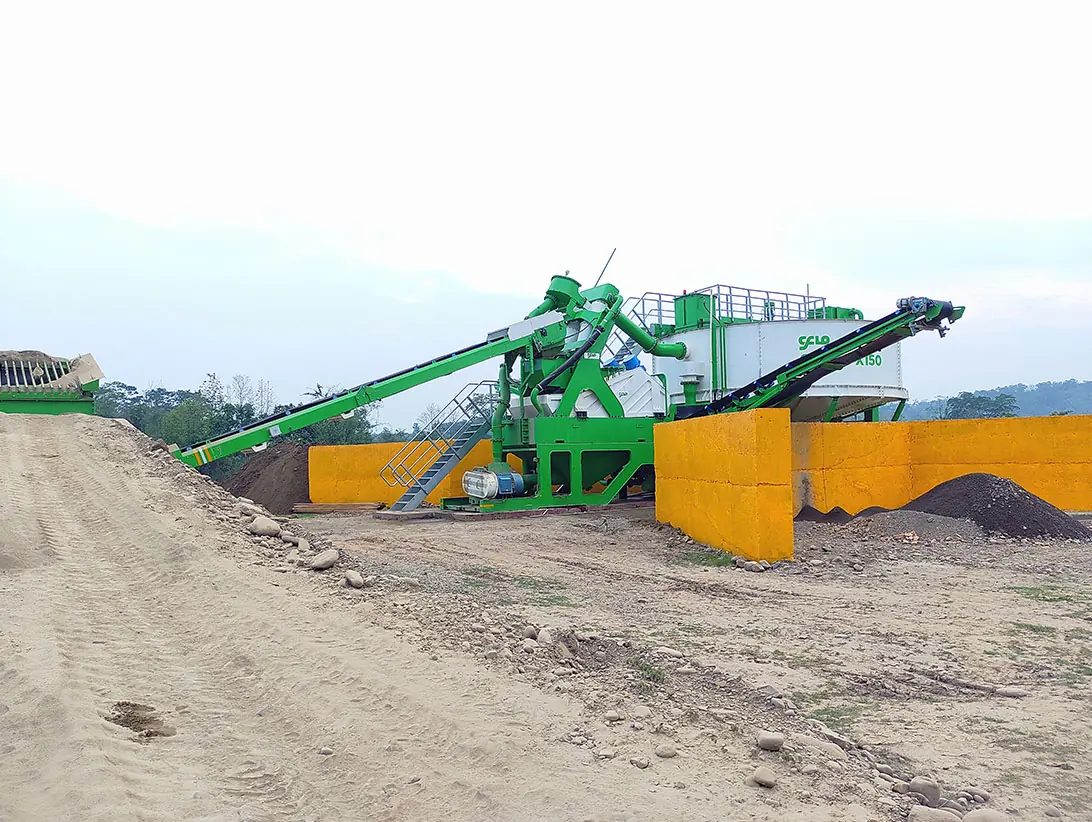
Real plants in this application
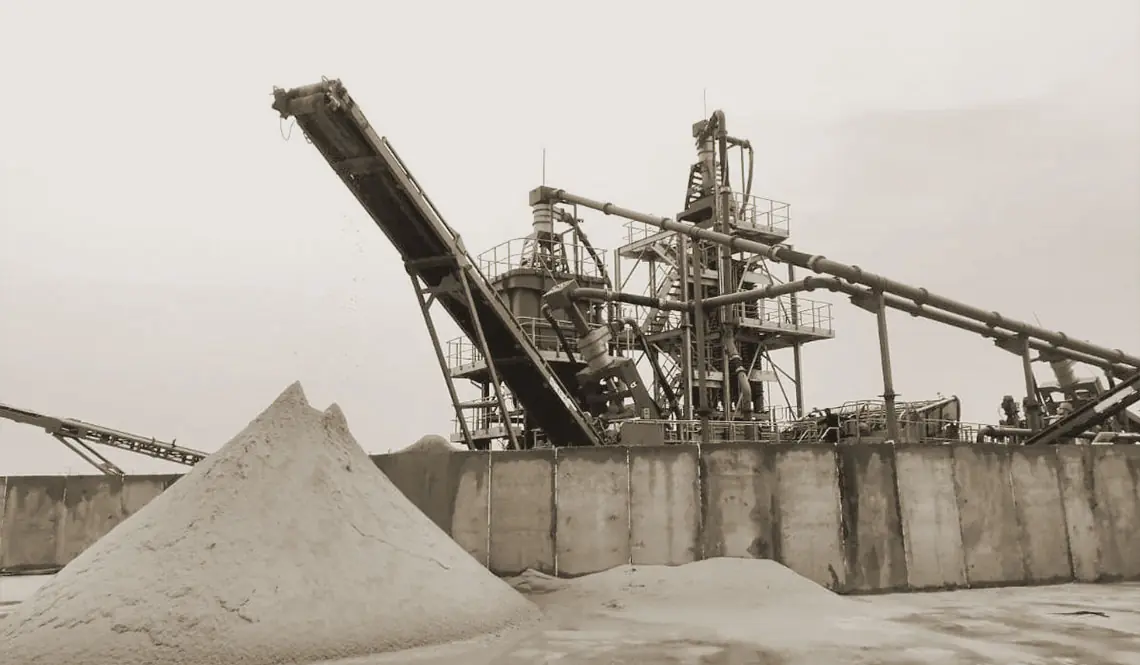
Ahmed Brothers Materials (Ghani Group)
Khushab, Punjab, Pakistan
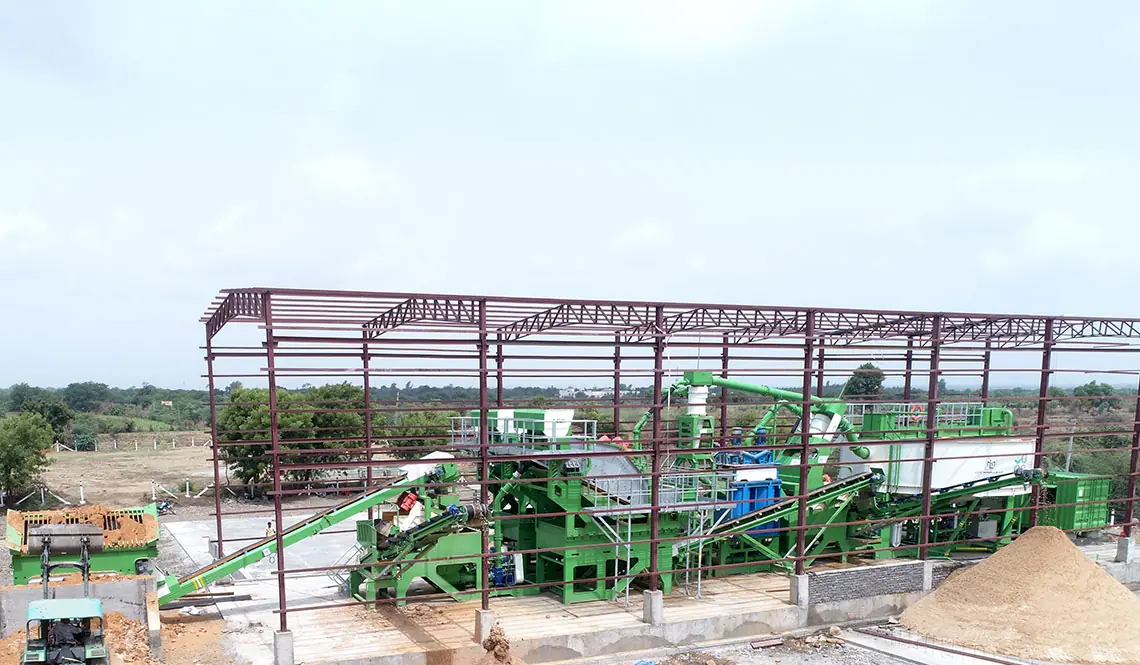
Livic Minerals LLP
Bharuch, Gujarat, India
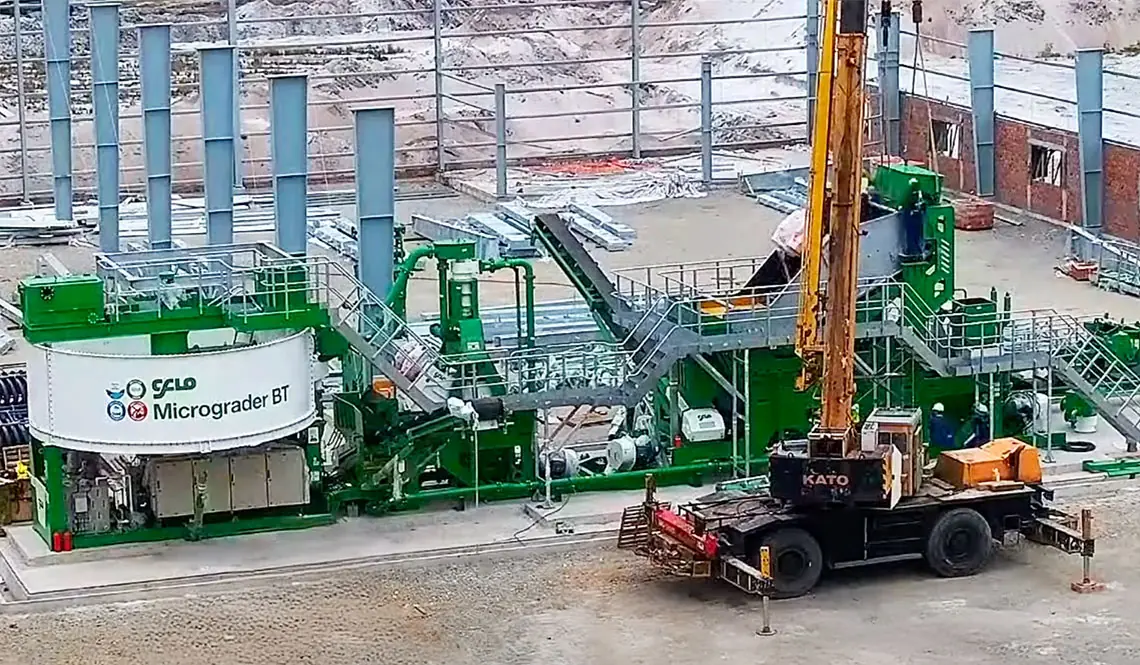
Phenikaa Hue Mineral Processing (Vicostone Group)
Hue Province, Vietnam
Machines behind these results: Micrograder
Frequently asked questions
What is silica sand?
Silica sand is sand made up predominantly of quartz, which is silicon dioxide (SiO2). It is distinguished from ordinary construction sand not by where it is found but by purity: how much quartz it contains, and how little iron oxide, clay and other minerals remain with it.
How is silica sand different from ordinary sand?
Construction sand is a mixture of quartz, feldspars, micas, clay and rock fragments, and is sold on grading. Silica sand is sold on chemistry as well. A deposit assaying 98.5% SiO2 with 0.5% Fe2O3 is a good silica sand and still not a glass sand: at Chu Lai in Vietnam it took attrition, gravity and magnetic separation to reach above 99.3% SiO2 with iron below 0.05%.
What is silica sand used for?
Glass is the largest use, including flat glass, containers and solar photovoltaic glass, all of which run between 70% and 74% silicon dioxide. The same material is also graded for foundry moulding sand, frac sand and proppant, ceramics and refractories, water filtration media, and the low-iron grades required by solar panels.
What is glass sand?
Glass sand is silica sand that meets the chemistry and the grading a particular glass batch requires. It is not a separate mineral. Because every glass type has different requirements, there is no single glass sand specification, which is why sizing a plant starts with an assay of your own feed.
What specification does glass sand need to meet?
There is no single glass sand specification: each glass type demands its own chemistry and grading. Soda-lime-silica glass, which covers solar glass, bottles, jars and float glass, contains 70–74% silicon dioxide. Your plant design starts from the exact glass grade you supply, which fixes the iron limit and particle size distribution.
How is low-iron silica sand for solar panels produced?
After detailed analysis of your feed's particle size distribution and chemistry, the circuit combines attrition, gravity separation, magnetic separation and acid leaching to strip iron-bearing contamination, followed by classification, dewatering and drying. CFlo custom-builds this full circuit as modular equipment, sized to your deposit and target specification.
How much water does a silica sand washing plant recycle?
With CFlo's Zero-Liquid Discharge solution, up to 95% of process water is recycled within the wet processing circuit. ZLD also removes the need for large settling ponds, significantly reducing the footprint of your silica sand plant, a decisive factor on solar glass projects where environmental performance is scrutinised.
How much space does a glass sand processing plant need?
Less than a traditional static plant. CFlo integrates several processing phases into each modular unit, minimising the plant's footprint and reducing overall project cost through lighter civil works. Adding Zero-Liquid Discharge water treatment further cuts the area required, since large tailings ponds are eliminated.
How long does installation take compared with a stick-built plant?
Significantly less. CFlo's modular equipment range is pre-engineered and ships as compact building blocks, so installation takes a fraction of the time of the traditional stick-build or static approach. That gets you up and running, and generating revenue from glass-grade sand, in the shortest possible time.
Which companies use CFlo silica sand plants?
Published case studies cover Chu Lai (Vietnam), Ahmed Brothers Materials, Phenikaa (Vietnam), Saint-Gobain and Suraj Minerals. The Micrograder classification system is the core of these plants, producing the tight particle size distributions glass manufacturers require.