
Sand and Gravel Washing
Sand washing for pit, river and alluvial deposits. One feed washed, graded and dewatered on a single chassis, with the water recycled.
PlatformsCombo
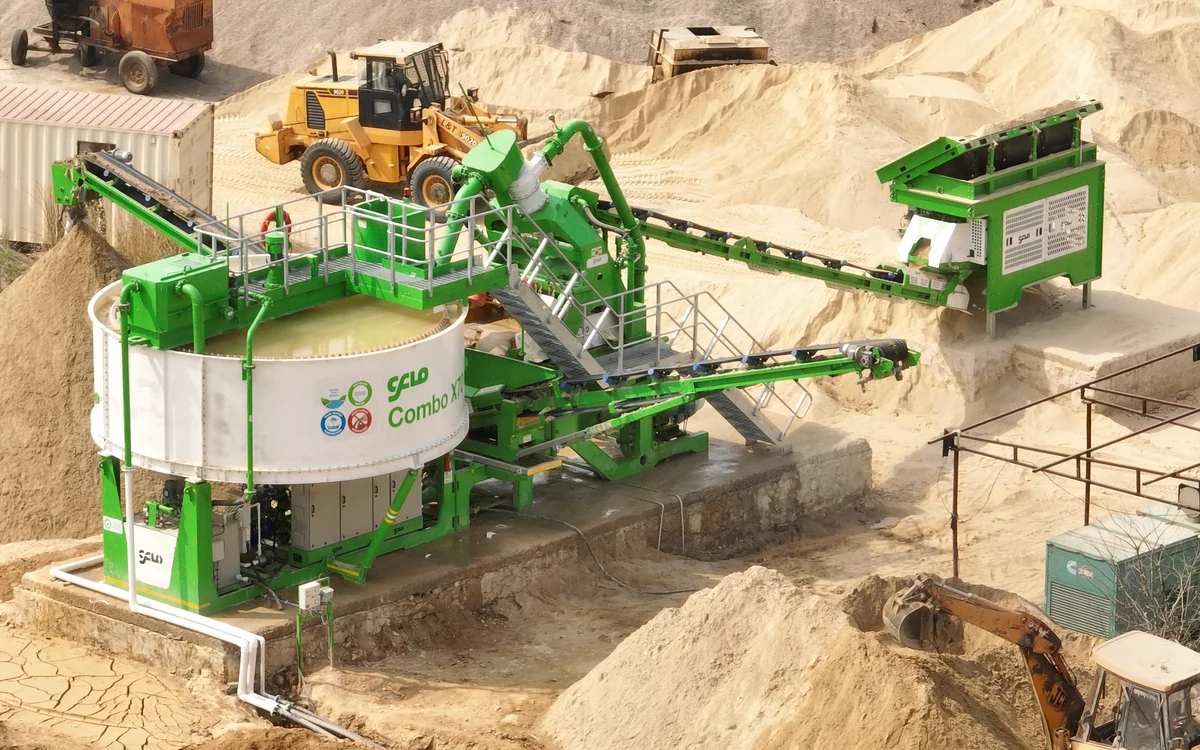
A sand and gravel washing plant takes one as-dug feed from a natural pit, river or alluvial deposit and turns it into several saleable products: graded concrete sand, and clean gravel split into the sizes the market buys. The work is removing clay, silt and organics that arrive with the deposit, holding each product inside its grading band, and doing it without losing the fine sand or the water. Sand washing is what turns the as-dug material into product, and CFlo builds these as one modular sand and gravel washing plant with the water circuit already inside it.
One feed, several products
A quarry making crushed aggregate controls its feed: the rock is what the face gives, and the crusher decides the size. A sand and gravel pit does not have that luxury. Whatever the river laid down is what the excavator digs, and it arrives as one mixed feed of sand, gravel, silt, clay and whatever organic matter came with it.
In the UK and Ireland this material is called land-won sand and gravel: sand and gravel dug from pits on land, as opposed to the marine aggregate dredged from the sea bed. Nearly all of it is washed before it can go into concrete, which is why a land-won pit and a wash plant tend to arrive as one decision rather than two.
The plant is what turns that single feed into a product range. The gravel is split into the fractions the market actually buys, the sand is brought inside a grading envelope, and the material that is neither has to be separated out and dealt with. Done properly, one deposit supports a full product list. Done poorly, the output is pit-run sold at pit-run prices.
This page is about natural deposits. Crushed rock fines are covered on the manufactured sand page, coarse crushed stone on the aggregate washing page, and dredged marine material on the sea sand page.
Why sand washing, and not just screening
You can screen a natural deposit dry and sell what comes off it. Most pits start that way, and most stop, because the price of unwashed material is set by its worst fraction.
Sand washing changes what the same deposit is worth. Water does three things a dry screen cannot. It removes the silt and clay coating the particles, which is what a fines limit in a concrete specification is actually measuring. It separates properly, because a wet screen passes near-size material that would blind a dry deck within minutes. And it recovers, because the fine sand that leaves in the dust on a dry plant is caught, dewatered and sold on a wet one.
A sand and gravel washing plant is therefore not a cleaning step bolted onto a screening plant. It determines both the product list and the price per tonne.
What is actually in the feed
Four things arrive with a natural deposit and each fails the product in a different way.
Clay is the difficult one. Plastic clay bonds onto the gravel and will not rinse off with a spray bar, and clay lumps in fine aggregate are limited explicitly by concrete aggregate standards. It also carries through into the sand as a fines fraction that raises water demand in the mix.
Silt is the fraction below 75 microns. Standards for concrete aggregate hold it to a few percent, and it is the most common reason a natural sand fails a specification while looking perfectly good in the stockpile.
Organics and lignite. River deposits carry root matter, wood, peat and coal specks. Organic impurities interfere with cement hydration, and lignite shows up as staining and popouts in the finished concrete.
Oversize and tramp. Boulders, cobbles and roots that the plant behind them was never designed to swallow.
Scalping before anything else
The first thing a sand and gravel plant needs is a feed it can rely on, because a wash plant fed in surges separates worse than one fed steadily, and a plant fed a boulder stops.
A Strato Series scalping screener sits at the front. An excavator tips as-dug material straight into a lined hopper, a variable-speed feeder meters a set tonnage onto a heavy-duty dual-deck screen, and oversize and tramp material leave before they can reach anything else. Where the deposit is wet and sticky, finger screen media handles material that would blind woven mesh in minutes. It runs on electric power rather than a diesel engine and hydraulics, which matters on a pit that already has a grid connection and no wish to run a fuel supply chain.
Breaking the clay bond
If the deposit is clay-bound, this is the stage that decides whether the plant works.
Spray water does not remove plastic clay from stone. A Scrubmax twin shaft logwasher does, by holding the material in a water bath and driving it against itself so the scrubbing is done stone-on-stone. Counter-rotating shafts carrying spiral high-chrome paddles work the material up an incline against the water flow, clay is sheared off and goes into suspension, and lightweight organics float and leave over the discharge weir instead of ending up in your concrete sand.
The adjustable weir sets retention time, which is the main lever on how hard the machine scrubs. A deposit whose clay content changes across the pit can be handled by changing that, rather than by accepting a worse product on the difficult days.
The sand washing plant itself: washing, grading and dewatering in one chassis
The Combo sand washing plant does the rest of the work. Feeding, washing, screening, classification, dewatering and stockpiling are engineered onto one modular chassis rather than bought as separate machines and made to agree on site.
Gravel is washed and split into its size fractions on the screens. Sand is classified to bring it inside the grading envelope, then dewatered before it is stockpiled, because sand that goes to the pile too wet drains across the yard and takes its finest fraction with it. That fine sand is product you have already paid to produce, and it is the fraction most often lost in a plant assembled from parts.
Because the plant arrives pre-wired and factory tested, there is no integration project. On a sand and gravel site, where the plant frequently has to move as the pit works out, being modular is not a convenience but the difference between relocating and rebuilding.
Water is what decides whether a pit is permitted
A sand and gravel operation is a water operation. Washing is what makes the product saleable, and water is increasingly what a pit is granted or refused permission over.
Run it open loop and you pay three times: for the fresh make-up water, for the land the settling ponds occupy, and for the excavator and dumper hours spent digging the ponds back out. Add a wet season and an overflow becomes a compliance event.
Every CFlo plant has Hydromax built in as standard. It is a high-rate thickener that replaces a field of settling ponds with one engineered tank: slurry is dosed with flocculant, clean water overflows a weir and gravity-feeds back to the plant, and thickened sludge is pumped out on an automatic cycle. Easysettle then rigidifies that sludge at the point of disposal so it releases its water immediately and dries to a cake firm enough to drive on. The whole water and tailings circuit is part of the plant rather than a separate purchase, which is why the loop actually closes in the field instead of only in a flowsheet.
Deposits vary, and a sand washing plant has to
The single thing that separates a sand and gravel operation from a quarry is that the feed changes as you work through the deposit. Clay content rises in one corner, the sand goes finer at depth, a gravel band runs out.
That is an argument for sizing a plant against the deposit rather than against a single sample, and for configuring it so the operator has real adjustments: retention time on the scrubber, feed rate on the scalper, the cut points on the classification. It is also the reason we pilot your material before proposing anything, because the honest answer to what your deposit will yield comes from running it, not from a table.
A Combo X70 delivering engineered sand

Frequently asked questions
What is a sand and gravel washing plant?
A plant that takes as-dug material from a natural pit, river or alluvial deposit and separates it into saleable products: clean gravel in graded sizes and washed sand inside a grading specification. Its real work is removing the clay, silt and organic matter that arrive with the deposit.
How is this different from aggregate washing or manufactured sand?
The feed. Sand and gravel is a natural deposit that already contains both, and the plant's job is to sort and clean what nature deposited. Aggregate washing deals with crushed stone, and manufactured sand is made from crusher dust and crushed rock fines. The equipment overlaps; the flowsheet does not.
My gravel has heavy clay. Is a wash screen enough?
Almost certainly not. Spray bars remove what is loose. Plastic clay bonded to the stone needs attrition, which is what a logwasher provides. The test is simple and we run it on your own material before quoting anything.
Will washing lose my fine sand?
It should not, and if it does you are losing product every hour the plant runs. Fine sand is recovered by classification and dewatering rather than allowed to leave with the wash water, and the water itself is recovered by the thickener. A plant assembled from separate machines is where that fraction usually disappears.
How much water does a sand and gravel plant use?
Far less than the throughput suggests, if the loop is closed. In a CFlo plant the great majority of process water is recovered and returned, and fresh water is needed only to replace what leaves in the product and in the sludge cake. The figure for your site depends on your fines content and your target product moisture.
Can the plant move as the pit works out?
Yes, and on a sand and gravel site that is usually a requirement rather than a preference. The plants are modular and bolted rather than site-welded onto a concrete raft, so relocating within a deposit is a planned move rather than a rebuild.
What do you need from me to size one?
A representative sample and the basics: the tonnage you want, the products you intend to sell and their specifications, your top size and an idea of how the deposit varies. From there we pilot the material and put real numbers into a proposal rather than catalogue ones.
What is land-won sand and gravel?
It is the UK and Ireland term for sand and gravel dug from pits on land, as distinct from marine aggregate dredged from the sea bed and from crushed rock quarried and blasted. It is the material this page is about. Nearly all land-won output is washed before it goes into concrete, because the deposit arrives with the clay and silt still in it.