
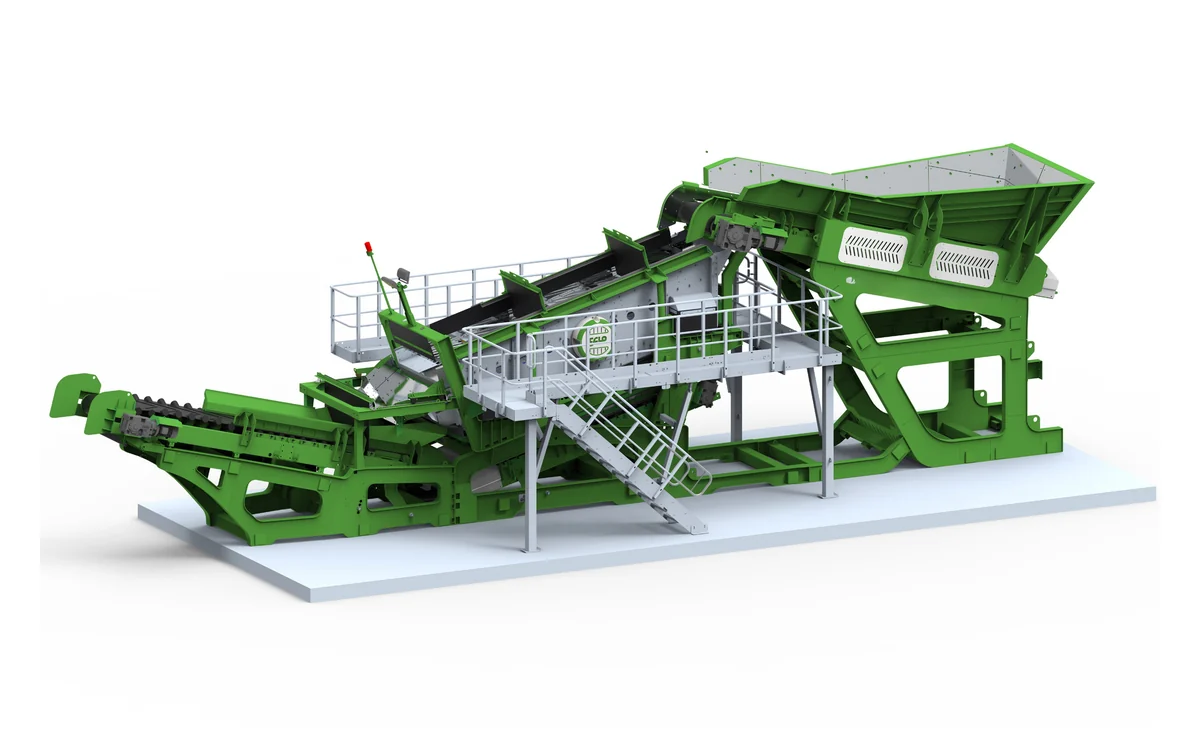
Strato Series Scalping Screener
The front end of the plant, running on clean power instead of diesel.
The CFlo Strato Series is a range of portable, all-electric scalping screeners that prepare mixed raw material for downstream processing. An excavator loads the hopper directly, a variable-speed feeder meters the material onto a heavy-duty dual-deck screen, and oversize and undersize leave on integrated conveyors. Three models cover up to 500 tonnes per hour, in wet or dry configuration, with no diesel engine and no hydraulics anywhere on the machine.
What scalping is for
A wash plant is built for the material it was designed around. Feed it demolition rubble with reinforcing bar in it, or overburden with boulders and root matter, and the plant spends its life clearing blockages rather than producing product.
Scalping is the stage that prevents that. It takes raw, mixed, unprepared feed and splits off what the plant behind it cannot handle: the oversize, the rubble, the tramp material. What goes forward is a controlled, consistent feed at a known tonnage, which is the single biggest influence on whether the plant behind it hits its numbers.
On a C&D site or a mining dump, the material arriving is never uniform. The Strato is the machine that makes it so.
Industries this plant serves
All-electric, and why that matters
Portable screeners have almost always been diesel-hydraulic: an engine driving pumps, driving cylinders and motors through hoses. Every Strato is all-electric instead. There is no engine, no hydraulic circuit, no oil and no hoses.
That removes a whole category of failure and cost. There is no hydraulic oil to buy, filter or dispose of, no hoses to burst, no seals to weep, no heat to manage and no fire risk from oil under pressure onto a hot surface. Fault-finding is standard electrical work rather than pressure testing a circuit.
It also changes what the machine costs to run. Electric motors put more of their input into the work than a hydraulic circuit does, so there is less energy wasted as heat, and where the site has grid or renewable power there is no diesel to buy, haul or account for. At the point of use there are no exhaust emissions at all, which increasingly decides whether a machine can work inside a city boundary on a demolition site at all.
Direct feed, metered
An excavator tips straight into a holding hopper lined with Hardox where the wear actually occurs. A steel curtain across the mouth takes the impact of surges and large rocks so the hopper and the screen underneath do not.
Underneath, a belt feeder with a variable frequency drive meters material onto the screen, or an apron feeder on the 7500R where the feed is heavy and bulky enough to justify one. That VFD is more useful than it sounds: feed rate becomes a number the operator sets rather than a consequence of how enthusiastically the excavator is loading, and a screen fed at a steady tonnage separates far better than one fed in surges. A self-cleaning magnet can be fitted to pull reinforcing bar and tramp steel out of the stream.
The screen and its media
The screen is a Screenmax Circular Motion Rinsing Screen, a heavy-duty dual-deck unit in a hot-dip galvanised box, and it can run wet or dry. It is the same screen family that does the coarse sizing duty inside the Combo and Reurban.
What makes it suit such different duties is that the media changes with the job. Woven mesh sizes clean dry material. Finger screens handle sticky, high-moisture C&D waste and soil, where mesh would blind solidly within minutes. Punch plate takes heavy scalping duty at large apertures, and Bofor bars deal aggressively with oversize rubble. The same machine covers dry aggregate in summer and wet clay-bound demolition arisings in monsoon, by changing what is on the deck.
Material handling without extra machines
The structure is self-supporting and the conveyors are part of it. An under-pan conveyor sits directly beneath the screen deck, catching and carrying screened material without spillage, which removes the separate collection conveyor and chute that a conventional arrangement needs.
The oversize discharge conveyor is reinforced to take the impact of heavy coarse material dropping onto it without deflecting, because that is the belt that fails first on a scalper. A radial stockpile conveyor can be added where a large stockpile is wanted, along with a transfer conveyor to link it.
Walkways run along both sides with a centralised motor control panel and protected wiring, so routine access to the screen, the feeder and the drives does not need scaffolding or a machine shutdown.
Where it fits in the circuit
The Strato is the front end. It goes ahead of the wash plant, whether that is a Reurban C&D recycling plant, an Oremax beneficiation plant or a Combo sand washing plant, preparing the feed so the plant behind it runs on material it was designed for.
Typical duties are C&D waste recycling, where demolition arisings arrive mixed with rubble, timber and steel; mining overburden and quarry by-products, where a dump has to be scalped before anything can be made from it; iron ore, preparing run-of-mine feed ahead of beneficiation; and aggregate washing.
Being portable, it can also work a site on its own, producing a scalped product without a wash plant behind it at all.
Model range
| Parameter | Strato 3600 | Strato 7500 | Strato 7500R |
|---|---|---|---|
| Max feed capacity | Up to 200 tph | Up to 500 tph | Up to 500 tph |
| Screen deck | 3.0 x 1.2 m, 2 decks | 5.0 x 1.5 m, 2 decks | 5.0 x 1.5 m, 2 decks |
| Feeder | Belt feeder with VSD | Belt feeder with VSD | Apron feeder with VSD |
| Hopper volume | 6 m³ | 15 m³ | 15 m³ |
| Installed power | 28.5 kW | 48.5 kW | 60 kW |
| Discharge conveyor | 3.5 m | 5.5 m | 5.5 m |
| Total length | 16 m | 24 m | 24 m |
| Machine height | 5 m | 5.6 m | 5.6 m |
All models take Hardox lined hoppers, modular screen media, wet or dry configuration, all-electric drive, full walkway access, and optional self-cleaning magnet and radial stockpile conveyor.

Frequently asked questions
What is a scalping screener?
The first screening stage in a plant. It removes oversize, rubble and tramp material from raw feed so that the equipment behind it receives something consistent that it was designed to handle, rather than whatever came off the face or out of the demolition.
Why all-electric rather than diesel?
Because most of what goes wrong on a portable screener is the diesel-hydraulic system rather than the screening. Removing it removes the oil, hoses, seals, heat and fire risk, along with the fuel cost and the exhaust emissions. On urban demolition sites, emissions at the point of use are increasingly what decides whether a machine is allowed to work at all.
Can it work on wet, sticky material?
Yes, and this is where the media choice matters. Finger screens are made for sticky, high-moisture C&D waste and soil that would blind woven mesh almost immediately. The screen also runs in a wet configuration with sprays.
Is it mobile?
It is portable rather than tracked: designed to be moved between sites and set up quickly, not driven around a working face. It is a fixed-position machine once in place, which is what allows the heavier structure, the larger hopper and the integrated conveyors.
Does it need a wash plant behind it?
No. It produces a scalped, screened product on its own. It is most often specified as the front end of a CFlo plant, but it works as a standalone screening unit where that is all a site needs.
How do I size one?
By the tonnage you need and the top size and nature of the feed. Bulky, heavy run-of-mine material generally justifies the apron feeder on the 7500R, while cleaner or lighter feed is well served by the belt feeder models. Tell us the material, the top size and the target tonnage and we will size it, including the media for the duty.