
Critical Minerals and Heavy Mineral Sands
The wet front end that makes a heavy mineral concentrate. Honest about where our scope ends.
PlatformsMicrograder
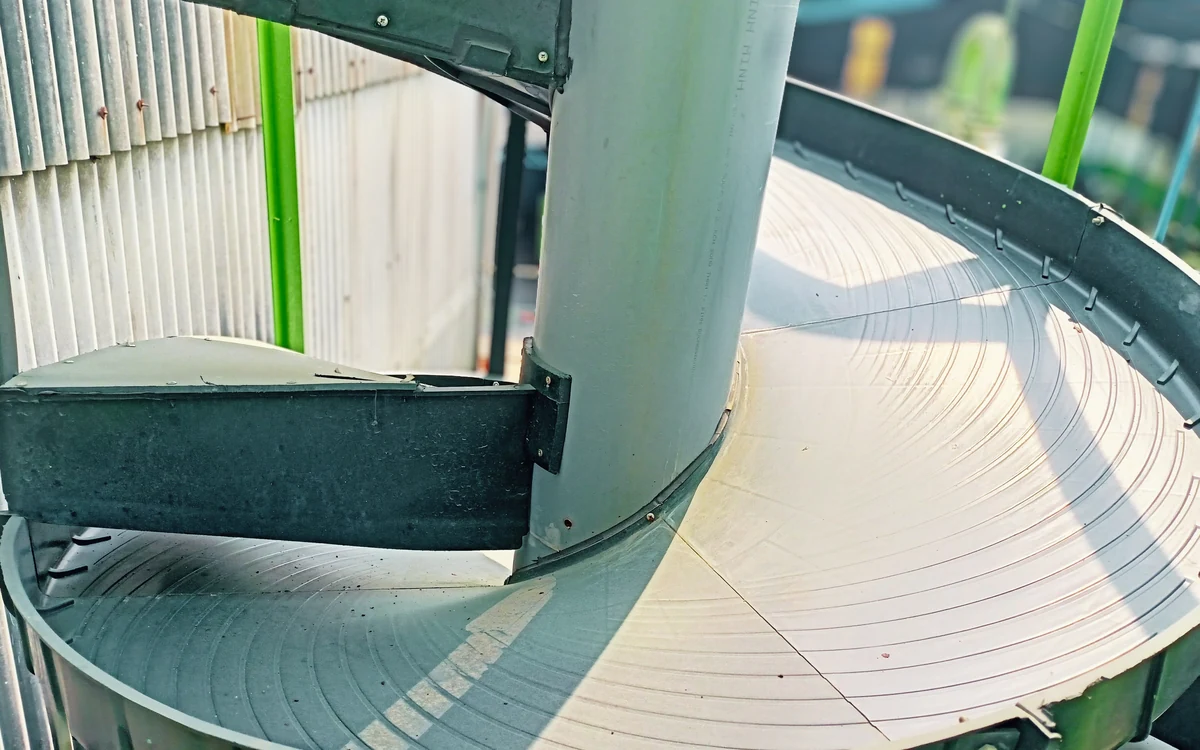
Heavy mineral sands are concentrated in two stages: a wet plant that produces a heavy mineral concentrate, and a dry mill that separates that concentrate into individual mineral products. CFlo builds the wet plant. Attrition scrubbing, desliming, classification and spiral gravity separation take run-of-mine sand and deliver a clean, deslimed HMC, with the water recovered and the slimes handled. The dry mill, and any chemical processing beyond it, is somebody else's scope and we will say so.
Where our scope starts and stops
This is worth settling first, because a lot of suppliers in critical minerals are vague about it and it wastes everybody's time.
A mineral sands operation has three parts. The wet concentration plant takes run-of-mine sand and produces a heavy mineral concentrate: it removes the slimes, removes the quartz, and hands on a concentrate of the heavy fraction. The dry mill then splits that concentrate into separate products, using magnetic and electrostatic separation to divide ilmenite from rutile from zircon from monazite. Beyond that, for rare earths, comes chemical processing: cracking, leaching, solvent extraction and the separation of individual rare earth oxides.
CFlo builds the first of those three. We do not supply dry mills, we do not do flotation, and we do not do chemical separation of rare earth elements. What we do is the wet front end, and we do it as a single supplier with one point of responsibility.
That is a deliberate scope. The wet plant determines the grade and the recovery that everything downstream has to live with, and it is where most of the water, most of the tailings and most of the operating cost sit.
A beach sand deposit is a critical minerals deposit
The term has become the way this material is discussed in India, and it is not marketing. It changes who is interested in a deposit and why.
India's Ministry of Mines identified 30 critical minerals in 2022, and the National Critical Mineral Mission was approved in January 2025 to secure domestic supply of them. Three entries on that list come straight out of a heavy mineral sands circuit:
- Titanium, from ilmenite and rutile
- Zirconium, from zircon
- Rare earth elements, from monazite and xenotime
So an operator who has spent years thinking of a deposit as beach sand, or as a nuisance heavy fraction in a construction sand operation, is sitting on critical minerals as the term is now defined. The minerals have not changed. What has changed is that securing them domestically is national policy, exploration is being funded, and the value of a concentrate is being looked at differently.
What this does not change is the processing. A critical minerals project still begins with a wet plant that liberates the grains, removes the slimes and concentrates the heavies by gravity. Whatever the material is called, that is the stage we build.
Why heavy mineral sands suit gravity separation
Mineral sands are a gravity problem more than a size problem, and that is a stroke of luck, because gravity separation is cheap, mechanically simple and consumes no reagents.
The valuable minerals are heavy: ilmenite, rutile, zircon, garnet, monazite and xenotime all carry a specific gravity well above the quartz they sit in. Sort on settling velocity rather than on size, and the concentrate separates itself. That is what a Spiropure spiral gravity concentrator does: slurry descends a helical trough, dense particles migrate to the inner band, light quartz is carried outward, and splitters cut the stream.
The other stroke of luck is that a placer deposit is already liberated. The minerals were separated by water and wind over geological time and arrive as discrete grains, so there is no crushing or grinding to do. Feed preparation is scrubbing and desliming, not comminution.
Attrition is what makes the gravity stage work
The single most common reason a mineral sands gravity circuit underperforms is that it was fed dirty material.
Grains in a weathered placer carry surface coatings: clay, iron oxide, organic films. A coated grain presents the density of the coating as much as the mineral, and a spiral reads density. Feed it coated sand and it makes a poor separation, and no amount of adjusting the splitters fixes it, because the signal the machine is reading has already been corrupted.
An Atropure attrition scrubber removes those coatings by high-density particle-on-particle attrition, and desliming takes the released fines away before they can blanket the separation. With the feed prepared correctly the spirals work as designed. Without it you will spend the life of the plant blaming the spirals.
The wet circuit
A CFlo heavy mineral sands plant is a Micrograder configured for the duty, and the stages are these:
- Scalping and feed preparation to remove oversize, roots and trash, through a Strato where the feed needs it
-
Attrition scrubbing with the Atropure to strip surface coatings and break down clay
-
Desliming on hydrocyclones to take out the minus 45 to 75 micron fraction, because slimes blanket a gravity separation and consume reagent-free capacity for nothing
-
Sizing on Screenmax screens, since a spiral works best on a controlled size range
-
Gravity concentration through Spiropure spirals, usually in rougher, cleaner and scavenger stages, to lift the heavy fraction to concentrate grade
-
Dewatering of the concentrate for transport to the dry mill
- Water recovery and tailings through Hydromax and Easysettle, so the plant runs closed loop
What leaves is a heavy mineral concentrate at a grade and moisture the dry mill can work with, and a sand tailing that on many operations is itself saleable.
Rare earths, specifically
Monazite and xenotime are the rare earth bearing minerals in most placer deposits, and they behave in a wet plant exactly like the other heavy minerals: dense, liberated, and recoverable by gravity.
So the wet front end for a rare earth placer is the same wet front end. What differs is everything after it. Splitting monazite from ilmenite and zircon is a dry mill problem, done magnetically and electrostatically, and recovering the individual oxides is a chemical plant. If a supplier tells you their wash plant produces rare earth oxides, they are describing something that does not exist.
Rare earth projects also carry their own regulatory and permitting requirements, which vary by mineral and by jurisdiction and are settled with your regulator and your own specialists. Our part is to design the wet circuit, and its water and tailings handling, around whatever those requirements turn out to be, so the constraints are in the flowsheet from the start rather than retrofitted to it.
Testwork before anything else
Every placer is different, and the difference is not visible. Two deposits with the same total heavy mineral content can have entirely different mineral splits, different liberation, different slimes content and different scrubbing requirements.
Our material testing lab runs the whole wet circuit at pilot scale on your bulk sample: attrition, desliming, classification and spiral gravity separation, with a wet high-intensity magnetic separator available so you can see how the concentrate would respond in a dry mill even though we would not be the ones supplying it. What comes back is a mass balance, a concentrate grade and recovery, and a flowsheet sized to your tonnage.
On a critical minerals project that is not a formality. Deposits get financed or abandoned on those numbers.
Where it applies
Beach and dune sands, alluvial and fluvial placers, offshore and dredged deposits, and the reprocessing of old mineral sands tailings, which are frequently richer than the operators who made them realised.
The related work is on the beach sand, sea sand, placer and alluvial gold and tailings and slimes pages, which share most of the same circuit.
Frequently asked questions
What does a heavy mineral sands wet plant actually produce?
A heavy mineral concentrate: the dense fraction of the sand, deslimed, sized and separated from the quartz, dewatered and ready to go to a dry mill. It is not separated into individual minerals at that stage.
Do you separate ilmenite, rutile, zircon and monazite from each other?
No. That is dry mill work, done magnetically and electrostatically on the concentrate our plant produces. We build the wet plant that makes the concentrate, and we will tell you plainly where our scope ends rather than implying it goes further.
Can you produce rare earth oxides?
No, and nobody can with a wash plant. Recovering individual rare earth oxides requires cracking, leaching and solvent extraction in a chemical plant. Our contribution is upstream: concentrating the monazite and xenotime along with the other heavy minerals so the chemistry has a concentrate to work on rather than raw sand.
Why does attrition matter so much on mineral sands?
Because a spiral separates on density, and a coated grain reads as its coating. Surface films of clay and iron oxide are the most common cause of a gravity circuit underperforming, and attrition scrubbing before the spirals is what removes them.
How do you handle project-specific regulatory requirements?
Rare earth and mineral sands projects carry requirements that differ by mineral and by jurisdiction, and those are settled between you, your regulator and your own specialists. We build the wet plant to suit them: the circuit, the water recovery and the tailings handling are designed around the constraints your project actually has.
What counts as a critical mineral here?
On India's 2022 list of 30, the ones a heavy mineral sands circuit bears on are titanium (from ilmenite and rutile), zirconium (from zircon) and the rare earth elements (from monazite and xenotime). The National Critical Mineral Mission, approved in January 2025, is the policy behind the current interest in securing them domestically.
Can old mineral sands tailings be reprocessed?
Often, and it is worth testing. Older gravity circuits were less efficient than current ones and frequently left recoverable heavy minerals behind, and the material is already mined, hauled and liberated. See the tailings and slimes page.
How do we find out what our deposit will yield?
Send a bulk sample to the material testing lab. We run the wet circuit at pilot scale on your material and report the concentrate grade, the recovery and the flowsheet, from your sand rather than from a comparable deposit.