
Spiropure Spiral Gravity Concentrator
Density, not size. Gravity does the separation and nothing in the trough moves.
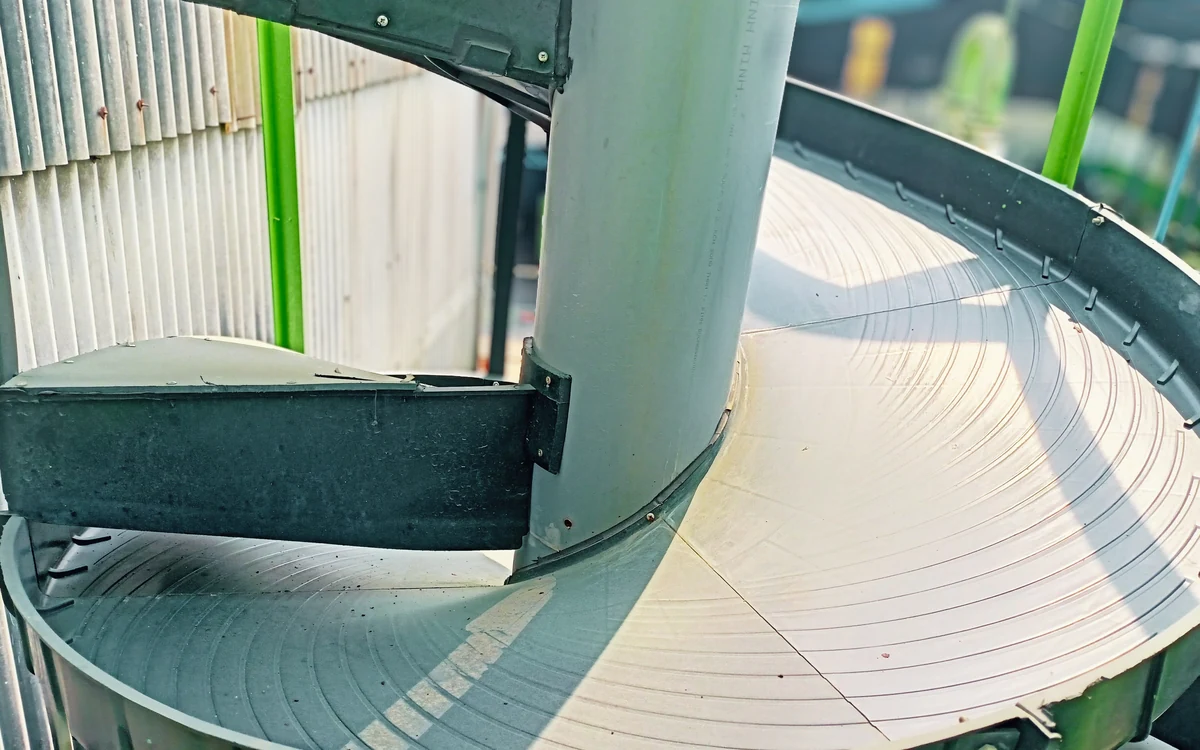
The CFlo Spiropure is a spiral gravity concentrator. Slurry fed to the top of a helical trough separates as it descends: dense particles migrate to the inner wall and light ones are carried to the outer, and splitters at the bottom cut the stream into fractions. It removes contamination that classification cannot see, because it sorts on density and particle behaviour rather than on size. The separation itself uses no power and has no moving parts.
What a spiral sees that a screen cannot
A screen sorts by size. A classifier sorts by settling velocity, which is mostly size again. Both are blind to the thing that often decides whether a sand is saleable: two particles the same size can be quartz and heavy mineral, or clean sand and a mica flake, and every sizing device in the plant will treat them as identical.
A spiral does not. Slurry enters at the top of a helical trough and flows down under gravity alone. As it travels, the combination of centrifugal force, the film of water and the drag on each particle sorts the load across the width of the trough: dense, compact particles work inward to the slow-moving inner band, while light, platy and hydrodynamically awkward particles are carried outward. Splitters at the bottom cut that spread into product and reject.
The separation is on density and on shape, which is why spirals remove mica and other flat contaminants that no amount of screening will shift.
Where it earns its place
On silica and glass sand, the Spiropure is what strips the heavy mineral and mica contamination that drives the Fe2O3 and refractory figures a glass or foundry customer buys against. Getting the chemistry right is often a gravity problem rather than a washing one.
On iron ore, the same physics runs the other way: the dense fraction is the product and the light silica is the reject, so the machine upgrades Fe by rejecting liberated gangue.
It also does useful work anywhere a light contaminant is spoiling a clean product, including placer and alluvial circuits where free gold and heavy minerals report to the inner band.
Nothing in it moves
This is a practical advantage of gravity separation.
The separation consumes no power, because the driving force is gravity. There is no impeller, no shaft, no bearing and no drive inside the trough, so there is nothing in the separation to wear out, seize or need alignment. The installed power on a Spiropure module is the feed pump and the cyclone circuit around it, not the spirals themselves.
That also means the machine is quiet, has no vibration to isolate, and holds its performance over a shift without adjustment.
Modular, and flat-packed to ship
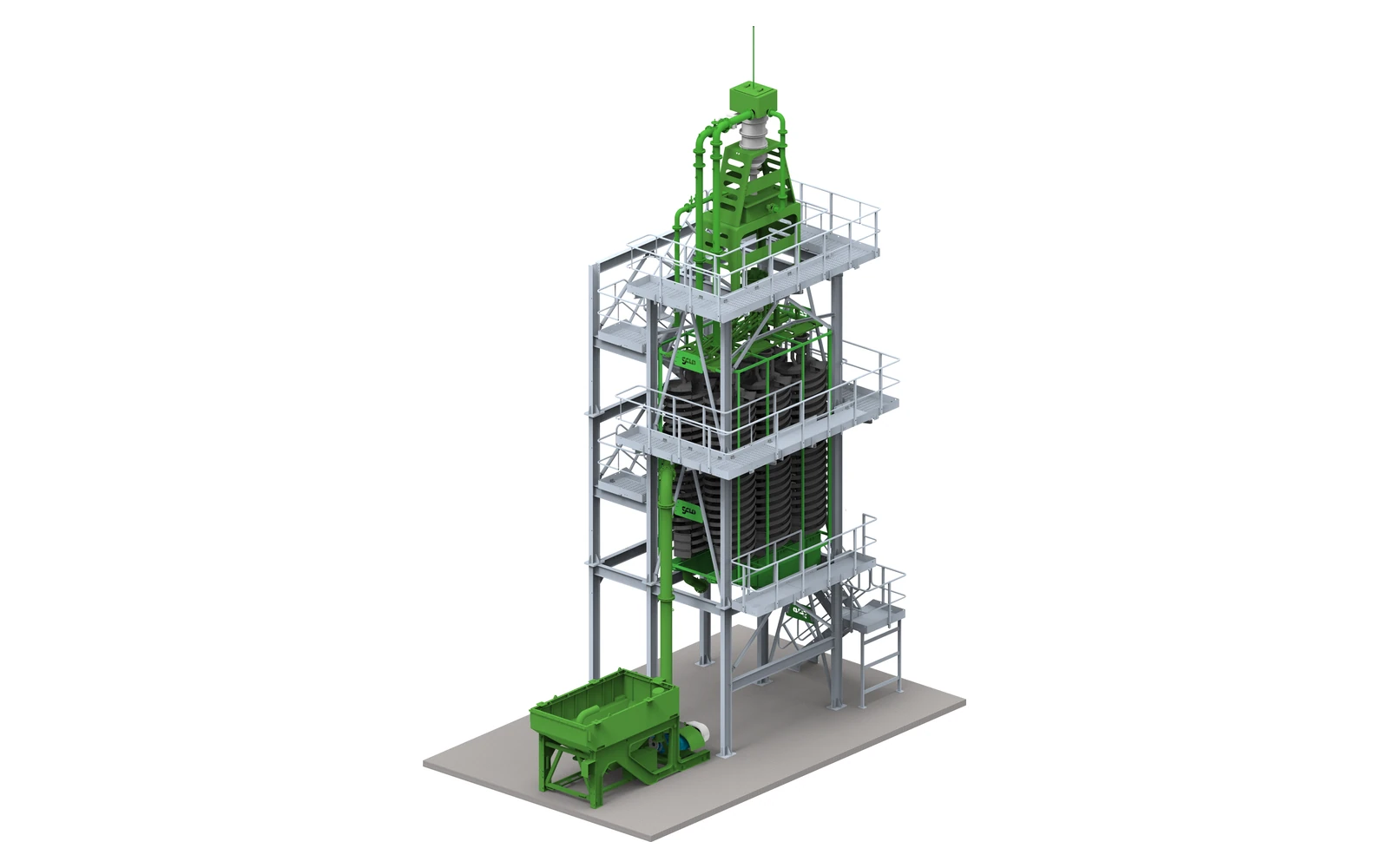
Spirals are awkward to transport: they are tall, helical and mostly air. CFlo builds the Spiropure as a modular system that flat packs for shipment, so a bank travels as components in conventional containers and is assembled on site rather than moved as a fabricated tower.
For a customer overseas, that is the difference between standard container freight and abnormal load handling at both ends. The banks bolt together, and the module count is set by duty rather than by what will fit on a lorry.
A complete Spiropure module arrives as the spiral banks, the distributor, the cyclone stage that prepares the feed density, the sump and pumping station, and the access structure with its walkways and stairs.
Where it fits in the circuit
The Spiropure works on a deslimed feed below about 1 mm, so it goes after classification and after attrition scrubbing. Sending it unwashed or unclassified feed wastes it: surface coatings change a particle's apparent density, which is the signal the spiral is reading, so an Atropure attrition scrubber upstream is often what makes the gravity stage work at all.
It is a standard part of the Micrograder industrial sand plant and of Oremax beneficiation circuits, and is supplied on its own. Typical duties are silica and glass sand, quartz, foundry sand, iron ore, chromite and placer and alluvial gold.
Model range
| Parameter | Y618 | Y618 M |
|---|---|---|
| Feed material | Silica sand | Iron ore |
| Max feed capacity | Up to 50 tph | Up to 50 tph |
| Top feed size | 1 mm | 1 mm |
| Fractions produced | 3 | 3 |
| Banks of spirals | 6 | 6 |
| Starts per spiral | 3 | 3 |
| Turns per bank | 18 | 18 |
| Cyclone diameter | 500 mm | 500 mm |
| Installed power | 37 kW | 45 kW |
Installed power is the feed pump and cyclone circuit; the spirals themselves draw none. Bank count, the number of starts and the splitter settings are all set against your material, because the cut a spiral makes is a property of the ore rather than of the machine.
Heavy mineral sands
The duty spirals were invented for. A placer deposit arrives already liberated, and the valuable minerals are all denser than the quartz around them, so gravity does the work with no reagents at all. See heavy mineral sands and rare earths.
See it in action
Frequently asked questions
What is a spiral gravity concentrator?
A helical trough that separates particles as slurry flows down it under gravity. Dense particles move to the inside of the spiral and light ones to the outside, and splitters at the discharge cut the stream into product and reject. It sorts on density and particle shape rather than size.
How is it different from a hydrocyclone or a classifier?
Those sort by settling velocity, which in a narrow size range is mostly size. A spiral separates particles of the same size but different density, which is what removes heavy mineral or mica contamination from a sand and what upgrades an ore by rejecting liberated gangue.
Does it use much power or water?
The separation uses neither: the driving force is gravity and the trough has no moving parts. The installed power is the pump and cyclone circuit that feeds it, and in a CFlo plant the water is recovered by Hydromax.
What feed does it need?
Deslimed, classified and, if the material is coated, scrubbed. Top size around 1 mm. Slimes in the feed blanket the separation and surface coatings falsify the density the spiral is reading, so what happens upstream largely decides how well the spirals perform.
Can it be shipped internationally without special handling?
Yes, and this is why it is built the way it is. The system is modular and flat packs into conventional containers, so it travels as components and is assembled on site rather than moving as a tall fabricated structure.
How do you size one?
From your material. Send a representative sample: we run it, establish what the gravity stage can actually recover and at what grade, and size the bank count and splitter arrangement from that rather than from a catalogue figure.