
Tailings and Slimes Beneficiation
Recover the mineral still in your tailings, and dewater the rest, under a single point of responsibility.
PlatformsOremax
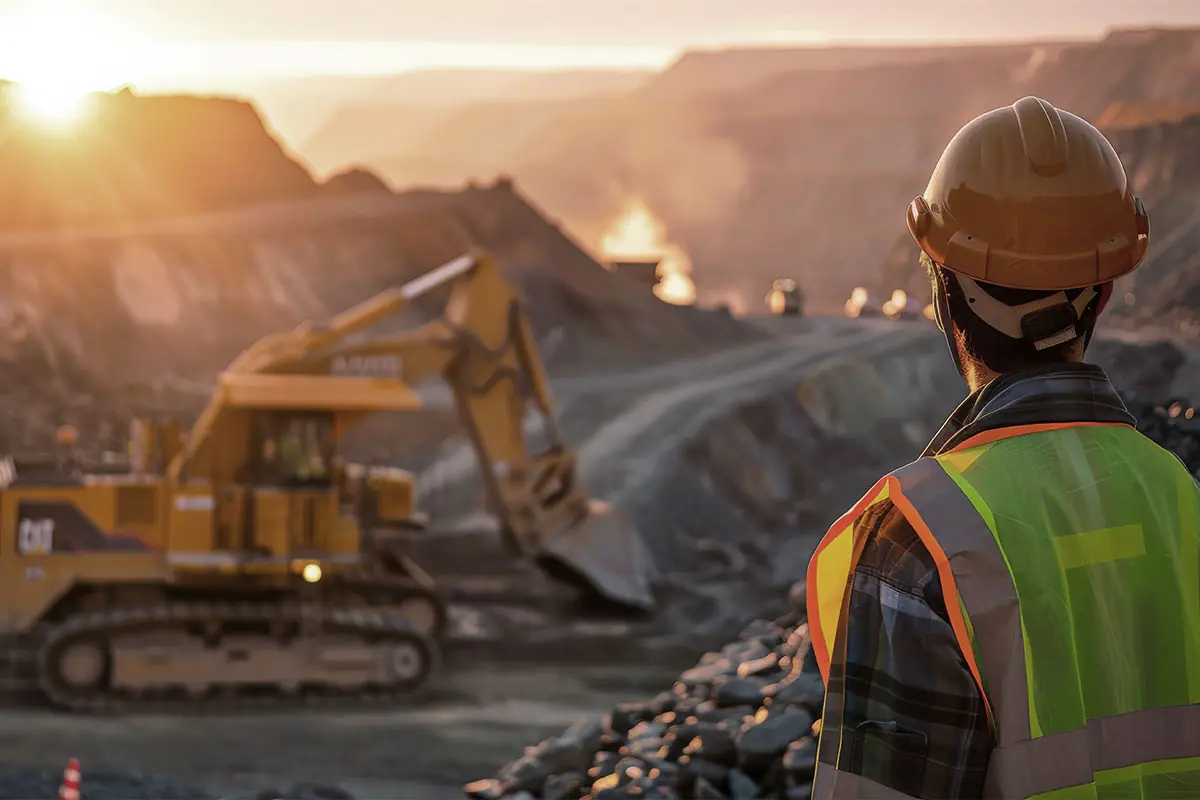
Tailings and slimes are ore you have already paid to mine, haul and crush. CFlo builds circuits that recover the saleable mineral still in them and dewater what is genuinely waste. At SAIL's Kiriburu iron ore mine, slime that had been discarded since the 1960s is now recovered as saleable product. Design, supply, installation and commissioning sit under one contract and one point of responsibility.
The most expensive material on site is already in the dam
Every tonne in a tailings dam has been drilled, blasted, hauled, crushed and processed. The capital and energy are spent. What separated it from product was a grade cut or a particle size your circuit could not hold, not an absence of value.
That is why a tailings project has an economics no greenfield ore body can match. There is no stripping ratio, no haul from a new face, and the material is already liberated. It is also why regulators increasingly treat an untouched dam as a liability rather than a legacy: reprocessing reduces the footprint you are obliged to rehabilitate at the same time as it produces revenue.
Slimes, tailings and overburden are three different problems
The words get used loosely, and the distinction decides the circuit.
-
Slimes are the ultra-fine fraction that reports to classifier overflow. Rich in mineral, too fine for a conventional circuit to hold.
-
Tailings are what remains after processing, whether from a gravity, magnetic or flotation circuit. Grade is lower but the volume is large.
-
Overburden is not either of these. It is the rock in the way, stripped before you reach the ore, and it is covered on the overburden and quarry by-products page.
Slime that had been waste since 1964
SAIL's Kiriburu Iron Ore Mine in West Singhbhum, Jharkhand has been working since 1964. Its classifier overflow, the ultra-fine fraction, was treated as waste for most of that time and sent to the tailings pond, taking recoverable iron with it.
CFlo's Oremax slime beneficiation system now lifts that stream to a saleable iron ore product, with the low-grade reject routed to the mine's existing tailings thickener rather than adding a new disposal problem. The grades are in the Kiriburu case study. Discharge and receiving chutes are lined with manganese steel, because slime at that tonnage is abrasive and a circuit that wears out is not a circuit.
The same principle runs through other CFlo installations. At Pacific Industries in Jabalpur, Madhya Pradesh, a plant works iron ore fines that older drum-scrubber equipment could not process effectively, stripping liberated silica to lift Fe grade and recover a substantial share of the feed as saleable ore. At Vedanta FACOR in Jajpur, Odisha, the objective was to stop chrome value disappearing into tailings from ferrochrome production.
The circuit
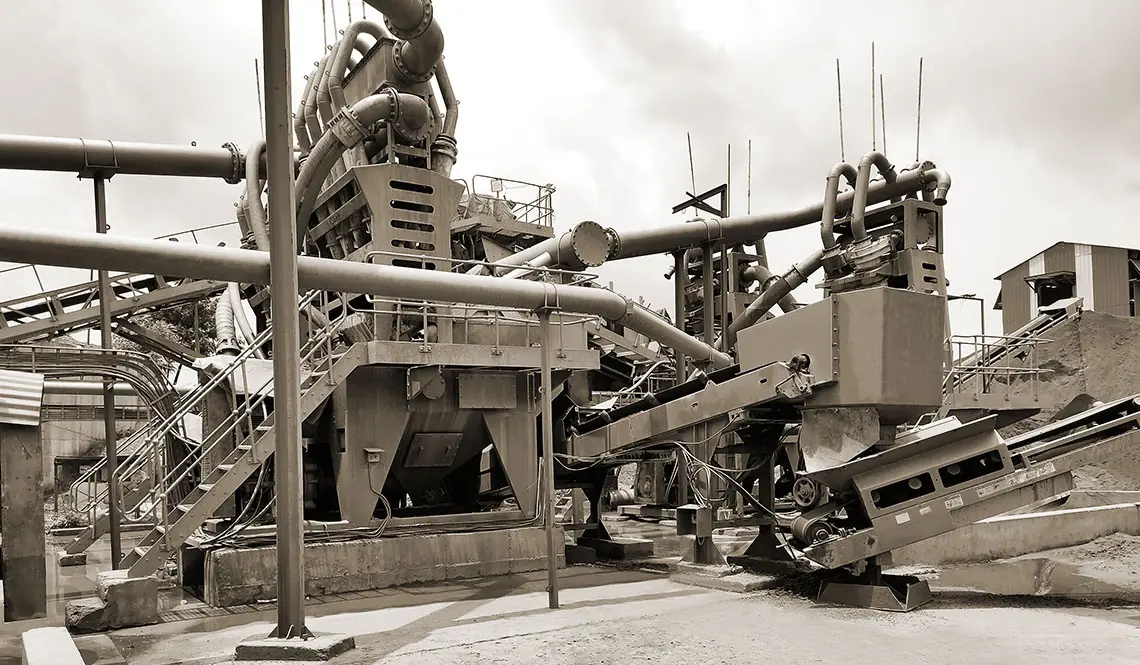
No two tailings streams justify the same plant, which is why every project starts with a material analysis rather than a model number. What the circuit draws on is consistent:
- Classification and desliming to cut at the size your product spec demands
- Gravity and magnetic separation to lift grade where the mineralogy allows it
- Attrition scrubbing to break the surface coatings that hold contaminants onto particles
- Hydrocyclones to make a sharp, controllable cut on the fines
- Dewatering so both product and reject leave the plant handleable
Dewatering: thickeners, Easysettle and filter presses
Recovery is only half a tailings project. What you do with the water and the reject decides whether the site works.
Hydromax high-rate thickeners return the great majority of process water to the plant. Easysettle rigidifies the reject at the point of disposal so it releases its water immediately and dries to a trafficable cake, closing the loop without a pond.
Where a site needs mechanical dewatering instead, whether because space is tight, cake moisture must be low, or the reject has to be trucked, CFlo supplies filter presses as part of the same scope. We do not manufacture the press. We design the circuit around it, select and source it through our industry supply chain partners, integrate it, install it and commission it, and stand behind the result.
One contract, one point of responsibility
A tailings project is where multi-vendor procurement usually comes apart. The beneficiation circuit is from one supplier, the thickener another, the filter press a third, the controls a fourth, and when the plant does not hit its numbers each one can point at the others.
CFlo takes the whole scope: material analysis, process design, equipment supply including bought-in items such as filter presses, installation, commissioning and performance. One contract, one point of responsibility. That is the reason to hand the whole problem over rather than assemble it yourself.
Where it works
Iron ore slimes, chromite, coal fines, bauxite and alumina, mineral sands, gold and copper tailings, silica sand desliming, and construction and demolition washing circuits.
Frequently asked questions
Can tailings really be reprocessed at a profit?
Often, yes, and the economics are unlike a new ore body because the mining, hauling and crushing are already paid for. Whether it works on your dam depends on grade, mineralogy and particle size, which is why every project begins with a material analysis before any equipment is proposed.
What is the difference between slimes and tailings?
Slimes are the ultra-fine fraction that reports to classifier overflow and is often rich in mineral. Tailings are what remains after the main processing step. Slimes are frequently the more attractive target because the mineral is already liberated.
Do you supply filter presses?
Yes. Filter presses are part of what we deliver, sourced through our industry supply chain partners rather than manufactured in our own works. The design of the circuit around the press, the integration, the installation and the commissioning are ours, under the same single point of responsibility as the rest of the plant.
Filter press, thickener or Easysettle: which do I need?
Usually more than one. A thickener recovers the water; what you do with the reject depends on your site. Easysettle suits sites with space for bays and no need for a very low moisture cake. A filter press suits constrained sites, cake that must be trucked, or a moisture specification. We size the combination against your material and your constraints rather than starting from a preferred answer.
Will reprocessing reduce my rehabilitation liability?
Generally it reduces the volume and the footprint you eventually have to close, and produces a drier, more stable deposit. What that means for your obligations depends on your jurisdiction and your permit, and is a question for your own advisors rather than your equipment supplier.
What do you need from me to size a plant?
A representative sample and the basics of the stream: tonnage, solids percentage, particle size distribution, mineralogy and where the reject can go. From there we can pilot the material and put real numbers, not catalogue numbers, into a proposal.