
CFlo in the Middle East
Specification sand, aggregate and mineral products made where the material is, on the water the site has, supported from Sharjah.
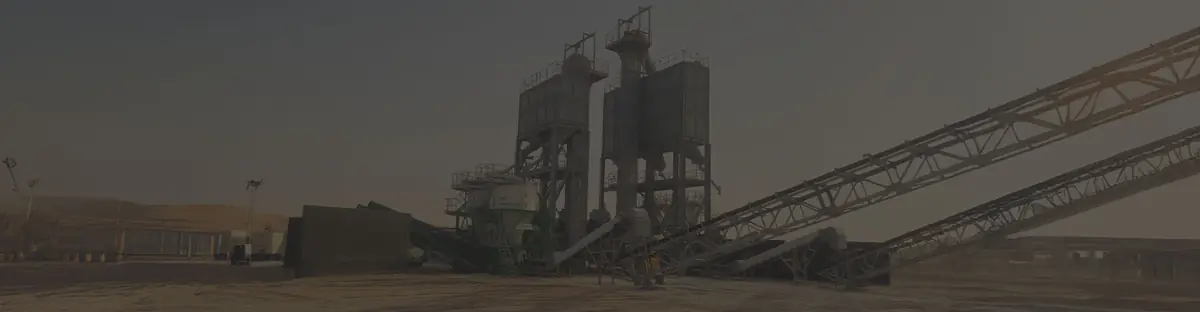
CFlo builds modular wet and dry processing plants that turn crushed rock and limestone scalpings, dune sand, silica sand deposits, low-grade ore and construction and demolition waste into a specification product for the Gulf: washed concrete and plaster sand, proppant and glass sand, beneficiated ore and washed recycled aggregate. The plants recycle up to 95% of their process water, and the Aerograder grades dry feed with no process water. In the Middle East they are sold, installed and supported by CFlo World FZE from its service hub in the Hamriyah Free Zone, Sharjah, with engineers, a service van and spare parts stocked in the region, and every project is sized on a Sample Study of the operator's own material before anything is designed.
What CFlo builds
Five platforms cover the range, and each has a page written for Gulf feeds, water constraints and site conditions. Every plant is factory assembled, ships in standard containers and commissions on a prepared pad rather than being built up on site.
- Combo: the sand washing plant, taking crushed rock fines, limestone scalpings and as-dug sand to washed concrete and plaster sand and clean graded aggregate at up to 350 tonnes per hour on one chassis, with up to 95% of process water recycled.
- Aerograder: the dry air classifier, cutting fines from a dry feed below 5 mm with no process water, no cyclones and no baghouse, proven on dune sand for proppant in Abu Dhabi.
- Micrograder: the specification plant for silica sand, grading frac, glass, foundry, filter and sports sand to a tight band with attrition scrubbing, precision screening and spiral gravity concentration.
- Oremax: the ore washing and beneficiation plant, lowering cut-off grades on low-grade minerals by scrubbing, wet screening and precise cut-point control.
- Reurban: the mobile plant that recycles construction and demolition waste on the site that generates it, removing trash and washing the feed into specification recycled sand and aggregate.
Two process modules come with every wet plant as standard. The Hydromax high-rate thickener returns the great majority of the process water to the plant, and the Easysettle sludge bay manager rigidifies tailings at the point of disposal so they dry to a trafficable cake without a pond. Plants for the Gulf are CE certified, with the PLC control panel CFlo designs and builds itself housed in a double-door stainless steel enclosure rated for outdoor use in harsh environments. CFLO is a registered trade mark in the European Union (EUTM 018951318), the United Kingdom (UK00003977524), the United States (Reg. No. 7,630,688) and Australia (No. 2443583). The Combo is protected by granted patents in the United Kingdom (GB 2552042 B), the United States (US 11,185,869 B2), Canada (CA 3,046,045 C) and Australia (AU 2017374901 B2), and by registered designs in the European Union (002531566-0002) and the United Kingdom (90025315660002).
Washed sand from crushed rock and limestone scalpings
Gulf quarries crush hard limestone and gabbro in enormous volumes, and the fines and scalpings the crushers leave behind are the same problem everywhere: too dusty and too poorly graded to sell as sand, stockpiling at the crusher while concrete producers buy sand from further away. A Combo takes the ultrafine fraction out at a cut point set to the specification, scrubs off any clay and grades what is left into concrete sand and plaster sand, with the coarse fractions sold as graded aggregate from the same plant.
Stevin Rock, the Ras Al Khaimah government-owned operator producing more than 80 million tonnes a year, has ordered a Combo Mega E5 to wash limestone scalpings and mine rejects into saleable product, and Power International already runs the same machine on the same duty at its limestone mines in Fujairah.
Dune sand, graded without water
Dune sand is abundant, fine and dry. Wind sorting leaves it too fine and too uniform for a concrete grading envelope on its own, and over the 1% limit on minus 200 mesh (75 micron) fines for proppant. The correction is a bottom-end cut rather than a wash, and in the Gulf it has to be made without process water. The Aerograder makes the cut dry, with no process water, no cyclone and no baghouse, on feed below 5 mm at below 2% surface moisture, which an arid site provides year round.
Four Aerograder units in Abu Dhabi grade local dune sand into proppant for a major oil and gas services operator at 280 tonnes per hour combined. The July 2026 verification campaign, run at 70 tonnes per hour per unit, held the graded product at an average of 0.83% minus 200 mesh against the 1% ceiling, with mass yield of about 90% and roughly 94% of the plus 140 mesh fraction recovered, on no process water; the case study carries the full figures. Where the sand needs its coatings taken off as well, the Micrograder is the wet route.
Silica sand for glass, frac and industrial use
The Gulf's silica sand resources are abundant but variable, and glass, solar and oilfield buyers specify a product rather than a deposit: a narrow grading band, iron under control, the fine fraction removed. The Micrograder does that with attrition scrubbing, precision fine screens, spiral gravity concentrators and upward-flow classification, without chemical reagents. At Chu Lai in Vietnam two Micrograder lines take a feed of about 98.5% silicon dioxide to float glass sand above 99.3%, with iron oxide cut from roughly 0.5% to below 0.05%, on an entirely gravity-based circuit with roughly 95% water recovery.
Ore, tailings and recycled aggregate
The Oremax washes and beneficiates low-grade ore and recovers saleable product from tailings and slimes, and the same Hydromax and Easysettle modules that recycle water on a sand plant let a mining operation retire a pond. The Reurban recycles construction and demolition waste where it is generated, floating off wood, plastic and paper and washing the rubble into recycled sand and aggregate that sells against primary material. The regional reference is at Rawdat Rashed near Doha, where Green & Grey Trading and Contracting runs a CFlo recycling operation for QPMC: 310 tonnes per hour across two phases, one of the largest construction and demolition waste recycling installations in the Gulf, recycling 95% of its water with fines held below 3% in the finished aggregate. CFlo World FZE is a member of the Dubai Recycling Business Group.
The Sharjah hub
A part needed on a Tuesday cannot wait for a flight. CFlo World FZE opened in the Hamriyah Free Zone in Sharjah in July 2025 as the group's service hub for the Middle East, with engineers from Sevaforce, CFlo's service organisation, permanently stationed there, a service van, and spares, consumables and flocculants held on the shelf in the region. It commissions plants, runs retrofits and preventive maintenance, and services equipment from other manufacturers. Before CFlo had an office in the region, MEGA Supplies, a UAE garnet processor running another maker's wash plant, asked CFlo to design and supply the water management system that let the plant work within the water the site could supply. The hub's first year is set out in its August 2026 report.
Start with a sample
No plant is engineered from a catalogue. Sizing starts with a Sample Study of your own material at CFlo's pilot plant and laboratory at Howrah, a DSIR-recognised in-house R&D unit: usually a review of your existing gradation data, then a 20 kg bench sample by courier, and a pilot sample only if the bench result justifies it. In the Gulf the report settles the question that decides the plant, whether the route is wet, dry or both, and gives the water balance alongside the grades and yields. Pre-Engineering follows only if the numbers work and runs in parallel with financial clearance, so manufacture starts when the supply contract is placed. The Sample Study page sets out the programme, the timings and how samples travel. Where capital is the constraint, CFlo also offers equipment leasing or pay-per-tonne tolling.
Send us a sample
Tell us about the material and an engineer will come back with how much to send, how to sample it, and what the programme would cover.
Who you deal with in the Middle East
CFlo World FZE handles sales, installation, commissioning and support across the UAE, Saudi Arabia, Oman, Qatar, Kuwait and Bahrain from WH No. LV-62-D, Hamriyah Free Zone, Sharjah, United Arab Emirates. Call toll free within the UAE on 800 088 601045, from anywhere in the region on +44 7868 788960, or write to [email protected]. Process solutions for the region are led by Prosenjit Dey and the Sharjah office by Rakesh Jha, and the contact page lists every regional office.

Leads process solutions across the Middle East and Africa: greenfield projects, retrofits and equipment replacements, from concept to solution development.

Leads the Sharjah office: three engineers, a service van and regional parts stock.
What to send us first
A representative sample or a recent gradation of the feed, a chemical analysis if you have one, the moisture as it arrives, the specification the product has to meet, the tonnes per hour you want to produce, and how much water the site has, because water decides whether the route is wet, dry or both. If sand is currently being trucked to your operation, the landed cost per tonne is useful too, because it is the number a local plant has to beat. Send it through the form above or contact CFlo World FZE, and we will scope the Sample Study with you before you ship anything.
Frequently asked questions
Does CFlo have an office in the Middle East?
Yes. CFlo World FZE operates from the Hamriyah Free Zone in Sharjah, United Arab Emirates, with Sevaforce engineers, a service van and spare parts stocked in the region. Call toll free within the UAE on 800 088 601045 or write to [email protected]. CFlo World FZE is a member of the Dubai Recycling Business Group.
Can dune sand be graded for concrete or proppant without water?
The fine cut can be. The Aerograder removes the fraction below 75 microns with no process water, no cyclone and no baghouse on feed below 5 mm at below 2% surface moisture, and in Abu Dhabi four units hold proppant below the 1% minus 200 mesh ceiling. A feed that also needs its coatings or clay removed still needs washing, which is the Micrograder's job, recycling around 95% of its water.
How much water does a CFlo wash plant need in the Gulf?
Every wet plant ships with the Hydromax thickener and the Easysettle sludge bay manager as standard, returning up to 95% of the process water to the plant, so fresh water make-up is limited to what leaves with the product and the tailings. Easysettle rigidifies the tailings so they dry to a trafficable cake in a small sludge bay, and where a site has no room for one, mechanical dewatering is specified instead. Where fresh water is scarce, circuits can be configured to run on seawater.
Which plant washes limestone scalpings?
The Combo. Power International runs it on limestone scalpings at Fujairah, and Stevin Rock in Ras Al Khaimah has ordered a Combo Mega E5 for the same duty at the largest scale in the region.
How does a Sample Study work from the Middle East?
Programmes are sized in bulk from 20 kg for a short bench programme up to 2500 kg for a full pilot campaign, depending on the stages involved. Samples travel to the CFlo works at Sankrail Industrial Park, Howrah, India, on a DDP basis with the paperwork agreed first, and the Sharjah team scopes how to take the sample before anything ships.