
CFlo in Australia
Specification sand and mineral products made where the material is, sized on a study of your own sample.

CFlo builds modular wet processing plants that turn sand, quarry by-product and low-grade mineral into a specification product: frac and silica sand, manufactured sand from crusher dust, sand from dredged and marine material, heavy mineral concentrate, and product recovered from tailings. In Australia the plants are sold and supported through an Australian Certified Partner, and every project is sized on a Sample Study of the operator's own material at CFlo's DSIR-accredited lab in India, with Pre-Engineering available to turn the result into a plant design while financial clearance is still in progress. The first Australian frac sand plant, a Micrograder for a site near Darwin, is in manufacture for commissioning in early 2027.
What CFlo builds
Five platforms cover the range. Each is a factory-assembled modular plant that ships in containers and commissions on a prepared pad rather than being built up on site.
- Combo: the sand washing plant, taking crusher dust, quarry scalpings or as-dug sand and gravel to washed concreting sand and graded aggregate at up to 350 tonnes per hour on one chassis, with up to 95% of process water recycled.
- Micrograder: the specification plant for silica, glass, foundry and frac sand, grading to a tested band with attrition scrubbing, precision rinsing screens, spiral gravity concentrators and upward-flow classification.
- Oremax: the ore washing and beneficiation plant, proven on iron ore, limestone, chromite, quartz, bauxite, phosphate and manganese, and on slimes recovered from tailings.
- Reurban: the mobile plant for construction and demolition waste, excavation waste, contaminated soil and clay-bound overburden.
- Aerograder: the dry air classifier, cutting fines from a dry feed below 5 mm with no process water, no cyclones and no baghouse.
Two process modules come with every wet plant as standard. The Hydromax high-rate thickener returns the great majority of the process water to the plant, and the Easysettle sludge bay manager rigidifies tailings at the point of disposal so they dry to a trafficable cake without a pond. Plants for Australia are built to AS/NZS requirements, including the PLC control panels CFlo designs and builds itself, and CFlo holds patents in Australia covering the Combo, Oremax, Micrograder and Reurban platforms.
How CFlo works in Australia
CFlo sells through Certified Partners, and in Australia that means an Australian Certified Partner that puts sales and service inside your own market, with CFlo's engineering behind it. Oceania sits in the same territory as the UK and Europe, so the CFlo Europe Limited team in Belfast that runs UK projects is the team behind Australian ones. Enquiries reach the sales desk through CFlo Oceania, and a regional specialist gets back to you, usually within one business day.
Two services support an Australian project: the Sample Study at CFlo's lab in India, which every plant starts with, and Pre-Engineering, which is optional and follows if the numbers work.
Sample Study & Interpretation. Feed gradation, clay content, moisture and mineralogy decide the plant, so material goes to CFlo's DSIR-accredited lab before anything is designed. The lab runs pilot bench and pilot units on bulk samples, configured as a circuit rather than as jar tests, from 20 kg for a short bench programme up to 2500 kg for a full pilot campaign, and reports recovered products, grades and yields against the specification you sell into, together with a mass balance, water and polymer consumption and a recommended flowsheet. Washed sand is also run in concrete for workability, water demand and strength, so what comes back is a product result. Reports take one to two weeks for a short programme and up to twenty to twenty-four weeks for an extensive one, measured from receipt of the sample. Samples travel on a DDP basis with the paperwork agreed first, and how the sample is taken matters as much as how much you send, so it is worth a conversation with the sales desk before anything ships. The Sample Study page sets out the programme.
Pre-Engineering. If the numbers work, Pre-Engineering turns the report into a complete engineering package designed against your feed: process flow, mass and water balance, sized equipment list, general arrangement, civil and structural drawings and utility schedules, over twelve weeks in four phases. It runs in parallel with your financial clearance rather than after it, against an invoiced fee, so manufacture starts when the supply contract is placed rather than after a further twelve weeks of design.
The first Australian frac sand plant
A Micrograder rated at 80 to 100 tonnes per hour is in manufacture for a frac sand site near Darwin in the Northern Territory, with commissioning scheduled for early 2027. It will wash and classify local sand into proppant grades for a large oil and gas operator, and it is being delivered through a CFlo Certified Partner in Australia. Neither the partner nor the end user is named, at their request.
Until now the sand for the project has been hauled in by road from more than a thousand kilometres away. The plant reaches the specification in stages: scalping and sizing, attrition scrubbing to lift the coatings off the grains, then classification to place the cut points precisely. Around 95% of the process water is recycled and the installation runs with zero liquid discharge. It is built to Australian and New Zealand standards and ships as containerised modules, so commissioning on site is measured in days rather than months. Ryan Barker, Regional Head of Operations and Delivery at CFlo Europe Limited, is managing delivery. The project announcement has the detail, and measured results will be published once the plant is running.
Frac and silica sand
Proppant is a specification product: at least 90% of the sample between the designating sieves, no more than 0.1% coarser than the top sieve and no more than 1% finer than the bottom one, with sphericity, roundness, crush resistance, turbidity and acid solubility limits on top. The route follows the material. Run-of-pit sand carrying silt and surface coatings, as at Darwin, is a wet duty for the Micrograder. A feed that arrives dry and clean and needs only a bottom-end cut is a dry duty for the Aerograder, and an enclosed crusher-to-classifier circuit or an arid site gives year-round dry feed.
The dry route has measured results behind it. In Abu Dhabi four Aerograder units of 280 tonnes per hour combined capacity grade local dune sand to frac specification for a major oil and gas services operator. Across a July 2026 verification campaign at 70 tonnes per hour per unit, the graded product averaged 0.83% minus 200 mesh against a 1% specification ceiling, with about 90% mass yield and roughly 94% recovery of the plus 140 mesh coarse fraction, using no process water at all.
Glass and other silica grades are the same discipline with a different end product. At Chu Lai in Vietnam two 100 tonnes per hour Micrograder F70D lines take a feed of about 98.5% silicon dioxide and roughly 0.5% iron oxide to float glass sand above 99.3% silicon dioxide with iron oxide below 0.05%, a ten-fold reduction, at about 71% product yield and roughly 95% water recovery, on an entirely gravity-based circuit with no chemical reagents. See silica and glass sand and frac sand and proppant.
Construction sand from crusher dust and crushed rock fines
In Australia the sub-5 mm material a crusher leaves behind is called crusher dust or stone dust, and it is the same feed a Combo washes anywhere: too dusty and too poorly graded to sell as sand, stockpiling at the crusher. Washing removes the minus 63 micron fraction, typically 15–20% of the feed, at a cut point the operator sets, scrubs out clay where it is present, and holds the 63 to 600 micron fraction that crusher dust is short of. The product is a washed manufactured sand graded to sit inside the envelope the buyer specifies, whether that is a state road authority specification or a concrete producer's own, with the coarse fractions sold as graded aggregate from the same plant. Whether a given crusher dust gets fully inside that envelope depends on the rock and the crusher setting, which is what the Sample Study establishes.
Contractors already run this at scale. GR Infraprojects, a listed Indian EPC company, operates a fleet of 11 Combo plants across its highway projects, moving each one between sites in about ten days from shutdown to on-specification production, with more than 95% of the process water recycled and zero liquid discharge. Its director reports a saving of 20–25 kg of cement in M45 concrete against natural sand, and a washed sand cost of about Rs 550 a tonne against about Rs 2,000 a tonne for natural sand in Maharashtra. Stevin Rock, the Ras Al Khaimah government-owned operator producing more than 80 million tonnes a year, has ordered a Combo Mega E5 to wash limestone scalpings and mine rejects into saleable product, a duty Power International already runs on the same machine at Fujairah.
Where the crusher dust carries little clay and the job is to take the ultrafines out for hotmix sand or dedusting rather than to hold a concrete envelope, the Aerograder does it dry. It takes feed below 5 mm at below 2% surface moisture, and an enclosed crusher-to-classifier circuit or an arid site gives year-round dry feed. Afcons Infrastructure produced dedusted manufactured sand at 60 to 70 tonnes per hour on 45 kW and no water on a water-scarce section of the Samruddhi Mahamarg Expressway. Where the dust carries clay, washing is the route, because only water scrubs clay off a grain. See manufactured sand and hotmix sand.
Sand from dredged and marine material
Marine sand is well graded, rounded and free of organic contaminants, and its shell and chloride content are what keep it out of concrete. CFlo plants apply wet sizing, attrition scrubbing, classification and washing to bring the chloride down to the level the concrete standard allows, producing concrete and plaster sand. Screenmax precision fine screens hold the top of the gradation and dewater on the same deck, and the Vertimax upward-flow classifier makes the mid-range cut while floating shell fragments and organic matter off the top. Both are built into the Micrograder and are also supplied on their own. Water recovery is lower than on a freshwater circuit, because chloride builds up in the wash water and part of it has to be rejected, and washing circuits can be configured to run on seawater where fresh water is scarce.
Material from maintenance dredging of ports and channels, and from desilting dams and reservoirs, is sand that a river or the sea sorted: fine, wet and in large volume. CFlo does not carry out the dredging. It processes what comes out, shore-based or barge-mounted and fed directly from dredge pumps, into engineered sand for concrete, reclamation and fill, with the ultrafines concentrated and dewatered for low-cost disposal. CFlo wet processing plants are engineered for that fine, high-moisture feed. See marine sand, beach sand and desilting and dredged material.
Mineral sands and heavy minerals
A mineral sands operation has three parts: the wet concentration plant that makes a heavy mineral concentrate, the dry mill that splits it into ilmenite, rutile, zircon and monazite, and the chemical processing beyond that for rare earths. CFlo builds the first of the three, as a single supplier with one point of responsibility. It does not supply dry mills, flotation or chemical separation, and it says so.
The wet plant is a gravity problem more than a size problem. The valuable minerals are heavy and a placer deposit arrives already liberated, so feed preparation is attrition scrubbing and desliming rather than comminution, and Spiropure spiral gravity concentrators make the separation without reagents. Attrition is what makes the gravity stage work: a coated grain presents the density of its coating, and a spiral reads density. Where a beach, dune or dredged deposit carries a heavy mineral fraction, that fraction is worth recovering before the sand is sold as aggregate. See heavy mineral sands.
Tailings and water recovery
Every tonne in a tailings dam has already been drilled, blasted, hauled, crushed and processed, and what separated it from product was a grade cut or a particle size the circuit could not hold. CFlo builds circuits that recover the saleable mineral still in slimes and tailings and dewater what is genuinely waste, under one contract. At SAIL's Kiriburu iron ore mine, slime discarded since the 1960s is now lifted from 54–55% Fe to a product above 61% Fe by an Oremax slime beneficiation system, with the reject routed to the mine's existing tailings thickener.
Water is the other half. Hydromax high-rate thickeners return the great majority of the process water to the plant, Easysettle rigidifies the reject at the point of disposal so it releases its water immediately and dries to a trafficable cake, and filter presses are supplied where cake moisture has to be low or the reject has to be trucked. Both process modules bolt onto an existing wash plant as well as coming as standard on a new one, so an open-loop plant losing water to ponds can be closed without being replaced. Easysettle is proven on iron ore, coal, alumina, mineral sands, gold, copper and manufactured sand. See tailings and slimes and water management.
Start with a sample
Sizing starts with a sample rather than a catalogue. A Sample Study reports what your material will actually yield, at what grade and at what water and polymer consumption, and Pre-Engineering follows only if the numbers work. Tell us the feed, the tonnes per hour and the specification the product has to meet, and the sales desk will agree the sampling and shipping arrangements with you.
Send us a sample
Tell us about the material and an engineer will come back with how much to send, how to sample it, and what the programme would cover.
Who you deal with in Australia
The question an Australian operator weighs with any imported plant is who answers when a classifier drifts out of specification. In Australia the plant is sold and supported by an Australian Certified Partner, with CFlo's engineering behind it and the Customer Care Desk for troubleshooting, genuine parts and service visits. Oceania sits in the same territory as the UK and Europe, so the people delivering the Darwin plant are the people who would deliver yours. Enquiries go to CFlo Oceania on +61 870 925 996 or [email protected], or through the contact page, and a regional specialist gets back to you, usually within one business day.
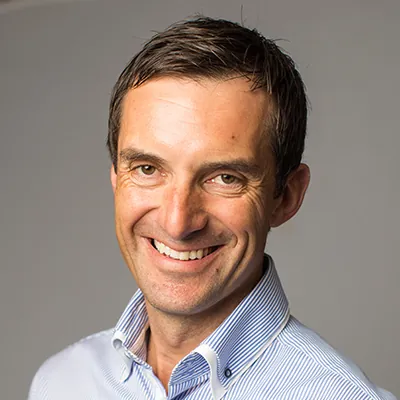
A career spent building wet processing plant for quarries in Britain and Ireland, having previously helped build a global wet processing brand.
What we need from you
A representative sample or a recent gradation of the feed, its clay and silt content, the moisture as it arrives, the tonnes per hour you want to put through, the specification the product has to meet, and what you currently do with the fines. If you already sell the by-product, the price you get for it is useful too, because it is the number the washed product has to beat.
Frequently asked questions
How does CFlo sell and support plants in Australia?
Through an Australian Certified Partner, which puts sales and service inside your own market with CFlo's engineering behind it. Oceania is covered from the same territory as the UK and Europe, and the Darwin frac sand plant is being delivered that way. Enquiries reach the sales desk on +61 870 925 996 or [email protected], and a regional specialist gets back to you, usually within one business day.
Can I see results before committing to a plant?
Yes. A Sample Study at CFlo's DSIR-accredited lab runs your own bulk sample through pilot units and reports recovered products, grades, yields, water and polymer consumption and a recommended flowsheet against the specification you sell into. Programmes run from 20 kg to 2500 kg of material and from one to two weeks up to twenty to twenty-four weeks from receipt of the sample.
What is Pre-Engineering and when does it run?
Pre-Engineering is the complete engineering package designed against your feed: process flow, mass and water balance, sized equipment list, general arrangement, civil and structural drawings and utility schedules, over twelve weeks in four phases. It runs in parallel with your financial clearance, against an invoiced fee, so manufacture starts when the supply contract is placed rather than after a further design loop.
Will the Aerograder handle damp or dirty feed?
No. Air classification suits a dry, clean feed below 5 mm at below 2% surface moisture, and the job is a fines cut rather than a wash. An enclosed crusher-to-classifier circuit or an arid site gives year-round dry feed, and either arrangement forms part of the specification. Feed carrying clay, silt or surface coatings is a wet duty, which is why the Darwin plant is a Micrograder.
Can crusher dust be washed into sand that meets a state road authority specification?
Washing removes the minus 63 micron fraction under control and grades what is left to sit inside a concrete sand envelope, and GR Infraprojects produces IS 383 manufactured sand from crusher dust on a fleet of 11 Combo plants. Whether a given Australian crusher dust gets fully inside the envelope a state road authority or concrete producer specifies depends on the rock and the crusher setting, which is what the Sample Study establishes.
What happens to the water and the fines?
Up to 95% of the process water is recycled, and the wet frac sand and manufactured sand plants described here run with zero liquid discharge. Tailings are rigidified at the point of disposal by Easysettle so they dry to a trafficable cake, and where a site cannot accommodate a settling bay, mechanical dewatering is specified instead. On marine sand, part of the wash water is rejected because chloride builds up in it.
How do I start?
Read how a Sample Study works, then send the sales desk your feed, tonnage and target specification through the contact page or on +61 870 925 996 and [email protected]. A regional specialist gets back to you, usually within one business day.