
Frac Sand and Silica Sand Processing in Australia
Proppant, glass sand and foundry sand graded to specification at the deposit, rather than hauled in by road from more than a thousand kilometres away.

CFlo builds modular plants that grade Australian silica sand to a tested specification. The Micrograder is the wet route for frac sand, glass sand and foundry sand where the feed carries silt, clay or surface coatings; the Aerograder is the dry route where the feed arrives dry and clean and needs only a fines cut. A Micrograder rated at 80 to 100 tonnes per hour is in manufacture for a frac sand project near Darwin, built to Australian and New Zealand standards and delivered through a CFlo Certified Partner in Australia. Every plant is sized from a Sample Study of the customer's own material before it is engineered.
What the specification asks of the sand
Frac sand is a proppant. Pumped into a fractured reservoir, it has to hold the fracture open under closure stress while letting hydrocarbons flow, and the standards it is sold against, API RP 19C and ISO 13503-2, are written around that job. At least 90% of a tested sample must fall between the two designating sieves for its grade, whether 20/40, 30/50, 40/70 or 70/140. Not more than 0.1% may be coarser than the coarse designating sieve and not more than 1% finer than the fine one. The same standards set limits on sphericity and roundness, crush resistance, turbidity and acid solubility, and clay, silt and surface coatings have to come off the grain before those limits can be met.
Glass sand and foundry sand are specification products of the same kind, judged on chemistry as well as grading. Two numbers decide what a silica deposit is worth: SiO2, which says how much of it is quartz, and Fe2O3, which says how much iron oxide is left. Iron is what discolours glass, so it sets the value of the sand. Commercial soda-lime-silica glass runs at 70 to 74% silicon dioxide, and the float glass specification held at Chu Lai in Vietnam calls for more than 99% SiO2 with Fe2O3 below 0.05%, in a band between 150 and 600 micron. Foundry sand is bought on grading and AFS fineness number, held batch to batch.
In every case the engineering problem is the same: a precise top-size and bottom-size cut, residual fines removed below the bottom sieve, and surface contamination stripped, repeatably, at production rate. Whether a given Australian deposit can be brought inside the band is a question for testwork on that deposit rather than a claim. See also frac sand and proppant, silica and glass sand and foundry sand.
The wet route: the Micrograder
Where the feed carries clay, silt or surface coatings, or needs both a wash and a sharp size cut, the Micrograder is the platform. It is a modular wet processing plant configured from proven process modules to match the deposit and the target product.
Atropure attrition cells scrub the coatings off each grain at 80% solids, so the separation stages downstream read the mineral rather than what is stuck to it. Screenmax precision fines screens fix the top of the gradation and dewater on the same deck. Hydrocyclones hold the bottom. The mid-range cut between two saleable fractions, where a screen would blind and a cyclone would scatter, belongs to the Vertimax upward flow classifier, which holds it from a PLC setpoint rather than drifting with the feed. Where iron is carried as discrete heavy mineral grains, Spiropure spiral gravity concentrators take them out by density with no reagents. The Hydromax high rate thickener recycles around 95% of the process water, and the Easysettle sludge management system releases water from the tailings at the point of disposal, so a wet frac sand plant can run close to zero liquid discharge.
Models run from the Micrograder BT50 at 50 tonnes per hour to the Micrograder BT100 and F100 at 100 tonnes per hour, with standard capacity varying with feed gradation and site conditions. Each plant is built to the standards required by its market, AS/NZS for Australia and New Zealand, including the PLC control panel that CFlo designs, builds and tests in its own works.
The dry route: the Aerograder
Some deposits do not need washing. Where the feed arrives dry and largely clean, a full wet circuit adds water, cost and footprint the material does not need, and the job is a precise fines cut rather than a wash. For those feeds CFlo deploys the Aerograder air classifier: a fines cut with no process water, no cyclone, no baghouse and no airlock, set by four controls, the selector blades, the feed rate to air ratio, the fan blades and the rejector speed. It cuts cleanly in the 75–100 micron region, which is where the residual fines below the finest designating sieves have to be removed.
Three conditions form part of the specification. The feed is below 5 mm, because the machine cuts fines and coarser material belongs on a screen or in a wet plant. Surface moisture is below 2%, because air will not separate damp fines. And the feed is dry all year, which depends on the circuit rather than the season: an enclosed crusher-to-classifier circuit or an arid site gives year-round dry feed, and either arrangement is written into the specification. Only water removes bonded clay, so a feed carrying silt, mud, clay or organics is a wet duty, and the route is chosen on the merits of the feed. Two models are available, the Aerograder C100 at 60 to 70 tonnes per hour and the Aerograder C200 at 120 to 150 tonnes per hour, and capacity scales by running units in parallel rather than by oversizing a single shell.
The Darwin frac sand plant
CFlo's first frac sand project in Australia is a Micrograder modular wet processing plant rated at 80 to 100 tonnes per hour, in manufacture for a site near Darwin in the Northern Territory, with commissioning scheduled for early 2027. It will wash and classify local sand into proppant grades for a large oil and gas operator, and it is being delivered through a CFlo Certified Partner in Australia. Neither the partner nor the end user is named, at their request.
Until now there has been no local source of sand graded to the proppant specification, and the sand used on the project has been hauled in by road from more than a thousand kilometres away. Freight is charged by the tonne over every one of those kilometres, on material that is available locally in the ground. Once the plant is running the same specification will be made on the doorstep, and the saving on haulage arrives before any process efficiency is counted, with the carbon attached to that haulage going with it.
The Australian feed is run-of-pit sand carrying silt and surface coatings that have to be scrubbed off, which makes it a wet duty. The plant reaches the specification in stages: scalping and sizing, attrition scrubbing to lift the coatings off the grains, then classification to place the cut points precisely. Around 95% of the process water is recycled and the installation runs with zero liquid discharge, which matters on a remote site with no water to spare. It is built to Australian and New Zealand standards and ships as containerised modules, so commissioning on site is measured in days rather than months. Delivery is managed by Ryan Barker, Regional Head of Operations and Delivery at CFlo Europe Limited in Belfast, whose territory includes Oceania. Measured results will be published once the plant is running, and the project announcement has the detail.
Abu Dhabi: proppant graded with no process water
The dry route has been measured in the field. In Abu Dhabi, four Aerograder C100-class units run in parallel, 280 tonnes per hour of combined capacity, grading local dune and silica sand into frac sand for a major oil and gas services operator in a basin where water cannot be spared. Across a July 2026 verification campaign at 70 tonnes per hour per unit, the graded product averaged 0.83% minus 200 mesh against the 1% specification ceiling and stayed within a 0.71% to 0.98% band across all four machines. Mass yield to product was around 90%, recovery of the plus 140 mesh coarse fraction was about 94%, and the demonstrated median cut was approximately 290 mesh, or 54 micron, well below the 75 micron specification gate. The cut was made on a feed concentrated below 30 mesh, a tighter band than conventional dedusting duties and a more demanding case for the classifier.
The classified product goes to multi-deck dry screens for the 20/40, 40/70 and 70/140 product bands, and because the fines never reach the deck, blinding and recirculation are almost eliminated. The fines stream itself has value in brick-making, cementitious blends and filler markets. The measured results, campaign by campaign, are in the Abu Dhabi case study.
Chu Lai: float glass sand at 99.3% SiO2
The wet route's record is in holding a narrow band on silica. At CFG-Chu Lai Float Glass in Quang Nam Province, Vietnam, two 100 tonne per hour Micrograder lines take a raw ore of about 98.5% SiO2 and roughly 0.5% Fe2O3, a good silica deposit and still not a glass sand, and produce a final product above 99.3% SiO2 with Fe2O3 below 0.05%. That is a tenfold cut in iron on an entirely gravity-based, chemical-free circuit: Atropure attrition scrubbing, Centrimax hydrocyclone classification, Spiropure spiral concentration and Vertimax hydraulic classification, with Hydromax and Easysettle recovering approximately 95% of the water. Product yield is approximately 71%, the plus 600 micron oversize is sold as a construction sand by-product, and the product sits consistently between 150 and 600 micron with the plus 600 micron fraction below 1%.
The plant has also proved robust against the feed. During sustained operation the ore deviated materially from the samples used in the original test programme, with lower SiO2, higher Al2O3 and a coarser size distribution, and the plant still met or exceeded the specification. The Chu Lai case study sets out the flowsheet and the results. On the same platform, a Micrograder BT100 at Bharuch in India produces 100 tonnes per hour of AFS 50 to 55 foundry sand with zero liquid discharge, and a Micrograder BT50 at Hue in Vietnam grades low-iron silica sand for cristobalite manufacture at 30 to 35 tonnes per hour, recycling 95% of its process water.
The Sample Study comes first
No plant is engineered from a catalogue. Sizing starts with a Sample Study at CFlo's DSIR-accredited laboratory, which runs bench-scale and pilot-scale programmes on bulk samples as a connected circuit rather than as jar tests, so the interactions between stages are in the result rather than assumed. Programmes are sized from 20 kg for a short bench programme up to 2500 kg for a full pilot campaign, depending on the stages involved. Samples come to the CFlo works at Sankrail Industrial Park, Howrah, on a DDP basis with the paperwork agreed first, and how the sample is taken matters as much as how much is sent, so that is the first conversation.
What comes back is a report, not an opinion: feed characterisation, stage-by-stage results, a mass balance across the flowsheet, fraction-wise chemical assay of feed and product, product grades and yields against the specification the sand will be sold on, consumption figures for water, polymer and power, a recommended flowsheet sized to the tonnage, and samples of the products to put in front of your own customer. Where a product is sold against an industry standard, the testwork follows that standard's own test methods, so a proppant or glass sand result reads directly against the specification. Report timelines run from one to two weeks for a short programme to twenty to twenty-four weeks for an extensive one, measured from receipt of the sample. Reports are confidential to you.
Pre-Engineering follows only if the numbers work. It runs over twelve weeks in parallel with your capital approval: process flow, mass and water balance, a final sized equipment list, plant general arrangement, civil and structural drawings with foundation loading and utility schedules, and long-lead items identified early. Manufacture then starts on placement of the supply contract rather than after a further design loop. The Sample Study and Pre-Engineering page sets out both services in full.
Send us a sample
Tell us about the material and an engineer will come back with how much to send, how to sample it, and what the programme would cover.
Who you deal with in Australia
CFlo plants are sold and supported in Australia through Certified Partners, which puts sales and service inside the market, in the same way the Darwin project is being delivered. Delivery of that plant is managed by CFlo Europe Limited in Belfast, whose territory covers the UK, Europe, North America and Oceania, so the people running the Darwin project are the people who would run yours. CFlo Oceania handles sales and support enquiries for Australia and New Zealand on +61 870 925 996 or [email protected], and the contact page lists every regional office.
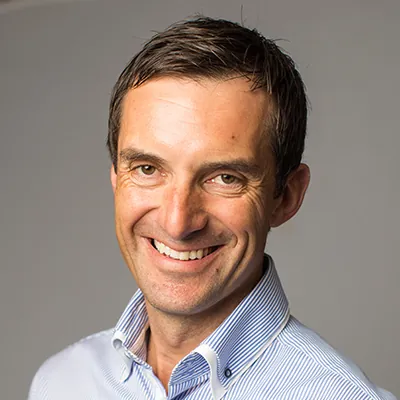
A career spent building wet processing plant for quarries in Britain and Ireland, having previously helped build a global wet processing brand.
What to send us first
A representative sample or a recent gradation of the feed, a chemical analysis if you have one, the moisture as it arrives, the specification the product has to meet, whether a proppant grade, a glass grade or a foundry fineness number, the tonnes per hour you want to produce, and how much water the site has. If proppant is currently being hauled to your operation, the landed cost per tonne is useful too, because it is the number a local plant has to beat. Send it through the form above, or contact CFlo Oceania, and we will scope the Sample Study with you before you ship anything.
Frequently asked questions
What specification does frac sand have to meet?
Under API RP 19C and ISO 13503-2, at least 90% of the tested sample must fall between the grade's designating sieves, for example 20/40 or 40/70, with no more than 0.1% coarser than the top sieve and no more than 1% finer than the bottom sieve, plus limits on sphericity, roundness, crush resistance, turbidity and acid solubility. Clay, silt and surface coatings have to be removed to meet the turbidity, crush and acid solubility limits, and that is what decides between a wet and a dry plant.
Can proppant be made in Australia without process water?
Where the feed arrives dry and clean, yes. The Aerograder makes the fines cut with no water, no cyclone, no baghouse and no airlock, on feed below 5 mm at below 2% surface moisture, and in Abu Dhabi it held the product below the 1% minus 200 mesh ceiling on all four units. An enclosed crusher-to-classifier circuit or an arid site gives year-round dry feed, and that arrangement forms part of the specification. A feed carrying silt, clay or surface coatings is a wet duty.
When is a wet plant the right choice?
When the deposit carries clay, silt or surface coatings that must be scrubbed off to meet turbidity and crush limits, or when the product needs both a wash and a sharp size cut. That is the case at Darwin, where the feed is run-of-pit sand carrying silt and surface coatings, and it is why the plant there is a Micrograder. A wet frac sand plant recycles around 95% of its process water and can run with zero liquid discharge, so it is workable on a remote site with little water.
Will a Micrograder get our deposit to glass grade?
That depends on the mineralogy, particularly how the iron is carried. At Chu Lai a feed of about 98.5% SiO2 with roughly 0.5% Fe2O3 reached above 99.3% SiO2 with iron below 0.05% on a gravity-based circuit. What an Australian deposit reaches is a Sample Study question rather than a claim, which is why sizing starts with your own sample.
How much material does a Sample Study need, and how do I send it?
Programmes are sized in bulk from 20 kg for a short bench programme up to 2500 kg for a full pilot campaign, depending on the stages involved. Samples come to the CFlo works at Sankrail Industrial Park, Howrah, on a DDP basis with the paperwork agreed first. How the sample is taken matters as much as how much you send, so it is worth a conversation before you ship anything.
How long does a Sample Study take?
From one to two weeks for a short programme to twenty to twenty-four weeks for an extensive one, measured from receipt of the sample. Where you sit in that range depends on how many stages the material needs. Pre-Engineering, if you go on to it, runs over twelve weeks in parallel with your capital approval.
Who supplies and supports a CFlo plant in Australia?
Plants are sold and supported through CFlo Certified Partners in Australia, with delivery managed by CFlo Europe Limited in Belfast, whose territory includes Oceania. Plants are built to Australian and New Zealand standards. Call CFlo Oceania on +61 870 925 996, email [email protected], or use the contact page.