
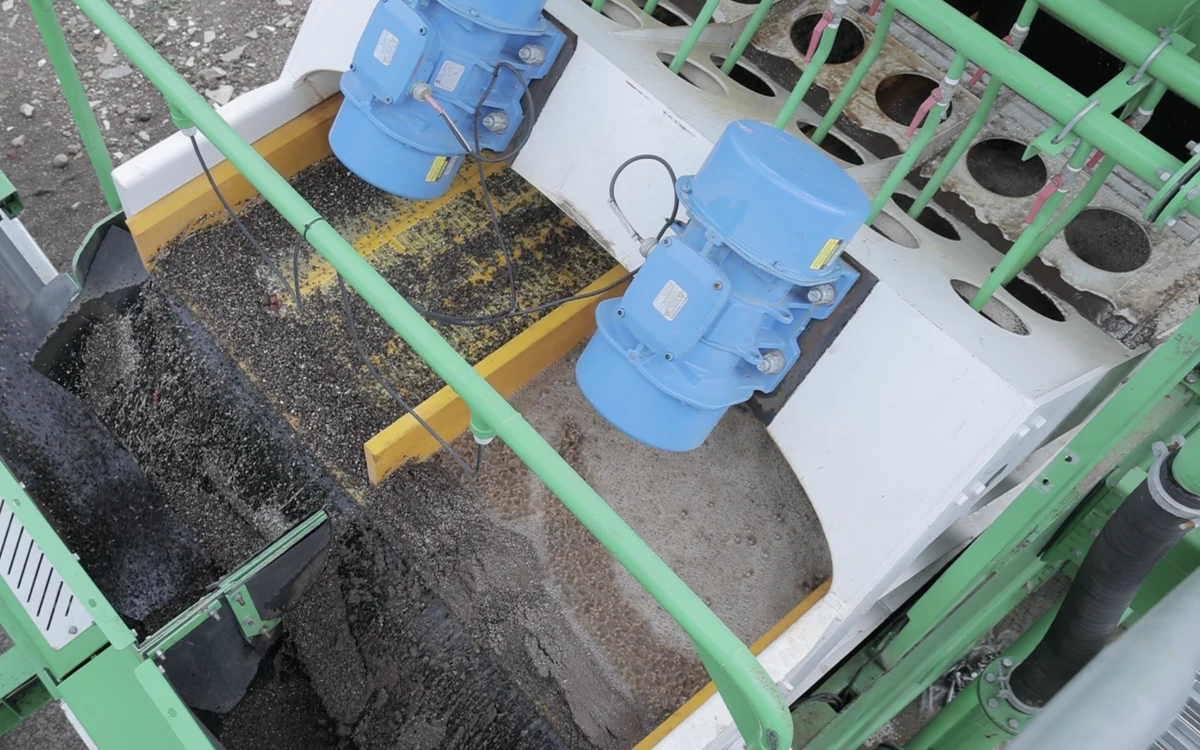
Centriscreen Dewatering & Sizing System
Ready for market straight from the belts, not after three days on a pad.
The Centriscreen Dewatering & Sizing System does two jobs in one machine: it makes the size split and it dewaters the product. Washed sand and aggregate come off the belts ready for market rather than going to a drainage pad to lose their water over days, which turns production into revenue as quickly as the plant can make it.
Wet product is unsold product
A washed sand that leaves the plant saturated is not finished. It goes to a drainage pad and sits there, and until it has drained you cannot weigh it honestly, load it, or sell it.
That waiting costs more than it looks. It ties up yard space that has to be sized for several days of production rather than one. It puts a loader and an operator on double handling, moving the same material twice. It makes stock figures unreliable, because a wet stockpile weighs what the water weighs. And on a site with a monsoon, a pad that never fully dries becomes the constraint on the whole operation.
The Centriscreen removes the pad from the flowsheet. Product leaves the belt at a moisture you can convey, stockpile and load out immediately.
Sizing and dewatering in the same machine
Most plants treat these as two stages: a sizing screen makes the split, then the product goes to a separate dewatering screen, with a transfer chute, its own structure, its own drive and its own maintenance between them.
The Centriscreen combines them. The deck sizes the material and the discharge end dewaters it, so one machine and one structure do what two used to, and the transfer point between them, which is where spillage and wear concentrate, no longer exists.
Fewer machines is not the point in itself. The point is that every stage you remove is a stage that cannot block, cannot wear out and does not need a walkway around it.
Working with the cyclones
The Centriscreen is normally paired with hydrocyclones, and the pairing is what makes the fines behave.
The cyclones make the fine cut and thicken the underflow; the Centriscreen takes that densified feed, holds the size split and drives the water out of it. In CFlo circuits this pairing runs as the Turbo Dual Wash arrangement, with cyclones and screen working as one unit rather than as two machines that happen to be plumbed together.
Recovering the fine fraction rather than losing it to the wash water matters twice over: it is product you have already paid to produce, and it is fines that would otherwise load the water and tailings circuit.
Straight to the stockpile
Because the product is dry enough to handle at the discharge, it can go directly to stockpiling conveyors rather than to a pad and a loader.
CFlo plants use wing stockpiling conveyors off the Centriscreen so that separate products build their own piles as they are made. That closes the loop on the whole idea: the material is sized, dewatered, conveyed and stockpiled without anyone touching it, and the first time a machine picks it up again is when it is being loaded onto a truck that is paying for it.
The screens it houses
The screen inside a Centriscreen is a Screenmax Dewatering & Sizing Screen. The Centriscreen is the system around it: the structure, the cyclone stage, the dewatering discharge and the stockpiling conveyors, with the screen doing the sizing and dewatering at its heart.
Four models are housed on the Centriscreen, B63, A65, C43 and E23, and which one your plant carries follows the tonnage and the size split it has to make. That is why the range of duties is so wide: the system does not change, the screen inside it does.
The Screenmax FS86 is the High Precision Fines Screen from the same family, and the G series are its circular motion rinsing screens, used where a product has to sit inside a narrow band rather than simply be sized and dewatered.
Where it fits in the circuit
The Centriscreen is the product end of the plant. It is a standard part of the Combo, Reurban, Micrograder and Oremax ranges, and is supplied on its own for existing circuits.
It earns its keep wherever the product is sold by weight and by grading: manufactured sand, sand and gravel washing, aggregate washing, silica and glass sand, C&D waste recycling and iron ore.
Where a product needs a tighter band than the housed screen can hold, a Screenmax FS86 is added as a separate precision stage, and where the mid-range split is the hard part the Vertimax holds it.
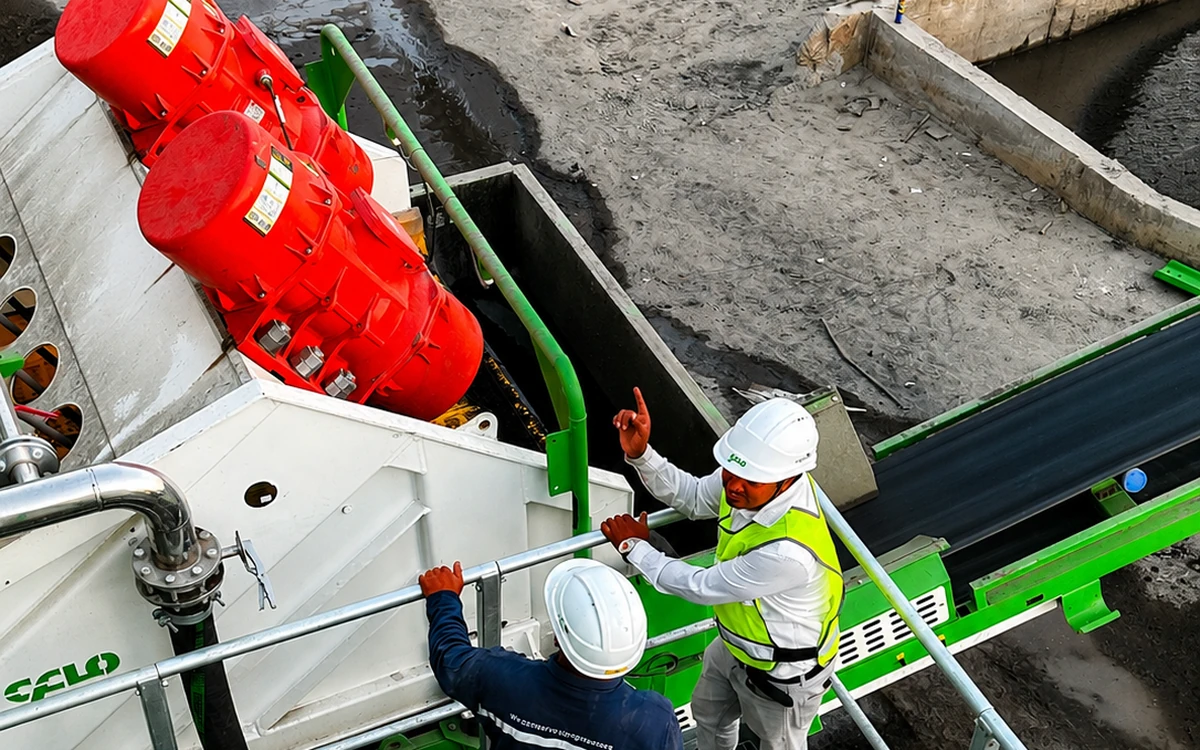
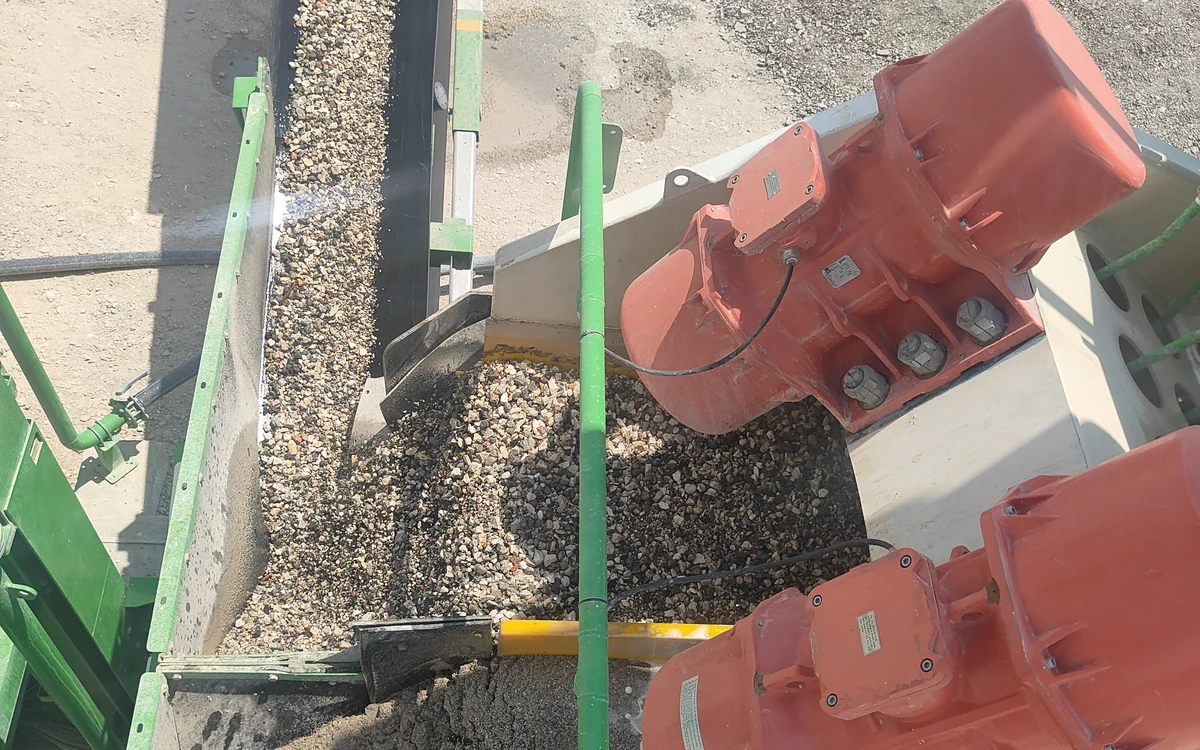
In pictures
Frequently asked questions
What is a dewatering and sizing system?
A single machine that makes the size separation and takes the water out of the product, instead of a sizing screen followed by a separate dewatering screen with a transfer chute between them.
Why does dewatering on the machine matter?
Because a saturated product cannot be sold. It goes to a drainage pad, occupies yard space for days, gets handled twice by a loader and weighs what the water weighs. Dewatering at the discharge means the material is saleable the moment it reaches the stockpile.
Do I still need a drainage pad?
No, and removing it is usually the point. Product is conveyed straight to the stockpile at a moisture you can handle.
How does it work with hydrocyclones?
The cyclones make the fine cut and thicken the underflow, and the Centriscreen sizes and dewaters what they hand over. In CFlo circuits the two run as a single Turbo Dual Wash arrangement rather than as separately specified machines.
Centriscreen or Screenmax?
Not a choice: the screen inside a Centriscreen is a Screenmax Dewatering & Sizing Screen, and four models are housed on it, B63, A65, C43 and E23. The Centriscreen is the system built around that screen. The Screenmax FS86 is the High Precision Fines Screen from the same family and is specified separately, where a product has to hold a narrow band.
Can it be retrofitted to an existing plant?
Yes. It is supplied as a standalone system and is designed to drop into the product end of a circuit you already run.