
Resources
Technical knowledge from two decades of wet processing, distilled into practical guides for engineers, producers and specifiers.
CFlo's resources section offers technical reference material for engineers, producers and specifiers, headlined by the Engineered Sand Handbook: a complete guide to engineered sand covering specifications, processing and applications. They are drawn from what CFlo has learned building and running plants, and are available on request.
Why an equipment maker publishes a handbook
Most manufacturers in this industry stop at the machine. They will tell you what the plant produces and consider the job done.
A producer's problem does not end there. Making a sand to a gradation is only useful if somebody buys it and it performs in concrete, and whether it performs depends on things an equipment brochure never covers: particle shape, fines content, water demand, and what all of that does to a mix design and to the cement bill.
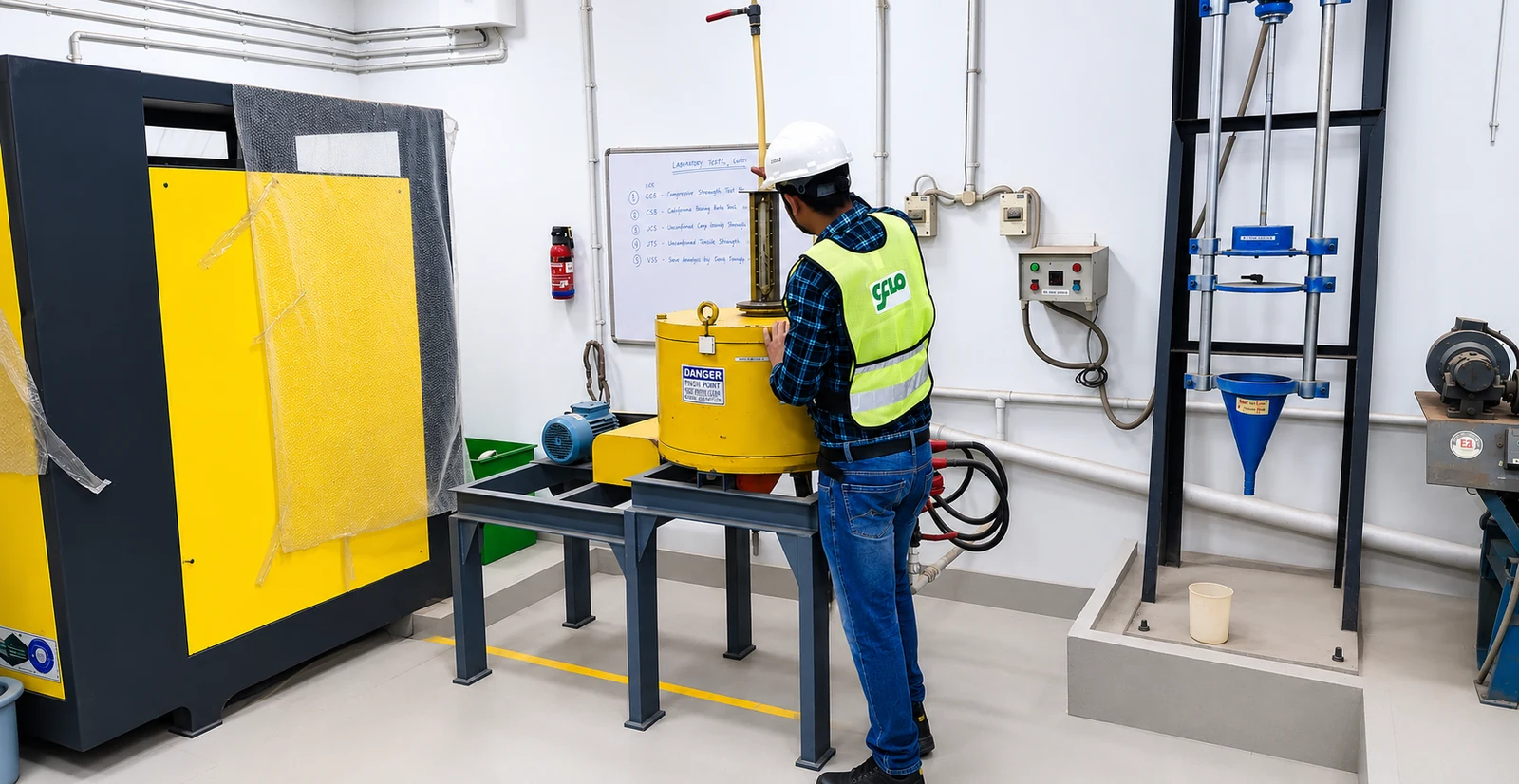
CFlo works on that end of the problem too, in our own Sample Study & Interpretation facility, where the sand a plant produces is tested in concrete rather than only against a sieve. The Engineered Sand Handbook is where that knowledge is written down.
Cement, and the carbon that comes with it
The commercial argument for engineered sand is usually made on the sand. The stronger argument is made on the cement.
A well-graded manufactured sand with controlled fines and good particle shape needs less water for the same workability. Less water for the same strength means less cement. Cement is the most expensive ingredient in a cubic metre of concrete and by a wide margin the largest source of its carbon, so a sand that reduces the cement content reduces the cost and the footprint together.
That is the part the handbook exists to explain, with the evidence behind it: not just how to produce specification sand, but what it is worth to the person pouring it.
Engineered Sand Handbook
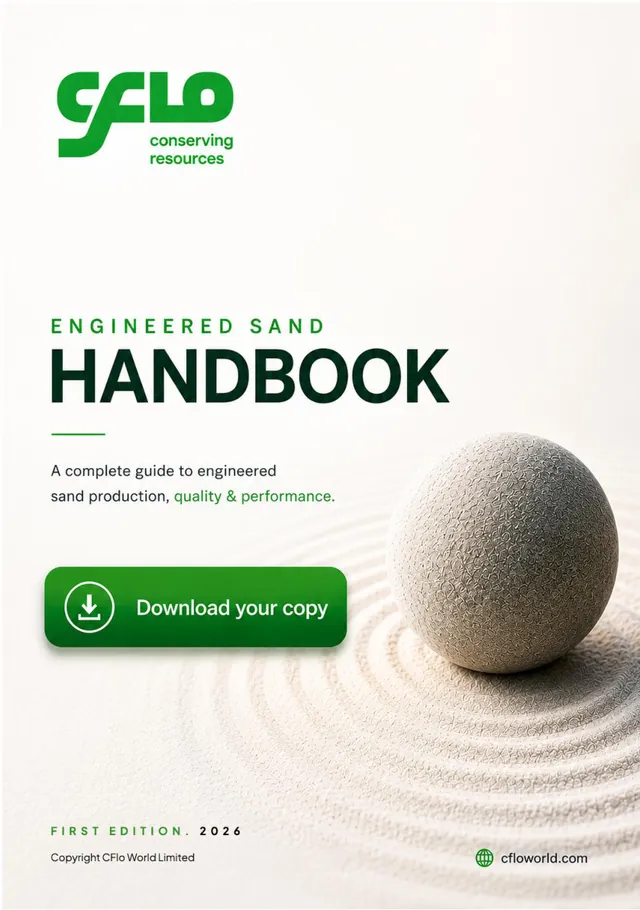
A complete guide to engineered sand, written by the team behind 500+ wet processing installations across 20 countries. The handbook brings together what CFlo has learned since 2006 about producing consistent, specification-grade sand as a sustainable replacement for natural sand.
It is a practical reference for concrete producers, contractors, consultants and policymakers working towards the same goal we are: helping 100 countries replace natural sand with sustainable alternatives.
Request your copy and our team will send it to you directly.
If you would rather see it proven on your own material than read about it, that is what the Sample Study & Interpretation facility is for.
Select the document you need below and it will arrive in your inbox within moments.
Request this resource
Tell us who you are and the team will email it to you.
Frequently asked questions
What is the Engineered Sand Handbook?
A complete guide to engineered sand published by CFlo, covering how specification-grade sand is produced through modular wet processing and where it can replace natural sand. It is written for concrete producers, contractors, consultants and specifiers, and follows the material through to what it does in a mix rather than stopping at the sieve.
Who should read the Engineered Sand Handbook?
Anyone specifying, producing or approving sand for construction: concrete producers evaluating manufactured sand, contractors facing natural sand shortages, consultants writing material specifications, and policymakers shaping sand and C&D waste regulations. It is equally useful as an induction resource for teams new to wet processing.
How do I get CFlo's resources?
Submit the request form on this page with your email address and our team will send the resource to you directly. There is no charge. For equipment-specific literature, see the brochures page, and for real project data see our case studies section.
Does the handbook cover concrete performance, not just production?
Yes. Gradation, particle shape and fines control are covered as production problems and then followed through into what they do in concrete: water demand, workability, strength development and the cement content a mix needs. That connection is what an equipment brochure leaves out.
Why does CFlo publish technical resources?
CFlo's mission is to help 100 countries replace natural sand with sustainable alternatives, and that shift depends on engineers and specifiers trusting engineered sand. Sharing the technical evidence openly, from gradation control to water recycling, accelerates adoption faster than keeping it proprietary.