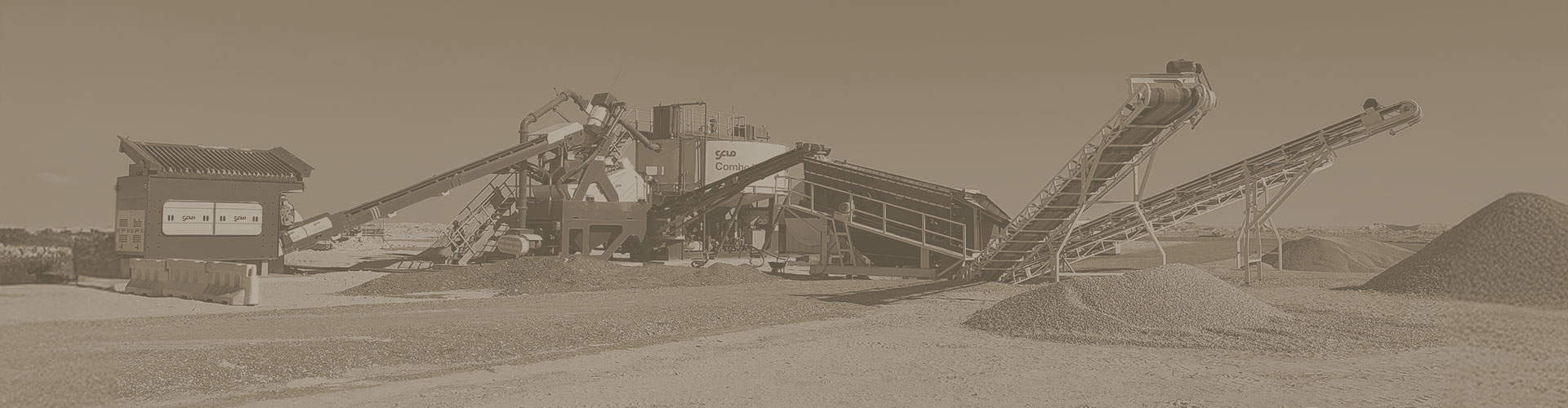
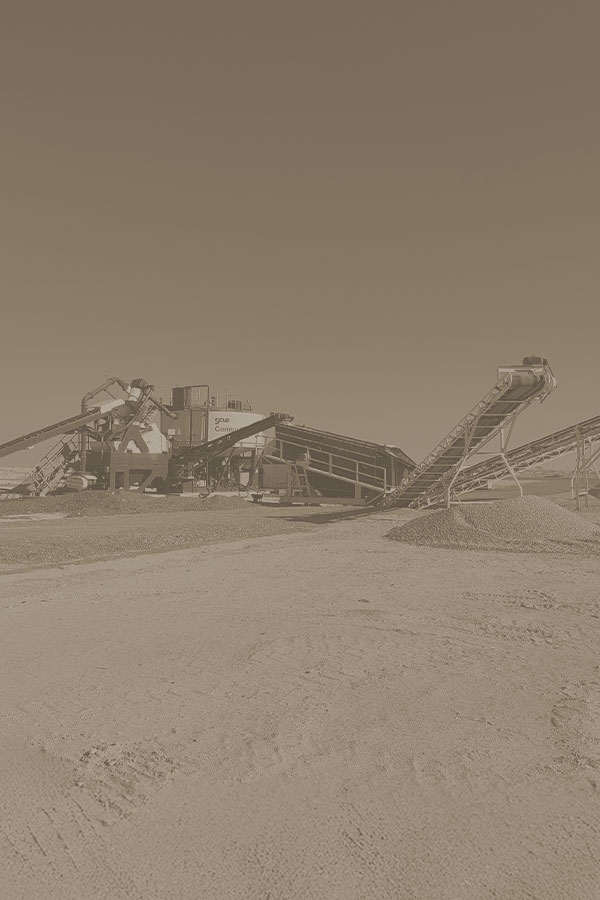
How CFlo World Limited is transforming construction and demolition waste into valuable recycled aggregates at the waste disposal landfill site in Rawdat Rashed near Doha, setting a new benchmark for sustainable waste management across the Gulf.
Total Processing Capacity - 310 tph
Water Recycling Rate - 95%
Fines in Final Product - <3%
Phased Deployment - 2 Phases
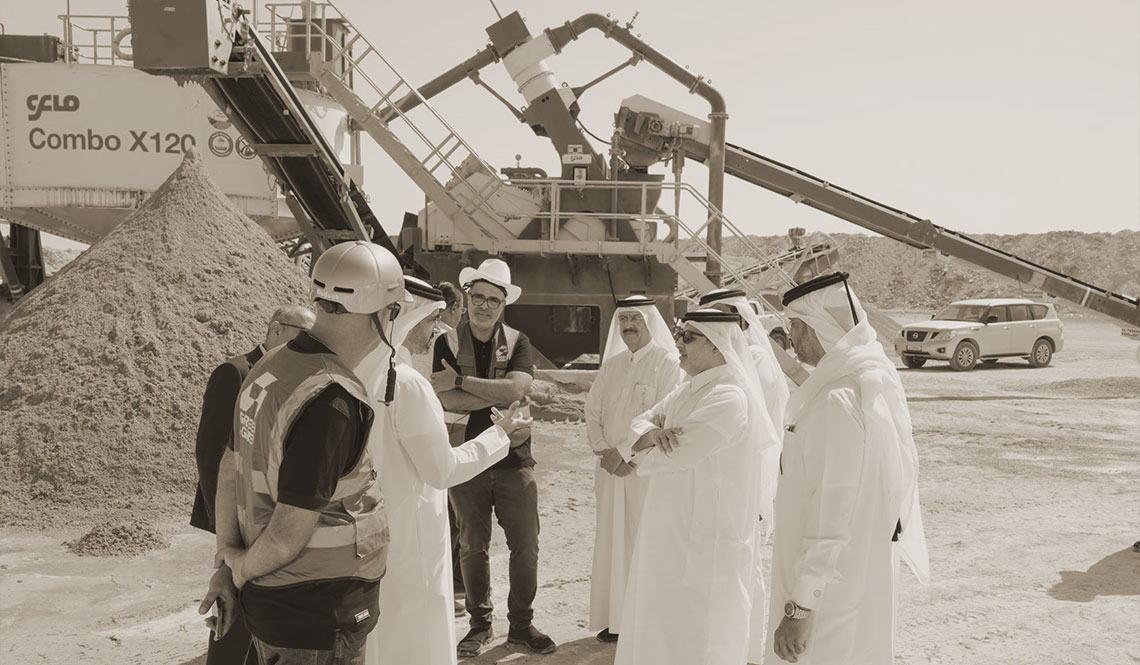
Qatar’s remarkable two-decade construction boom, accelerated by preparations for the FIFA World Cup 2022, generated enormous volumes of construction and demolition (C&D) waste. Managing that legacy effectively became both an environmental imperative and a national priority. Qatar’s National Vision 2030 demands sustainable development, and the Qatar Projects Management Company (QPMC) was mandated to find technologies capable of converting C&D debris into recycled materials with genuine infrastructure value.
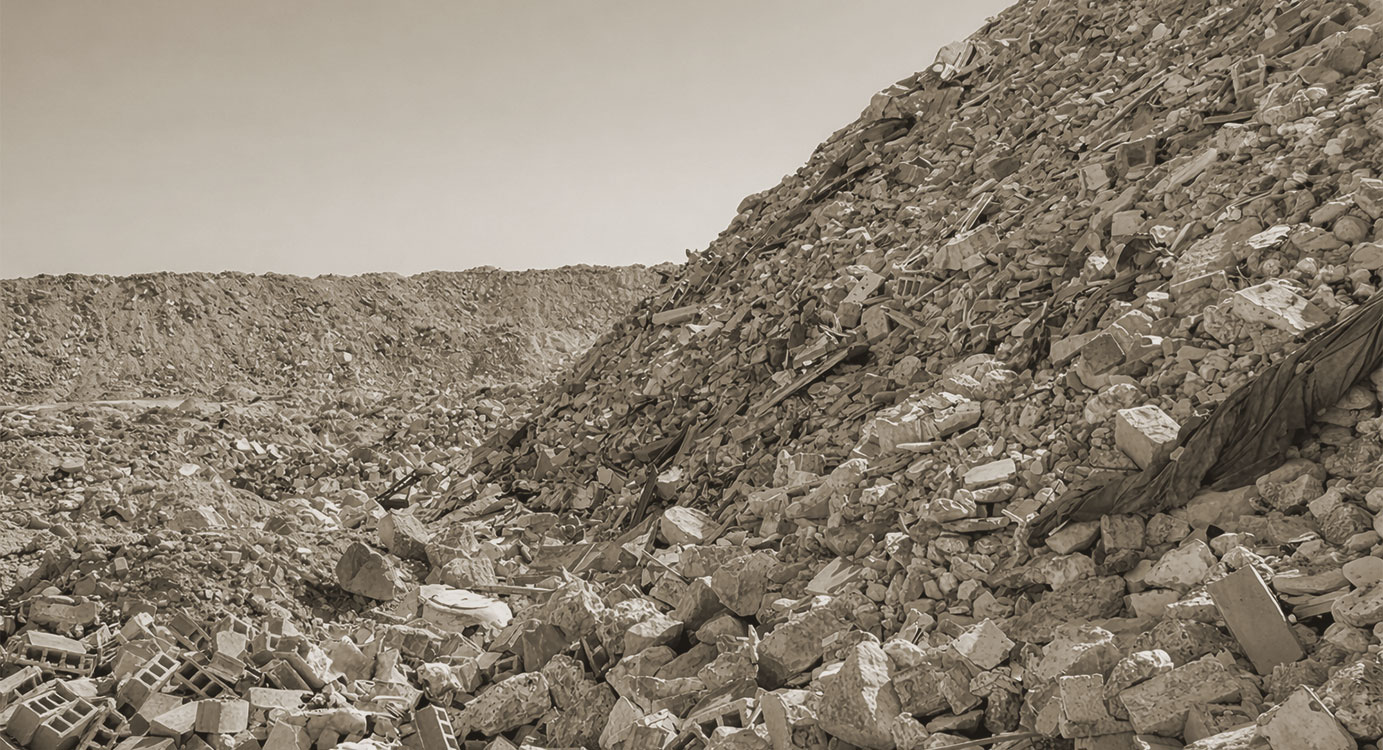
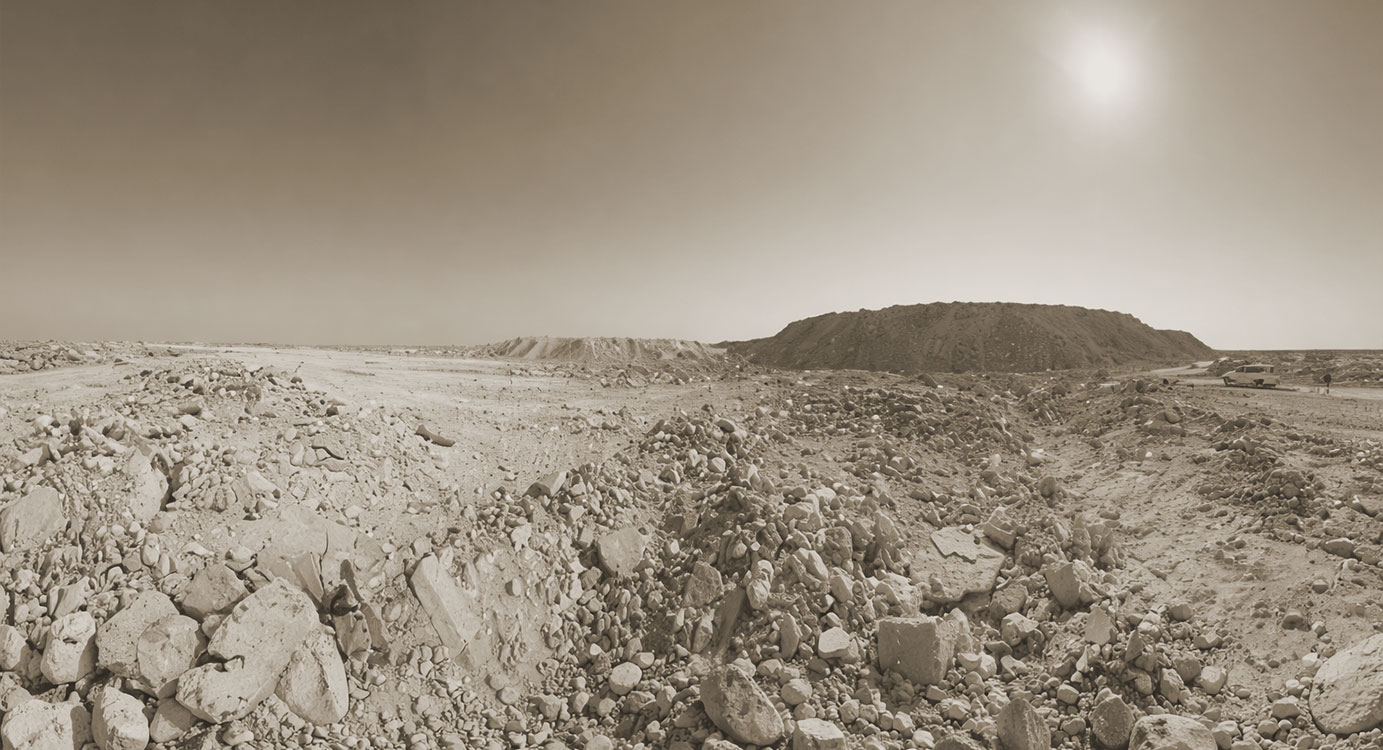
The scale of the problem was formidable: vast stockpiles of demolition rubble at a remote desert site in Rawdat Rashed landfill site, with no mains power and no piped water supply. Processing this material to a specification demanding less than 3% of fines at 63 microns, while achieving consistent grading and low contamination, required a purpose-engineered solution from the ground up.
Green & Grey Trading and Contracting WLL, contracted by QPMC to establish the pilot project, selected CFlo World Limited to design and engineer the processing system. CFlo’s approach combined proven modular wet processing technology with site-specific adaptations, delivering a plant capable of operating entirely off-grid.
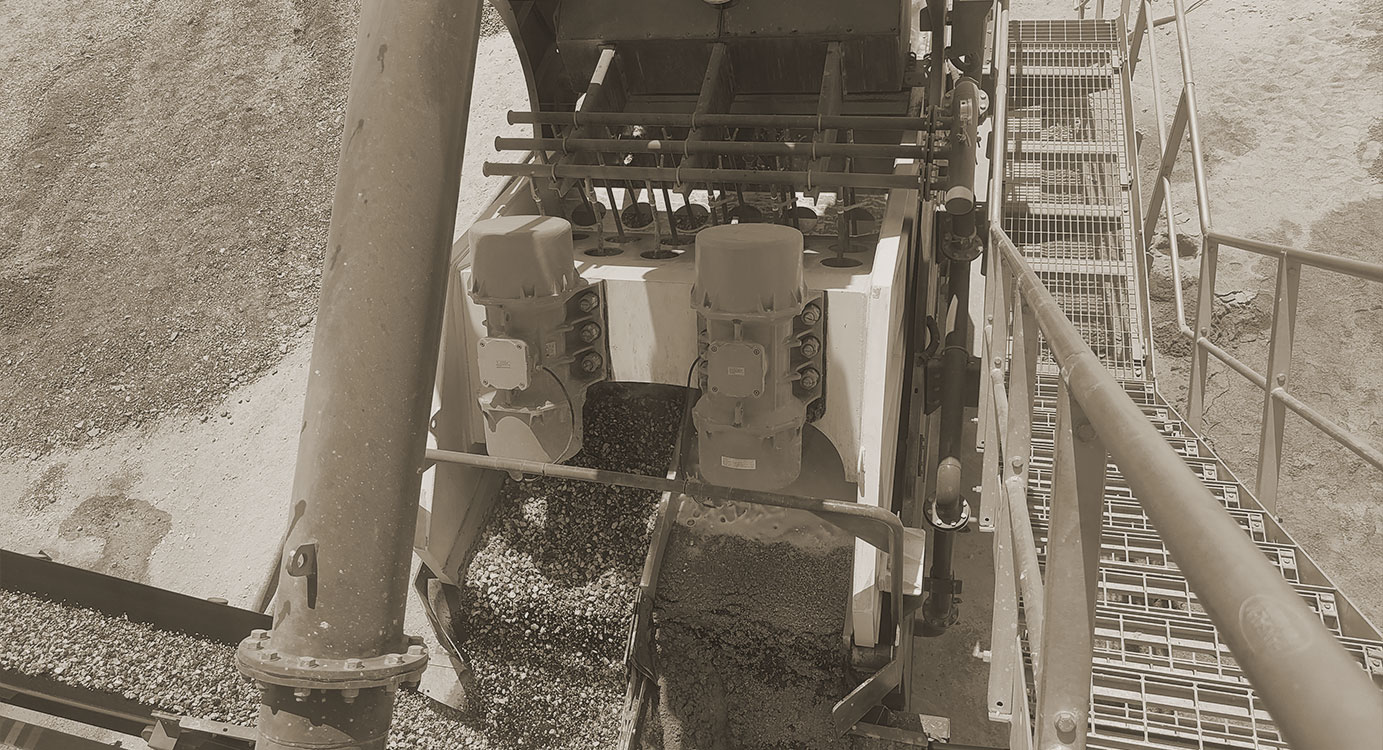
Phase 1 centered on a modular wet processing platform capable of handling up to 120 tonnes per hour of mixed C&D material. The system accepts crushed raw demolition rubble and, through a combination of washing and classification, separates it into clean, specification-grade recycled aggregates and manufactured sand. CFlo platform is built around patented technology, enabling the plant to operate at 95% water recovery. This was a critical feature given the absence of any piped water supply at Rawdat Rashed.
Following the success of the pilot, a fully integrated advanced processing system was engineered as Phase 2, adding a further 190 tonnes per hour of processing capacity. The combined two-phase system will operate at 310 tonnes per hour, making it one of the largest C&D waste recycling installations in the gulf region.
When we looked at this project, the challenge wasn’t just the material. It was the location. No power, no water, extreme heat. Our wet processing platform was designed precisely for conditions like these. It’s modular, it recirculates 95% of its water, and it can run entirely on generators. That’s not a workaround. That’s the design.
| Parameter | Raw Ore (Typical) |
| Client | Green & Grey Trading and Contracting WLL | QPMC, Qatar |
| Location | Rawdat Rashed, Qatar |
| Equipment | Combo X120 (Phase 1) + Custom-design 190tph Reurban advanced wet processing system (Phase 2) |
| Total Capacity | 310 tonnes per hour |
| Water Recovery | 95% recirculation |
| Product Spec | < 3% material passing 63 microns | Meets QPMC standards |
| Status | Phase 1 operation since 2025, Phase 2 under commissioning |
Three principal challenges shaped the engineering brief, each resolved through deliberate design choices embedded in the CFlo system.
Off-Grid Operation
With no power grid and no water infrastructure at the remote Rawdat Rashed site, the plant had to be self-sufficient. CFlo engineered the equipment to desired electrical specifications, allowing reliable operation from generators and eliminating the mandatory need for grid connection. The 95% water recycling system means the entire washing and classification process runs on a small, continuously replenished supply, with minimal make-up water required.
Stringent Product Quality Requirements
QPMC demanded tight specifications for recycled aggregate quality before approving the material for use in infrastructure applications. The CFlo process consistently achieved less than 3% of material passing 63 microns, meeting and receiving formal QPMC approval. The resulting graded aggregates and recycled sand are suitable for use in multiple construction applications, giving the output genuine market value.
High Alkalinity and Variable Water pH
Legacy C&D demolition material, particularly concrete rubble, releases significant alkalinity during wet processing, causing pH levels in the recirculated water to climb sharply. Left unaddressed, this would compromise both process efficiency and water recycling performance. CFlo’s integrated pH conditioner enabled the operator to stabilise the pH continuously, maintaining consistent processing conditions and protecting the water recirculation circuit from scaling and degradation.
The results speak clearly. Raw mixed demolition rubble, including concrete chunks, masonry debris and fine material, enters the wet processing system and exits as distinct, specification-grade sand & aggregate products. Laboratory testing by International Technical Laboratory W.L.L. (ITL), conducted to BS EN 933-1:2012 standards, confirmed the quality of the recovered material across multiple product streams.
| Test Parameter | Standard | Result |
| Particle size distribution (0–10 mm) | BS EN 933-1:2012 | Well-graded, consistent |
| Particle size distribution (0–28 mm) | BS EN 933-1:2012 | Well-graded, consistent |
| Clay lumps & friable particles | QPMC limits | 0.1–0.2% |
| Acid soluble sulphate | BS EN 1744-1 | Tested & characterised |
| Chloride content | BS EN 1744-5 | Tested & characterised |
| Fines passing 63 μm | QPMC spec (<3%) | < 3% achieved |
These verified outputs are fit for use in various civil infrastructure applications, converting what was a landfill liability into a commercially viable construction material.
The lab results confirmed what we saw on site from day one. Our system delivers a clean, well-graded product that meets the specification every time. When you’re processing legacy demolition material with this degree of variability, consistency is everything. That’s what gives the end client confidence to approve the material for use in real infrastructure projects
This project sits at the intersection of environmental regulation and economic opportunity. Qatar’s National Vision 2030 places sustainable resource management at the heart of national development strategy. The Ministry of Municipality and Environment (MME) has progressively tightened C&D waste regulations by raising landfill fees, mandating on-site segregation and pushing operators toward certified recycling solutions.
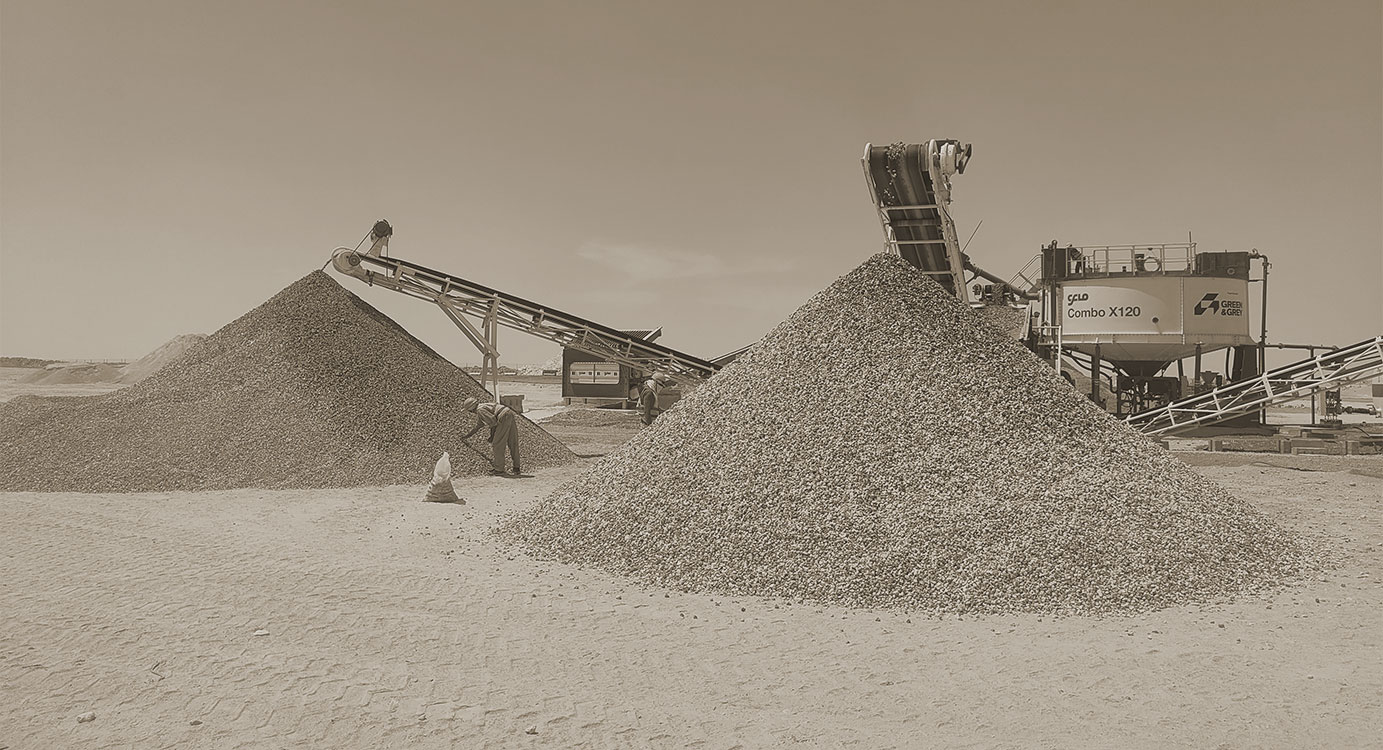
The Rawdat Rashed installation responds directly to that regulatory direction. By processing legacy stockpiles that might otherwise have remained as permanent landfill, the project contributes measurably to Qatar’s circular economy commitments by recovering high-value aggregates, conserving natural resources, and demonstrating that C&D waste is a raw material, not a problem.
What has been achieved at Rawdat Rashed is more than a single installation. It is a proof of concept for the entire Gulf region. As construction pipelines continue to generate significant C&D volumes across Qatar, the UAE, Saudi Arabia and beyond, the pressure to find credible processing solutions will only intensify.
CFlo’s combination of modular design, off-grid capability, high water efficiency and proven product quality positions it uniquely for this market. The Combo X120’s ability to operate under these conditions, while reliably hitting tight product specifications, removes the two most common barriers to deploying wet processing in remote or brownfield locations across the Middle East.
The expansion from 120 tph to 310 tph across two phases also demonstrates the scalability inherent in CFlo’s modular platform, allowing operators to start with a pilot, prove the economics, and scale to full commercial throughput without replacing core infrastructure.
The Middle East is where CFlo’s technology meets its most compelling use case. Water scarcity, remote sites, extreme temperatures. These aren’t obstacles for us; they’re the conditions we engineer for. Qatar is the proof point. The model is now ready to scale across the GCC and beyond.
The Qatar project is not an isolated achievement. It is part of a broader strategic mission. The cement and concrete industry is one of the largest consumers of sand and aggregates on the planet, and one of the most carbon-intensive sectors in the global economy. The GCCA’s 2050 Net Zero Roadmap demands a fundamental shift in how raw materials are sourced, processed and reused. C&D waste recycling, precisely what the Rawdat Rashed installation delivers, sits at the heart of that transition: diverting demolition debris from landfill and returning it as specification-grade aggregate directly into the construction supply chain.
Natural sand is the world’s most consumed raw material after water. Its unsustainable extraction is driving ecological destruction across rivers, coastlines and deltas on every continent. CFlo’s mission to sustainably replace natural sand in 100 countries is not simply an environmental ambition. It is an economic and industrial imperative. Qatar is one proof point.
In March 2026, CFlo joined the Global Cement and Concrete Association (GCCA), as a Net Zero Value Chain Partner alongside ABB, Schneider Electric and Saint-Gobain. C&D waste recycling sits at the heart of the GCCA’s 2050 Net Zero Roadmap, and the Rawdat Rashed installation is a direct contribution to that global transition.
About CFlo World Limited
CFlo World Limited is a global leader in modular wet processing technology, with an installation base of over 500 projects across 18 countries in nearly two decades of operation. The company’s purpose is to conserve resources and create waste-free cities, driving innovation across four key sectors: waste recycling, upcycling mining waste, ore beneficiation, and critical mineral recovery.
Middle East: info@cflo.ae | Global: info@cfloworld.com